Syriac Catholic Church
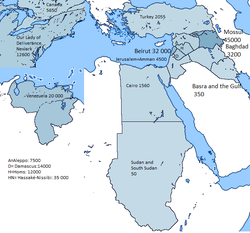
The Syriac Catholic Church is an Eastern Catholic sui iuris (self-governing) particular church in full communion with the Holy See and the broader Catholic Church. Rooted in the Levant, this community preserves a rich spiritual heritage through the use of the West Syriac Rite and the Syriac language—a dialect of Aramaic. With a population of approximately 160,000 members, the majority of the faithful reside in Syria and Iraq, with significant communities in Lebanon and a growing overseas diaspora.
As one of the smaller Eastern Catholic churches based in the Middle East, it maintains deep liturgical and traditional ties with the Syriac Orthodox Church, reflecting a shared history that dates back to the earliest days of Christianity.
Key Facts
- Leadership: Headed by the Patriarch of Antioch, currently Mor Ignatius Joseph III Yonan.
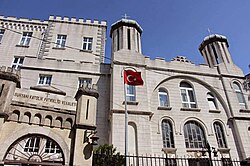
- Headquarters: Beirut, Lebanon.
- Liturgical Language: Syriac (Aramaic).
- Rite: West Syriac Rite.
- Membership: Approximately 153,415 faithful (as of 2018).
- Scripture: Uses the Peshitta version of the Bible.
Historical Origins and Evolution
The Syriac Catholic Church traces its lineage to the Church of Antioch, established by Saint Peter. In the early centuries of Christianity, the Patriarch of Antioch held ecclesiastical authority over the Diocese of the Orient, stretching from the Mediterranean Sea to the Persian Gulf. This era produced renowned scholars and saints, including Saint Ephrem (a Doctor of the Church) and Saint Jacob of Sarug.
The Great Schism and Early Tensions
The unity of the Church of Antioch was fractured following the Council of Chalcedon in 451 AD due to disagreements over Christology. This led the Syriac, Coptic, and Armenian churches to reject the council's outcomes, aligning them with Oriental Orthodoxy. While a decree of unity was signed at the Council of Florence in 1444, it was quickly annulled by the Syriac hierarchy.
The Emergence of the Catholic Line
The modern Syriac Catholic Church began to take shape in the 17th century through missionary efforts by Jesuits and Capuchins in Aleppo. In 1662, Andrew Akijan was elected as the Syriac Patriarch of Antioch, signaling a pro-Catholic movement. However, the community faced severe persecution under the Ottoman government throughout the 18th century, often forcing the church underground.
The current unbroken succession of patriarchs, known as the Ignatius line, began in 1782. Metropolitan Michael Jarweh of Aleppo was elected patriarch by the Syriac Orthodox Holy Synod but subsequently declared himself in communion with the Pope of Rome. Jarweh established the monastery of Our Lady in Sharfeh, Lebanon, which remains a vital center for the church's seminary and printing house today.
Modern Era and Global Expansion
Legal recognition from the Ottoman government arrived in 1845, sparking a period of rapid growth. However, this progress was devastated by the Sayfo (the genocide of Syriacs and other Christians) during World War I. This tragedy forced the patriarchal see to move from Mardin to Beirut, where it remains today.
In recent decades, the church has expanded into the West. A presence was established in Australia in 1985, led by Monsignor Michael Berbari. The community in Sydney grew significantly following the arrival of Iraqi refugees fleeing ISIS, leading to the laying of a foundation stone for a new church at Kemps Creek in 2024.
Church Organization and Hierarchy
The church is led by the Patriarch of Antioch and all the East of the Syriacs. By tradition, every patriarch adopts the name "Ignatius." The church's jurisdiction is divided into several eparchies (dioceses) and exarchates across the Middle East, Turkey, the United States, Canada, and Venezuela.
Ecclesiastical Ranking
The church maintains a clear distinction between major and minor orders:
- Major Orders: Bishop, Kahno (Priest), and Mshamshono (Deacon).
- Minor Orders: Afudyaqno (Sub-deacon), Quroyo (Lector), and Mzamrono (Cantor).
While the Synod of Sharfeh in 1888 traditionally bound priests to celibacy, the church now permits a number of married priests.
Liturgical Traditions
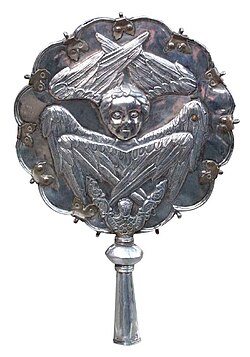
The West Syriac Rite is distinct from the Greek Byzantine rite used by Melkite Catholics. The liturgy is characterized by specific paraphernalia, including ceremonial fans used during services.
Summary of Church Profile
| Feature | Detail |
|---|---|
| Classification | Eastern Catholic (Sui Iuris) |
| Patriarch | Ignatius Joseph III Yonan |
| Primary Regions | Syria, Iraq, Lebanon |
| Liturgical Rite | West Syriac Rite |
| Key Monastery | Our Lady in Sharfeh, Lebanon |
| Estimated Members | ~153,000 - 160,000 |
Persecution and Martyrdom
The history of the Syriac Catholic Church is marked by resilience in the face of violence. From the Sayfo of 1915, where Bishop Flavianus Michael Malke was martyred, to modern tragedies, the community has suffered greatly. A notable recent event occurred on October 31, 2010, when ISIS extremists attacked the Our Lady of Deliverance Syriac Catholic Church in Iraq, killing 58 worshippers during Sunday Divine Liturgy.
Frequently Asked Questions
What is the difference between the Syriac Catholic and Syriac Orthodox Churches?
The primary difference is communion; the Syriac Catholic Church is in full communion with the Pope in Rome, while the Syriac Orthodox Church is not. Despite this, they share the same West Syriac Rite and liturgical language.
What language is used in the Syriac Catholic liturgy?
The church uses Syriac, which is a dialect of Aramaic, the language spoken in the region during the time of Jesus.
Where is the headquarters of the Syriac Catholic Church located?
The patriarchal see is currently located in Beirut, Lebanon, although it has moved several times throughout history due to persecution.
Who is the current leader of the church?
The church is led by Patriarch Ignatius Joseph III Yonan, who has served as the Patriarch of Antioch since January 20, 2009.
What is the "Ignatius line"?
The Ignatius line refers to the unbroken succession of Syriac Catholic patriarchs that began with Michael Jarweh in 1782, all of whom take the name "Ignatius" upon their ascension.