Arameans: The Tribal People and Lingua Franca of the Ancient Near East
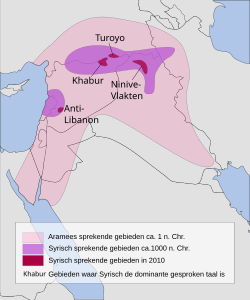
The Arameans were a tribal Semitic people who played a pivotal role in the cultural and political landscape of the ancient Near East. First appearing in historical records during the late 12th century BCE, their original homeland—known as the land of Aram—was centered in the regions of modern-day Syria. Rather than existing as a single unified nation, the Arameans were organized into various local centers of power spread across the Levant.
Because their identity was primarily tied to geography and language rather than a distinct material culture or a single religion, historians often view "Aramean" as a designation for the inhabitants of the region of Aram during the 1st millennium BCE. While Assyrian texts and the Hebrew Bible frequently use the term, later Aramean rulers rarely used it to describe themselves, with the notable exception of the kings of Aram-Damascus.
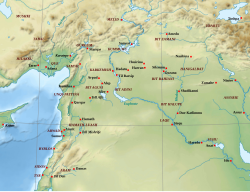
Key Facts
- Origins: A Semitic tribal group first documented in the late 12th century BCE in central Syria.
- Political Structure: Organized into Syro-Hittite city-states, most notably Aram-Damascus.
- Language: Aramaic became the lingua franca (a common bridge language) for administration and public life across the Near East.
- Imperial Influence: Their language was adopted by the Neo-Babylonian and Achaemenid Empires as "Imperial Aramaic."
- Dispersion: Neo-Assyrian policies of population relocation spread Aramean communities and their language throughout the region.
The Rise of Aramean City-States
At the dawn of the 1st millennium BCE, several Syro-Hittite states emerged. These were often organized around tribal groups known as Bit (meaning "house"), such as Bit-Adini and Bit-Agushi. Among these, the Kingdom of Aram-Damascus became the most prominent, reaching its zenith in the second half of the 9th century BCE under the leadership of King Hazael.
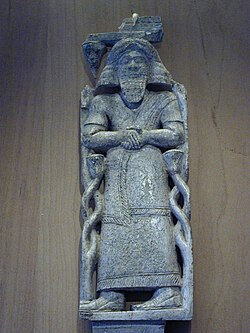
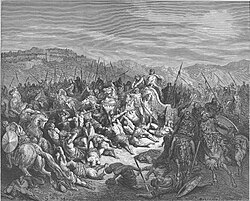
The Aramean states frequently clashed with neighboring powers. Their interactions with the Israelites are well-documented, including significant military conflicts that shaped the political boundaries of the era.
By the mid-century, some Syrian chiefdoms attempted to unify under a collective identity known as "All Aram," comprising states in both Upper and Lower Aram to collectively resist the encroaching power of the Assyrian Empire.
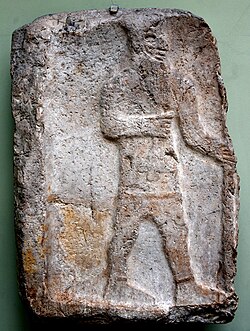
Neo-Assyrian Conquest and the Spread of Aramaic
During the 8th century BCE, the Neo-Assyrian Empire conquered the local Aramean city-states. The Assyrians employed a systematic policy of population displacement, forcibly relocating Arameans across their vast domains. While intended to break local resistance, this policy inadvertently facilitated the spread of the Aramaic language.
As Aramean communities were dispersed, Aramaic began to replace other local dialects, eventually evolving into Imperial Aramaic. This standardized version of the language became the primary tool for administration and diplomacy during the Neo-Babylonian Empire (612–539 BCE) and the Achaemenid Empire (539–330 BCE).
Hellenistic Transition and Later Legacy
The conquests of Alexander the Great introduced Greek influence to the region. By the late 4th century BCE, the Seleucid and Ptolemaic Empires competed for supremacy. During this period, the Greeks began using the term "Syrian" to describe the Arameans and their lands. Eventually, "Syria" was formally defined as the region west of the Euphrates, distinguishing it from "Assyria" to the east.
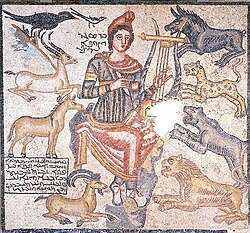
The linguistic legacy of the Arameans persisted long after their political independence vanished. Aramaic remained a vital language in the Near East, later becoming central to early Christianity and the culture of cities like Edessa.
Summary of Aramean History
| Period | Political Status | Linguistic Impact |
|---|---|---|
| Late 12th Century BCE | Tribal settlements in central Syria | Emergence of Aramaic dialects |
| 9th Century BCE | Rise of Aram-Damascus (King Hazael) | Regional dominance of Aramaic |
| 8th Century BCE | Conquest by Neo-Assyrian Empire | Forced migration spreads language |
| 612–330 BCE | Neo-Babylonian & Achaemenid rule | Establishment of Imperial Aramaic |
| Post-330 BCE | Hellenistic (Seleucid/Ptolemaic) rule | Transition to the term "Syrian" |
Frequently Asked Questions
Who were the Arameans?
The Arameans were a Semitic tribal people from the ancient Near East, primarily located in central Syria during the 1st millennium BCE. They are best known for their city-states and the widespread influence of their language.
What is the significance of the Aramaic language?
Aramaic became the lingua franca of the ancient Near East. Due to Aramean migrations and Assyrian deportation policies, it was adopted by major empires (Neo-Babylonian and Achaemenid) for administration and public life.
Which was the most powerful Aramean state?
Aram-Damascus was the most notable Aramean kingdom, reaching its peak of power in the second half of the 9th century BCE under King Hazael.
How does the term "Aramean" differ from "Syrian"?
"Aramean" was a term used in Assyrian and Biblical texts for the people of the region of Aram. "Syrian" is a Greek designation that became the standard term for the region west of the Euphrates during the Hellenistic period.
Why did the Arameans spread across the Near East?
While some spread through natural migration, a significant portion of the dispersion was caused by the Neo-Assyrian Empire's policy of forced population relocation and resettlement.