Amorites: The Nomadic Architects of the Bronze Age Near East
The Amorites were a Northwest Semitic-speaking people of the Bronze Age who rose from the plains of western Mesopotamia to become one of the most influential forces in the ancient world. Emerging in historical records around 2500 BC, they evolved from nomadic tribes into the founders of great empires, ruling vast territories across the Levant, Mesopotamia, and parts of Egypt from the 21st century BC until the start of the 16th century BC.
Their legacy is etched into the very foundations of early civilization, most notably through the establishment of the Old Babylonian Empire. From their origins as pastoralists to their role as urban administrators, the Amorites bridged the gap between the nomadic fringes and the heart of the Fertile Crescent.
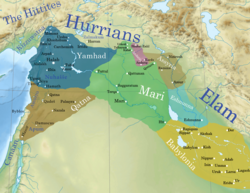
Key Facts
- Origins: Northwest Semitic-speaking people from western Mesopotamia and northern Syria.
- Peak Influence: 21st century BC to the early 16th century BC.
- Major Achievements: Founded the Old Babylonian Empire and several prominent city-states including Mari and Ebla.
- Geographic Reach: Spanned the Levant, Mesopotamia, and the Nile Delta in Egypt.
- Genetic Profile: A mixture of Copper Age Levantines and Mesopotamians.
The Rise of the Amorites: From Nomads to Rulers
Early Records and the Third Millennium BC
The earliest mentions of the Amorites appear in Sumerian records around 2500 BC, where they were referred to by terms such as mar.tu. In the East Semitic-speaking kingdom of Ebla, tablets from 2500 to 2250 BC describe them as rural groups inhabiting the middle and upper Euphrates basin in northern Syria.
During this era, the Amorites were viewed with suspicion by the established urban centers. The Third Dynasty of Ur saw such an influx of Amorite migrants that King Shu-Sin constructed a massive 270-kilometre (170 mi) wall stretching from the Tigris to the Euphrates to deter them. Contemporary Akkadian literature often portrayed the Amorites disparagingly, viewing their nomadic, herd-grazing lifestyle as primitive compared to the settled city-states.
The Second Millennium BC and Imperial Expansion
By the second millennium BC, the Amorites had transitioned from outsiders to architects of power. They established several influential city-states, including Isin, Kurda, Larsa, Mari, and Ebla. Their most enduring achievement was the founding of Babylon and the subsequent Old Babylonian Empire.
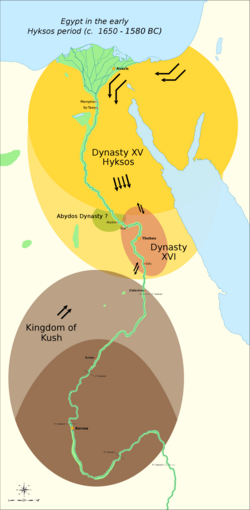
Their influence extended far beyond Mesopotamia. In Egypt, during the fragmented Second Intermediate Period, the Amorites founded the Fourteenth Dynasty in the Nile Delta. These rulers, such as Yakbim Sekhaenre, bore Amorite names and were likely integrated into the later Hyksos—a group of foreign rulers who controlled northern Egypt.
The Decline and Fall
The Amorite era in Mesopotamia came to an end in the 16th century BC with the fall of Babylon. Around 1595 BC, the Kassites occupied Babylon, renaming it Karduniaš. In northern Mesopotamia, the resulting power vacuum led to the rise of the Mitanni around 1600 BC.
In Syria, Amorite populations were eventually dominated by the Hittites and later the Middle Assyrian Empire. By the Late Bronze Age collapse, they were largely absorbed or displaced by other West Semitic-speaking peoples known as the Ahlamu, among whom the Arameans became the dominant group. By 1200 BC, the Amorites vanished from historical records, though they remained a fixture in later biblical narratives.
Culture, Language, and Religion
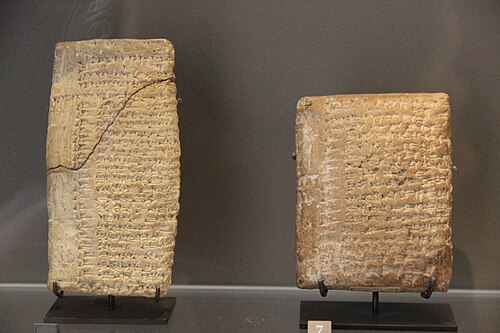
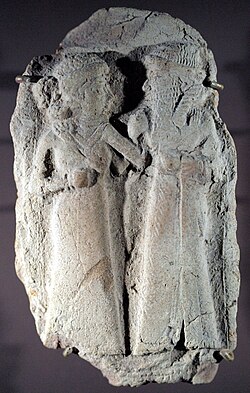
The Amorites spoke a Northwest Semitic language. While much of their history was recorded in the Akkadian cuneiform of the regions they conquered, recent discoveries have shed light on their specific spiritual beliefs. In 2022, a bilingual list from the Old Babylonian period was translated, revealing ten Amorite deities and their Akkadian counterparts.
Genetic Origins
Modern science has provided a window into the Amorite biological heritage. Ancient DNA analysis of 28 remains from the city of Alalakh revealed that the population was a genetic mixture of Copper Age Levantines and Mesopotamians. Paternal Y-DNA analysis showed a prevalence of haplogroups J1 and J2, indicating a strong connection to contemporaneous Levantine populations.
The Amorites in the Biblical Narrative
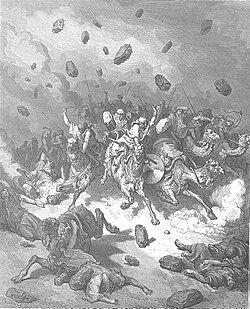
In the Hebrew Bible, the term "Amorite" refers to powerful highlanders in the land of Canaan, described as descendants of Canaan. They are depicted as a people of immense stature, with the Book of Amos comparing them to the "height of the cedars." Some scholars have interpreted this as a reference to them being giants.
Biblical accounts describe the Amorites occupying regions from the Dead Sea to Hebron, including Gilead and Bashan. Notable figures include the kings Sihon and Og. While the terms "Amorite" and "Canaanite" are often used interchangeably in these texts, the Amorites are specifically linked to the mountains of Judea and the Jerusalem region.
![One of the Ramesses III prisoner tiles, which is speculated by some scholars to represent an Amorite man[18]](/images/82/23/8223e4cb6249ecfff7dca8423c90e77d44300c75e7dded2a599f0218788375f3.jpg)
Summary of Amorite Influence
| Category | Details |
|---|---|
| Time Period | c. 2500 BC – 1200 BC (Peak: 21st–16th century BC) |
| Key City-States | Babylon, Mari, Ebla, Larsa, Isin |
| Major Empires | Old Babylonian Empire, 14th Dynasty of Egypt |
| Language Family | Northwest Semitic |
| Genetic Ancestry | Levantine and Mesopotamian mixture |
Frequently Asked Questions
Who were the Amorites?
The Amorites were a Northwest Semitic-speaking people of the Bronze Age who migrated from western Mesopotamia and northern Syria to establish powerful city-states and empires across the Near East, including the Old Babylonian Empire.
Did the Amorites rule Egypt?
Yes, they founded the Fourteenth Dynasty in the Nile Delta during the Second Intermediate Period and were likely part of the Hyksos, a group of foreign rulers in Egypt.
How are the Amorites described in the Bible?
The Bible describes them as powerful highlanders of great stature who inhabited Canaan and the regions east and west of the Jordan River, often using the term interchangeably with "Canaanite."
What happened to the Amorites?
Their political power declined in the 16th century BC as they were replaced by the Kassites in Babylon and the Mitanni in the north. They were eventually absorbed by other groups, such as the Arameans, by approximately 1200 BC.
What does genetic evidence tell us about them?
DNA analysis from the city of Alalakh shows that the Amorites were a mixture of Copper Age Levantines and Mesopotamians, genetically similar to other people living in the Levant during the Bronze Age.