Canaanite Religion: Deities, Myths, and Rituals of the Southern Levant
For approximately three millennia BCE, the land of Canaan in the southern Levant was home to a rich tapestry of spiritual beliefs. These traditions were primarily polytheistic (the worship of multiple gods), though some instances of monolatristic practice—the worship of one god without denying the existence of others—occurred. Deeply influenced by the neighboring superpowers of ancient Egypt and Mesopotamia, Canaanite religion evolved into a complex system of divine hierarchies and mythic cycles.
Our modern understanding of these beliefs is a mosaic assembled from fragmentary evidence. While the Hebrew Bible provided early insights, the field was transformed by the emergence of Levantine archaeology in the late 19th and early 20th centuries. Today, scholars rely on a combination of material remains and literary discoveries, most notably the Ugaritic texts, to reconstruct the spiritual life of this ancient civilization.
Key Facts
- Pantheon Structure: A four-tier hierarchy led by the creator god El and his consort Asherah.
- Primary Sources: The Ugaritic texts (c. 1275 BCE) and Ebla tablets (late 3rd millennium BCE) are critical literary records.
- Core Practices: Included animal sacrifice, the veneration of the dead, and worship in sacred groves and hilltop shrines.
- Cultural Reach: Canaanite beliefs influenced later Greek mythology and evolved into Phoenician and Punic religions.
- Regional Diversity: Different groups developed national patron deities, such as Chemosh for the Moabites and Yahweh for the Israelites.
The Evolution of Canaanite Beliefs
The Third and Second Millennia BCE
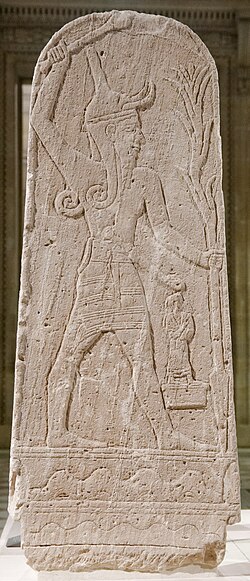
The earliest evidence of Canaanite religious thought appears in the Ebla tablets from Tell Mardikh, Syria, dating to the second half of the 3rd millennium BCE. These clay inscriptions list offerings to primary deities like El, Baal, and Dagon. By the late 3rd and early 2nd millennia BCE, these gods appeared in the personal names of the Amorite people in northwest Syria.
The most significant breakthrough came with the discovery of the Ugaritic texts near Ras Shamra. Dated around 1275 BCE, these three hundred texts provide an exhaustive look at Canaanite life, containing hymns, prayers, ritual prescriptions, and the legendary myths of the gods.
The First Millennium BCE and Beyond
As time progressed, Canaanite religion branched into several distinct regional traditions. In the kingdoms of Israel and Judah, Yahwism emerged; while the Hebrew Bible distinguishes it from Canaanite religion, many scholars view it as a localized branch of the broader Canaanite tradition. Other regional variations included Aramean religion in Syria and Phoenician religion in modern-day Lebanon.
The Phoenicians carried these beliefs across the Mediterranean as they established colonies. This evolved into Punic religion in North Africa (Carthage), southern Spain, and Sicily. These practices persisted in some areas until the 4th century CE, even after the Roman conquest.
During the Hellenistic period, a process of syncretism—the blending of different beliefs—occurred. Rather than being replaced by Greek religion, Canaanite deities were often identified with Greek equivalents based on shared characteristics.
The Divine Hierarchy and Pantheon
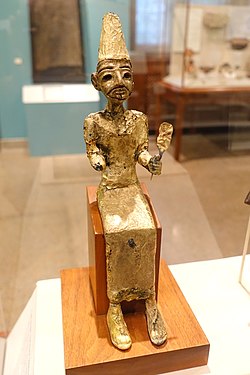
The Canaanite pantheon was organized into a strict hierarchy. At the summit were the creator deities, followed by active patron gods, then artisan deities, and finally messenger gods who lacked independent volition.
| Deity | Role/Domain | Key Association |
|---|---|---|
| El | God of Creation | Husband of Asherah; the "Most High" |
| Asherah | Consort of El | Divine mother figure |
| Baal | Storm and Weather | Lord of the north; associated with rain |
| Anat | War and Love | Powerful goddess; slayer of Ishat |
| Mot | Death | Not typically given offerings |
| Dagon | Crop Fertility | God of grain; father of Baal |
| Kothar-wa-Khasis | Craftsmanship | Created weapons for Baal |
Regional Patron Deities
In the Iron Age, specific groups adopted national gods to define their identity. The Moabites and Ammonites worshipped Chemosh (a god of war) and Milcom, respectively. The Edomites looked to Qos, while the Israelites centered their worship on Yahweh.
Religious Practices and Rituals
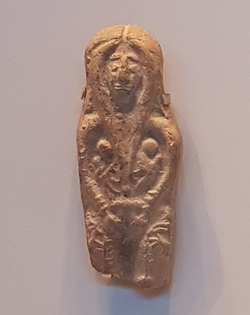
Canaanite worship was deeply tied to the landscape. Deities were often represented by figures placed in shrines on hilltops, known as "high places." These sites were frequently surrounded by sacred groves of trees and featured standing stones or Asherah poles.
Sacrifice played a central role in maintaining the divine relationship. Archaeological finds at Tell es-Safi reveal that animals, including sheep, goats, and donkeys, were imported from Egypt for sacrifice. Some evidence suggests donkeys were used as "foundation deposits" beneath residential buildings. While more controversial, some historical accounts and scholars suggest that human sacrifice occurred during extreme military crises or as offerings of prisoners of war.
Legacy and Influence
The reach of Canaanite religion extended far beyond the Levant. Phoenician sailors transmitted these ideas to Greece, where they may have influenced the tripartite division of the Greek underworld and heavens (Zeus, Poseidon, and Hades), mirroring the Canaanite division between Baal, Yam, and Mot. Similarly, the myths of the Tyrian Melqart share striking parallels with the Labours of Hercules.
Frequently Asked Questions
Who was the head of the Canaanite pantheon?
The pantheon was headed by the god El, the god of creation, and his consort Asherah.
What are the Ugaritic texts?
The Ugaritic texts are a collection of over 300 tablets found near Ras Shamra, Syria, dating to around 1275 BCE. They are the most substantial source of information on Canaanite myths, rituals, and prayers.
How did Canaanite religion influence Greek mythology?
Through Phoenician trade and cultural exchange, Canaanite concepts influenced Greek myths, specifically the division of divine realms and the stories of heroes like Heracles, who mirrors the Tyrian Melqart.
What were "high places" in Canaanite worship?
High places were hilltop shrines often surrounded by sacred groves of trees, where worshippers placed deity figures and Asherah poles to communicate with the gods.
Was Yahwism a part of Canaanite religion?
While the Hebrew Bible presents Yahwism as distinct, many modern scholars classify it as a branch of Canaanite religion, viewing the Israelites as an indigenous Canaanite people.