Aram: The History, Language, and Legacy of the Aramean States
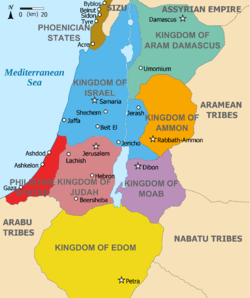
Aram was a historical region in present-day Syria, known in antiquity for its collection of small, independent states rather than a single unified empire. Mentioned in early cuneiform records and the Hebrew Bible, the region is most famously represented by Aram-Damascus, a state that eventually encompassed much of the Syrian territory. While the political sovereignty of these states eventually succumbed to the great empires of Mesopotamia and Persia, the cultural and linguistic footprint of the Arameans reshaped the ancient world.
The term "Aram" is a choronym—a name derived from a geographical region—meaning "Highlanders." This connection to the highlands is reflected in early records, including the Ebla tablets from approximately 2300 BCE and the annals of Naram-Sin of Akkad around 2250 BCE. Early Jewish tradition further attributes the name to the biblical Aram, the son of Shem and grandson of Noah.
Key Facts
- Geographic Core: Centered in modern-day Syria, often referred to in antiquity as Eber-Nari.
- Political Structure: Comprised of several small states, with Aram-Damascus being the most prominent.
- Linguistic Impact: Aramaic replaced Akkadian as the lingua franca (common bridge language) of the Near East.
- Imperial Adoption: Used as the administrative language by the Neo-Babylonian and Achaemenid Empires.
- Religious Center: The god Hadad, the deity of thunderstorms and fertility, was the primary protector of the Aramean kings.
The Rise and Fall of the Aramean States
Emergence and Early Dominance
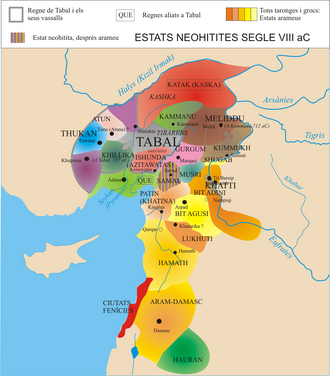
Between 1100 BCE and 900 BCE, a period characterized by mass migrations and upheavals across West Asia, the Arameans displaced the earlier Semitic Amorite populations. By 1200 BCE, the Arameans had become the dominant group in the region. They emerged during the decline of the Middle Assyrian Empire, posing a significant threat to Assyrian interests west of the Euphrates.
Despite numerous campaigns by the Assyrian king Tiglath-Pileser I, the Arameans maintained their independence and expanded into the Khabur Valley. Between 1050 and 900 BCE, they dominated most of the territory now known as Syria, which was then called Aramea or Eber-Nari.
Imperial Conquests and the Shift to "Syria"
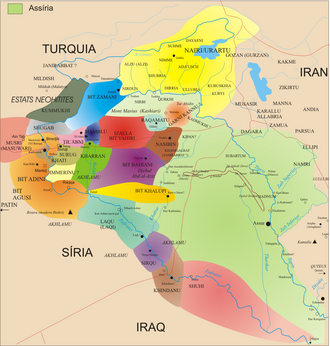
The tide turned in the 9th century BCE with the rise of the Neo-Assyrian Empire. Through a series of invasions and mass deportations, the Aramean states lost their independence by the second half of the 8th century BCE. This region later passed to the Neo-Babylonian Empire (612–539 BCE) and subsequently the Persian Achaemenid Empire (539–332 BCE).
Following the conquest by Alexander the Great in 332 BCE, the region became part of the Seleucid Empire. It was during this Hellenistic period that the Greek designation Syria was introduced. This term was a corruption of "Assyria," and by the 5th century CE, it was adopted by Aramean literary and ecclesiastical elites themselves.
Later History and Survival
The region remained a battleground between the Seleucids, Parthians, Romans, and Sassanid Persians. One notable exception was the powerful Aramean kingdom of Palmyra, which successfully resisted foreign conquest for a time. Eventually, the region fell under the Byzantine Empire and later the Arab Islamic conquest in the mid-7th century CE. While many adopted Arabic, Aramaic survived among indigenous populations in northern Iraq, south-east Turkey, and north-east Syria.
Cultural and Linguistic Legacy
The Dominance of Aramaic
Perhaps the most enduring legacy of Aram is the Aramaic language. It eventually supplanted Akkadian as the primary language of commerce and diplomacy. The Assyrians adopted a version known as Imperial Aramaic, which was later maintained by the Persians. This linguistic reach extended into the religious sphere; the Christian Bible was translated into Aramaic, and by the 4th century, the dialect of Edessa evolved into Syriac, a major literary and liturgical language.
Ancient Aramean Religion
The Aramean pantheon was rooted in common Semitic deities. Their supreme god was Hadad (also known as Ramman or Rahmana), the god of thunderstorms and fertility. Hadad was typically depicted as a bearded soldier with a double-edged sword, often associated with the bull.
The religious significance of the region is best exemplified by the great temple of Hadad in Aram-Damascus. Over centuries, this single site evolved from a pagan temple to a Roman Temple of Jupiter, then a Byzantine church, and finally the Umayyad Mosque, the largest mosque in modern Syria.
Summary of Regional Transitions
| Period | Dominant Power | Regional Name | Primary Language |
|---|---|---|---|
| 1100–800 BCE | Aramean City-States | Aram / Aramea | Aramaic |
| 800–612 BCE | Neo-Assyrian Empire | Eber-Nari | Imperial Aramaic |
| 612–332 BCE | Neo-Babylonian / Achaemenid | Eber-Nari | Imperial Aramaic |
| 332–64 BCE | Seleucid Empire | Syria | Greek / Aramaic |
| 64 BCE – 636 CE | Roman / Byzantine | Syria | Greek / Syriac |
Frequently Asked Questions
What is the difference between Aram and Syria?
Aram was the indigenous name for the region and its Aramean inhabitants. "Syria" is a Hellenistic (Greek) term introduced during the Seleucid period, derived from a corruption of the word "Assyria." Over time, the label Syria replaced Aram in both official and local usage.
Who was the most powerful Aramean state?
Aram-Damascus was the most outstanding of the Aramean states, eventually encompassing the majority of the Syrian region and serving as a primary political power before the Neo-Assyrian conquest.
What is Imperial Aramaic?
Imperial Aramaic is a standardized form of the Aramaic language adopted by the Neo-Assyrian Empire under Tiglath-pileser III. It served as the lingua franca for administration and trade across several subsequent empires, including the Neo-Babylonian and Achaemenid Empires.
Who was the god Hadad?
Hadad was the chief deity of the Arameans, the god of thunderstorms and fertility. He was often symbolized by a bull and was regarded as the protector of Aramean kings, who took the title "Bar-Hadad" (Son of Hadad).
Is Aramaic still spoken today?
Yes, though it is endangered. While Western Aramaic is spoken by only a few thousand people, Mesopotamian Eastern Aramaic survives among ethnically distinct Assyrians in northern Iraq, north-eastern Syria, south-eastern Turkey, and north-western Iran.