Neo-Hittite and Luwian-Aramean States of the Iron Age
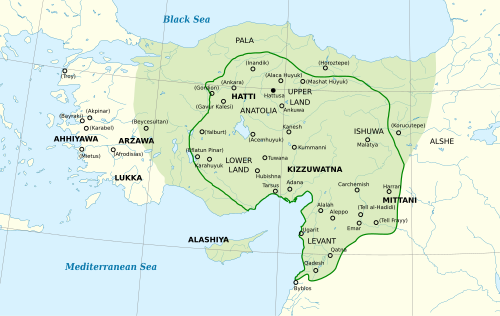
Following the dramatic collapse of the Hittite New Kingdom in the 12th century BCE, a series of regional polities emerged across southeastern modern Turkey and northwestern modern Syria. Known in antiquity as the lands of Hatti and Aram, these states bridged the gap between the Late Bronze Age and the rise of the Assyrian Empire. While they shared cultural similarities, they were divided by distinct linguistic and ethnic identities, primarily between the Luwians of the north and the Arameans of the south.
These societies flourished during the Iron Age, maintaining a complex network of decentralized structures and loose confederations until they were eventually subdued by the Assyrian Empire in the 8th century BCE.
Key Facts
- Timeline: Emerged in the 12th century BCE and lasted until the 8th century BCE.
- Geography: Located in southeastern Turkey and northwestern Syria.
- Primary Groups: Northern Luwian states and southern Aramean states.
- Languages: Luwian (Indo-European) and Aramaic (Northwest Semitic).
- Writing: Extensive use of Anatolian hieroglyphs and early alphabetic scripts.
- End: Most were absorbed by the Neo-Assyrian Empire.
The Debate Over Nomenclature
Scholars have long debated the most accurate term to describe these regional polities, as the choice of name often reflects different linguistic or cultural perspectives.
Neo-Hittite and Syro-Hittite
The term Neo-Hittite is the most common qualifier. However, it is criticized by some because the Hittite language itself is not attested in these states, potentially misleading readers into believing they were ethno-linguistically Hittite. Similarly, Syro-Hittite is criticized for overemphasizing the Aramean (Syrian) aspect while neglecting the Luwian influence.
Luwian-Aramean
Many modern scholars prefer Luwian-Aramean (or variations like Luwo-Aramaean). This term is based on endonyms—native names—and is considered more linguistically accurate since Hieroglyphic Luwian and Aramaic were the predominant spoken and written languages of the region.
Critique of "Syrian" and "Anatolian" Labels
Terms such as Syro-Anatolian are often viewed as culturally biased because they rely on exonyms (foreign names). For example, "Anatolia" is a Greek term. Furthermore, the use of "Syria" is considered anachronistic. The 8th-century BCE Çineköy inscription reveals that for ancient Luwians, "Syria" was actually a designation for Assyria proper. The territorial distinction of "Syria" as a specific western region was a later Greek innovation.
Transition from Bronze to Iron Age
The rise of these states was preceded by the collapse of the Hittite New Kingdom, a period marked by the decline of Eastern Mediterranean trade and the destruction of major cities in the Levant, Anatolia, and the Aegean. In the early 12th century BCE, the Kaskas (from the Black Sea coast) and the Mysians launched devastating attacks, destroying sites across Hatti, Arzawa (Lydia), Alashiya (Cyprus), Ugarit, and Alalakh.
Despite this upheaval, archaeological evidence suggests a strong cultural continuity. Excavations at the Ain Dara temple and the Temple of the Storm God in Aleppo show that Late Bronze Age temple buildings continued into the Iron Age without a hiatus, indicating that the transition was not a total break but an evolution.
Regional Organization and States
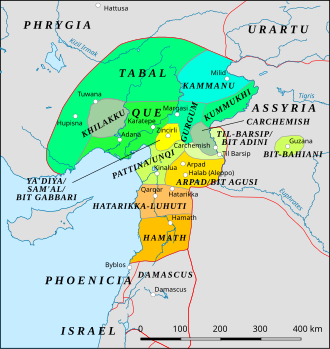
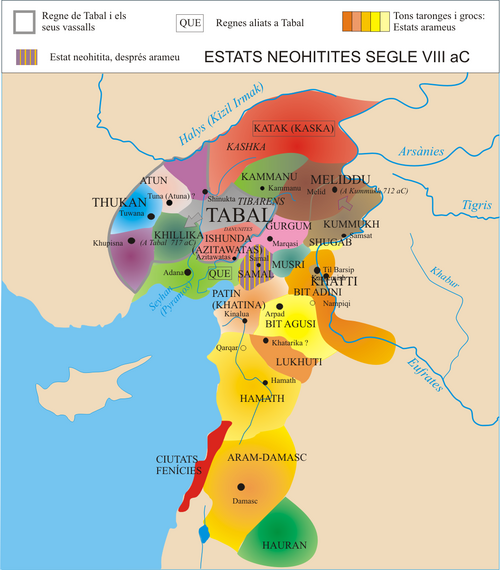
The Neo-Hittite states were highly decentralized. They are generally categorized into two primary geographic and ethnic groups.
The Northern (Luwian) Group
In the north, Hittite-descended rulers largely remained in power. This group included:
- The Tabalian region: Comprising Tabal proper, Tuwana, Atuna, Ḫubišna, Šinuḫtu, and Ištuanda.
- Other key states: Kammanu (with Melid), Ḫilakku, Ḫiyawa (including Karatepe), Gurgum, Kummuh, and Carchemish.
The Southern (Aramean) Group
From approximately 1000 BCE, Arameans rose to power in the south. This group included:
- Palistin: Likely centered at Tell Tayinat.
- Bit Gabbari: Including Sam'al.
- Bit-Adini: Centered at Til Barsip.
- Bit Bahiani: Centered at Guzana.
- Pattin: Including the city of Kinalua.
- Bit Agusi: Including Arpad, Nampigi, and later Aleppo.
- Other centers: Ain Dara (a religious center), Hatarikka-Luhuti, and Hamath.
Inscriptions and Literacy
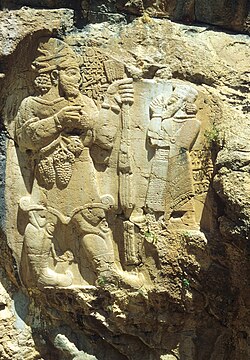
The region served as a vital hub for the evolution of writing. Luwian monumental inscriptions using Anatolian hieroglyphs continued almost uninterrupted from the 13th century BCE into the Iron Age. These were often found in multilingual formats, appearing alongside Aramaic, Phoenician, or Akkadian.
Simultaneously, the Early Iron Age saw the spread of alphabetic writing. Through cultural interactions on the Levantine coast between the 10th and 8th centuries BCE, the Greeks and Phrygians adopted alphabetic scripts from the Phoenicians, forever altering the course of Mediterranean literacy.
| Feature | Northern Group (Luwian) | Southern Group (Aramean) |
|---|---|---|
| Primary Language | Luwian (Indo-European) | Aramaic (Semitic) |
| Key Writing System | Anatolian Hieroglyphs | Aramaic Alphabet |
| Major Centers | Carchemish, Melid, Tabal | Hamath, Arpad, Sam'al |
| Political Structure | Decentralized / Former Hittite elites | Decentralized / Aramean rulers |
Frequently Asked Questions
Why is the term "Neo-Hittite" considered controversial?
It is controversial because the Hittite language is not found in the records of these states. Using the term may incorrectly imply an ethno-linguistic connection to the original Hittites, whereas the people actually spoke Luwian and Aramaic.
What caused the emergence of these states?
They arose following the collapse of the Hittite New Kingdom in the 12th century BCE, which was triggered by the decline of trade networks and attacks by groups such as the Kaskas and Mysians.
What is the significance of the Çineköy inscription?
The Çineköy inscription is the oldest evidence showing that the term "Syria" was originally an apheretic form of "Assyria." It proves that for the Luwians, "Syria" referred to Assyria proper, making the later Greek use of the term for the region of Aram anachronistic.
How did writing evolve in this region during the Iron Age?
The region maintained the use of Luwian hieroglyphs for monuments while simultaneously adopting and spreading alphabetic writing (Aramaic and Phoenician), which eventually influenced the Greek and Phrygian alphabets.