Melbourne Airport: A History of Growth and Aviation Evolution
Melbourne Airport, commonly known as Tullamarine or "Tulla," serves as the primary gateway for international and domestic travel in Victoria. Its establishment marked a pivotal shift in Australian aviation, moving the city's primary air hub from the constrained urban environment of Essendon to a sprawling site capable of supporting the jet age.
The Transition from Essendon Airport
Before the development of the current site, Essendon Airport served as Victoria's main aviation hub. While it was designated as an international airport in 1950, the post-war boom in air travel quickly overwhelmed its capacity. By the mid-1950s, Essendon faced critical limitations: its runways were too short for the emerging generation of large jet aircraft, and terminal facilities were insufficient. Despite the creation of an international overflow terminal in a northern hangar, the airport was hemmed in by residential subdivisions, making further expansion impossible.
Site Selection and Early Planning
In February 1958, a panel was appointed to identify a suitable replacement for Essendon. The search was extensive, evaluating several potential sites including Whittlesea, Hastings, Port Melbourne, Werribee, Laverton, Avalon, and Moorabbin. Ultimately, the choice came down to Tullamarine and Laverton.
Tullamarine was selected due to its superior proximity to the city center and lower projected development costs. Additionally, officials determined that traffic coordination between Essendon and Tullamarine would be more efficient than at Laverton, where the need to coordinate military and civil activities posed safety and logistical challenges.
In May 1959, the Commonwealth Government acquired 5,300 hectares of rural grassland at Tullamarine. Following preliminary approval in March 1960 and two years of intense planning, Prime Minister Robert Menzies adopted a five-year master plan in 1962. Construction officially began in November 1964.
The Early Years and the Astrojet Era
As the airport neared completion, the government sought to integrate commercial leisure and dining. In 1966, a partnership involving Paul Fayman, Leon Velik, Joseph Emanuel, Irvin Rockman, and the Petersville Corporation was formed to manage the airport's bars and restaurants, including the renowned Top Air restaurant.
One of the most unique early additions was the Astrojet Space and Science Centre. This aviation-themed entertainment complex featured a 300-seat cinema, an observation deck, cafes, and guided tours of aviation exhibits. This era of development also saw the addition of a 240-bed Travelodge hotel and a service station on the surrounding land.
Official Opening and Initial Operations
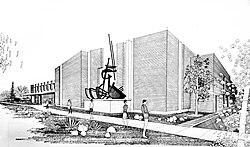
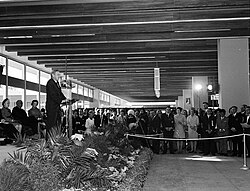
Melbourne Airport—originally named "Melbourne International Airport"—was officially opened for international operations by Prime Minister John Gorton on 1 July 1970. This ended Essendon's role as the city's international hub, though Essendon continued to handle domestic flights until 26 June 1971.
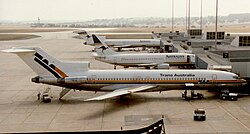
The airport's initial layout consisted of three connected terminals: a central International terminal, with Ansett to the south and Trans Australia Airlines to the north. At launch, the facility could handle eight Boeing 707s at a rate of 500 passengers per hour. In its first year, the airport served six international airlines and 155,275 international passengers. By 1973, minor expansions allowed the airport to accommodate the larger Boeing 747.
Privatization and Infrastructure Expansion
In 1988, the Federal Airports Corporation (FAC) took operational control of Melbourne Airport. Under the FAC, several upgrades were implemented, including the expansion of the Ansett domestic terminal (1989–1991) and the creation of the "SkyPlaza" retail complex in 1993. A major milestone occurred in 1995 with the opening of a diamond-shaped, three-level satellite concourse, which doubled international passenger handling capacity by adding 10 aerobridges.
The Australian Government announced the privatization of FAC-operated airports in April 1994. Melbourne Airport was acquired by the Australia Pacific Airports Corporation for $1.3 billion via a 50-year lease (with an option for another 49 years) completed on 30 June 1997.
Post-privatization saw a surge in infrastructure investment:
- Parking: A $49 million multi-storey carpark was completed in 1997, followed by a $40 million expansion in 2004.
- Hospitality: A six-story, 276-room Hilton Hotel (now Parkroyal) opened in 2000.
- Terminals: The Qantas domestic terminal was expanded in 1999, and the Domestic Express Terminal opened in December 2000.
Preparing for the Airbus A380 and Modern Growth
To accommodate the double-decker Airbus A380, the airport undertook significant works in 2005, including widening the main north-south runway by 15 meters. The airport also installed dual airbridges to board both decks simultaneously and extended the international terminal by 20 meters. These upgrades made Melbourne the first airport in Australia capable of handling the A380, which first performed a test flight there on 14 November 2005.
Further expansions to Terminal 2 occurred in 2006 and 2008, with the latter costing $330 million and adding five aerobridges and a new security and customs zone by 2011.
By 2017, international passenger movements surpassed 10 million annually. Following the COVID-19 pandemic, the 2022/2023 financial year saw international movements exceed 8 million, representing a 330% increase. The airport reached a new monthly record in January 2026, with 1.261 million international travellers passing through Terminal 2.
Key Facts
- Location: Tullamarine, derived from the indigenous name Tullamareena.
- Opening Date: 1 July 1970 (International); 26 June 1971 (Domestic).
- Privatization Cost: $1.3 billion in 1997.
- A380 Milestone: First Australian airport capable of handling the Airbus A380.
- Peak Growth: International passenger movements exceeded 10 million annually by 2017.
| Period/Year | Key Development | Impact/Detail |
|---|---|---|
| 1958-1959 | Site Selection | Tullamarine chosen over 7 other sites. |
| 1970 | Official Opening | International operations begin; replaces Essendon. |
| 1997 | Privatization | Acquired by Australia Pacific Airports Corporation. |
| 2005 | A380 Readiness | Runway widened; dual airbridges installed. |
| 2011 | Terminal 2 Expansion | $330 million project adding 5 aerobridges. |
Frequently Asked Questions
Why was Essendon Airport replaced by Melbourne Airport?
Essendon Airport had runways that were too short for modern jet aircraft and lacked adequate terminal facilities. Furthermore, it was surrounded by residential areas, making physical expansion impossible.
What is the significance of the name "Tullamarine"?
The name is derived from the indigenous word Tullamareena. It is often used locally (or shortened to "Tulla") to distinguish the main airport from Avalon, Essendon, and Moorabbin airports.
How did the airport prepare for the Airbus A380?
The airport widened its main north-south runway by 15 meters, constructed dual airbridges to allow simultaneous boarding of both decks, extended the international terminal, and added a baggage carousel.
When was the airport privatized and who owns it?
The transfer was completed on 30 June 1997, when the Australia Pacific Airports Corporation acquired the airport for $1.3 billion on a long-term lease.
What was the Astrojet Space and Science Centre?
It was an aviation-themed entertainment complex located adjacent to the terminal, featuring a 300-seat cinema, an observation deck, and various aviation exhibits.