Columbine II: The Historic Lockheed Constellation That Defined Air Force One
In the annals of aviation and presidential history, few aircraft hold as much significance as Columbine II. A Lockheed VC-121A-LO Constellation, this remarkable plane was not just a mode of transport for President Dwight D. Eisenhower; it was the vessel that birthed one of the most iconic call signs in the world: Air Force One.
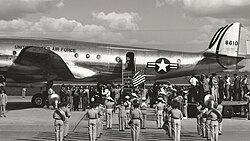
From its origins as a military transport to its role as a symbol of executive power, the story of Columbine II is a journey of service, near-oblivion, and a modern-day quest for preservation.
The Birth of a Presidential Icon
The aircraft was originally built as a C-121A, a military variant of the Lockheed Constellation, at Burbank, California. After serving with the Lockheed Air Service International maintenance facility in Iceland, the aircraft was selected by President-elect Dwight D. Eisenhower. In early 1953, it was converted to the VC-121A-LO standard to serve as his personal transport.
Eisenhower chose the name Columbine II as a tribute to a Constellation he had flown as a U.S. Army General, which was named after the state flower of Colorado. This new aircraft featured enhanced amenities to suit the needs of the presidency, serving Eisenhower from 1954 until 1959, when it was eventually replaced by a Boeing 707.
The Origin of the "Air Force One" Call Sign
Perhaps the most enduring legacy of Columbine II is the establishment of the Air Force One call sign. In 1953, a dangerous moment of confusion occurred when a commercial flight, "Eastern Air Lines 8610," crossed paths with "Air Force 8610," which was carrying the President. To prevent such near-misses in the future, it was decided that any Air Force aircraft carrying the sitting President would use the specific call sign "Air Force One."
From Military Service to Private Ownership
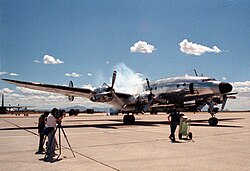
Following its presidential tenure, Columbine II continued its service with the United States Air Force. By the late 1960s, the aircraft was retired to Davis–Monthan Air Force Base for long-term storage. Unlike many other historical aircraft that remain in government hands, Columbine II holds the distinction of being the only presidential aircraft ever sold to a private party.
The aircraft was eventually purchased by Mel Christler, a businessman from Wyoming. In 1989, the plane was made airworthy again, allowing it to fly to Abilene, Kansas, for Eisenhower's 100th birthday celebration, as well as to an air show at Andrews Air Force Base, Maryland. By 2003, the aircraft had been moved to Marana Regional Airport, Arizona.
The Race to Save a Legend
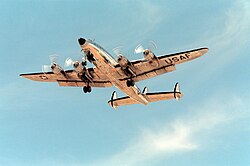
The aircraft's survival was nearly cut short when the owner considered selling it for scrap. However, during a research project, the Smithsonian Institution identified the aircraft's true identity as a former presidential plane. This discovery sparked a movement to save the aircraft for history.
In March 2016, Columbine II was purchased by Karl D. Stoltzfus Sr., the founder of Dynamic Aviation, for an undisclosed amount believed to be less than $1.5 million. The aircraft was ferried from the Arizona desert to Bridgewater, Virginia, to begin a massive restoration project.
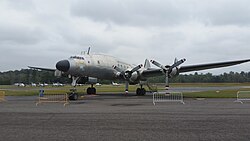
Despite the passing of Karl Stoltzfus in November 2020, Dynamic Aviation has remained committed to the First Air Force One project. The goal is to complete a multi-year restoration that will eventually allow the aircraft to tour the United States, sharing its unique history with the public.
Key Facts
- Aircraft Type: Lockheed VC-121A-LO Constellation (Model 749-79-36)
- Presidential Service: Served Dwight D. Eisenhower from 1954 to 1959
- Historical Milestone: The first aircraft to use the "Air Force One" call sign
- Unique Status: The only presidential aircraft ever sold to a private party
- Current Status: Undergoing restoration by Dynamic Aviation in Virginia
Summary of Columbine II Specifications
| Feature | Details |
|---|---|
| Manufacturer | Lockheed Aircraft Corporation |
| Serial Number | 48-0610 |
| Registration | N9463 |
| Primary User | President Dwight D. Eisenhower |
| Restoration Site | Bridgewater Air Park, Virginia |
Frequently Asked Questions
Why was the aircraft named Columbine II?
President Eisenhower named the aircraft Columbine II because he had previously flown on a Lockheed Constellation named Columbine while serving as a U.S. Army General.
How did the "Air Force One" call sign come to exist?
The call sign was established following a 1953 incident where a commercial flight (Eastern Air Lines 8610) nearly confused air traffic controllers with the presidential flight (Air Force 8610). The new designation ensured clear communication.
Is Columbine II still flying?
As of the most recent restoration updates, the aircraft is undergoing a long-term restoration process by Dynamic Aviation to return it to a condition suitable for touring the United States.
Who owns Columbine II today?
The aircraft is owned and managed by Dynamic Aviation as part of the First Air Force One project.
What makes this aircraft unique among presidential planes?
Columbine II is unique because it is the only aircraft that served as a presidential transport and was subsequently sold to a private individual rather than being retained by the government.