Aerospace Engineering: The Science and History of Flight and Space Exploration
From the first controlled glides of the early 20th century to the sophisticated spacecraft orbiting distant planets, the evolution of flight has been driven by aerospace engineering. This complex field is the primary discipline concerned with the development of aircraft and spacecraft, bridging the gap between our atmosphere and the vastness of outer space.
Because flight vehicles must endure extreme changes in atmospheric pressure, temperature, and structural loads, the field requires a massive integration of diverse technologies. This includes aerodynamics, propulsion, materials science, and structural analysis. Due to this immense complexity, aerospace engineering is rarely a solo endeavor; it is carried out by specialized teams of experts working in concert to ensure safety and performance.
Key Facts
- Aerospace engineering is divided into two main branches: aeronautical (atmospheric flight) and astronautical (spaceflight).
- Avionics engineering focuses specifically on the electronic systems used in aerospace vehicles.
- The term "rocket science" is a common colloquialism for astronautics, though technically, these professionals are engineers rather than scientists.
- A Bachelor's degree is the standard educational requirement for entering the profession.
- The field relies heavily on theoretical physics and computational fluid dynamics to simulate flight behavior.
The Two Pillars of Aerospace
While the term "aerospace" treats the Earth's atmosphere and outer space as a single realm, the discipline is traditionally split into two overlapping branches:
Aeronautical Engineering
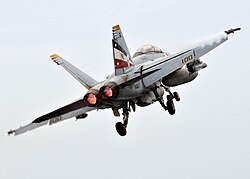
Originally the primary term for the field, aeronautical engineering focuses on vehicles that operate within the Earth's atmosphere. This includes everything from commercial airliners to military fighter jets.
Astronautical Engineering
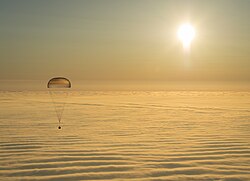
As technology advanced to include vehicles operating in outer space, astronautical engineering emerged. This branch deals with the mechanics of spaceflight, orbital maneuvers, and the unique challenges of life beyond our atmosphere.
A Brief History of Flight and Space
The foundations of aeronautics were laid by pioneers like Sir George Cayley, who was the first to separate the forces of lift and drag. This scientific approach moved the field away from purely empirical methods toward true engineering.
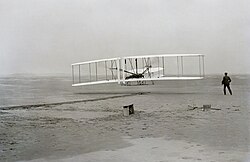
The modern era of flight truly began in December 1903, when the Wright Brothers achieved the first sustained, controlled flight of a powered, heavier-than-air aircraft. This milestone paved the way for the rapid military advancements seen during World War I and World War II, including the development of the first operational jet engine-powered aircraft, the Messerschmitt Me 262, in 1944.
The mid-20th century saw the birth of modern space exploration. Following the launch of Sputnik by the USSR in 1957, the United States established NASA in 1958. This era culminated in the historic Apollo 11 mission in 1969, which saw Neil Armstrong and Buzz Aldrin become the first humans to walk on the Moon.
Core Elements of the Discipline
To build a functional aerospace vehicle, engineers must master several specialized sub-disciplines:
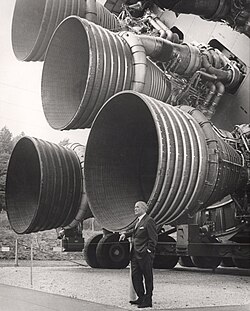
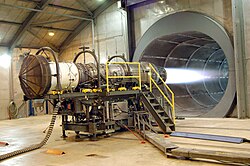
- Propulsion: Providing the energy to move a vehicle via jet engines, rockets, or electric propulsion.
- Avionics: The design and programming of onboard computer systems and electronics.
- Materials Science: Developing lightweight, high-strength materials capable of withstanding extreme environments.
- Astrodynamics: The study of orbital mechanics and predicting the movement of objects in space.
- Control Engineering: Using mathematical modeling to ensure a vehicle's behavior remains stable and predictable.
- Aeroacoustics: The study of noise generation caused by aerodynamic forces.
Summary of Aerospace Milestones
| Year | Milestone/Vehicle | Significance |
|---|---|---|
| 1903 | Wright Flyer | First sustained, controlled powered flight. |
| 1958 | NASA Founded | U.S. agency established for space and aeronautics research. |
| 1969 | Apollo 11 | First human landing on the Moon. |
| 1970 | Boeing 747 | First commercial flight of the "Jumbo Jet." |
| 1976 | Concorde | Introduction of passenger supersonic travel. |
| 1988 | Antonov An-225 | World's heaviest cargo aircraft. |
Frequently Asked Questions
What is the difference between aeronautical and astronautical engineering?
Aeronautical engineering focuses on vehicles that fly within the Earth's atmosphere, while astronautical engineering focuses on vehicles that operate in outer space.
Is "rocket science" the same as aerospace engineering?
While "rocket science" is a common term for astronautics, it is technically a misnomer. Aerospace professionals are engineers who apply scientific principles to solve problems, whereas science is the study of the nature of the universe.
What education is required to become an aerospace engineer?
Most professionals in this field require at least a Bachelor's degree in aerospace engineering or a related field such as mechanical engineering.
What is avionics?
Avionics is a specialized branch of aerospace engineering that deals with the electronic systems used on aircraft and spacecraft, including navigation, communications, and flight control systems.
Why is materials science so important in this field?
Aerospace vehicles must be extremely lightweight to fly efficiently, yet strong enough to withstand intense pressure, temperature changes, and structural loads. Materials science provides the specialized substances needed to meet these conflicting requirements.