Gliders: From Ancient Flight Attempts to Modern Aviation Mastery
A glider is a fixed-wing aircraft that achieves flight through the dynamic reaction of air against its lifting surfaces, rather than relying on an engine for propulsion. While most gliders are unpowered, some motor-gliders utilize small engines to sustain altitude or assist in self-launching. By exploiting meteorological phenomena like rising air, these aircraft can maintain or even gain height, turning the sky into a playground for sport and a laboratory for science.
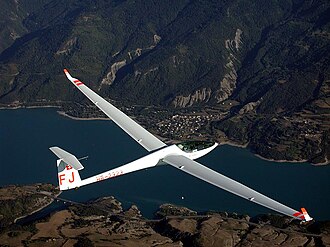
From the simple balsa wood models used as toys to sophisticated sailplanes capable of cross-country journeys spanning thousands of kilometers, gliders represent a diverse spectrum of aerodynamic engineering. They serve various purposes, including recreational air sports, military transport, and cutting-edge aerospace research.
Key Facts
- Core Principle: Gliders rely on lifting surfaces and air movement rather than onboard engines for flight.
- Primary Uses: Recreational sports (gliding, hang gliding, paragliding), military transport, and spacecraft recovery.
- Sailplanes: Specialized gliders designed with high lift-to-drag ratios for long-distance soaring.
- Paragliders: Foot-launched aircraft using a ram-air design, where air pressure inflates the wing cells.
- Military History: Used extensively in WWII to deliver troops and heavy equipment to combat zones.
The Evolution of Unpowered Flight
The history of gliding is marked by both legendary accounts and scientific breakthroughs. Early, unverified reports describe figures like the 9th-century poet Abbas Ibn Firnas and the monk Eilmer of Malmesbury attempting flight with feathery wings. While these early attempts often ended in injury, they highlighted a fundamental realization: the need for a tail for stability.
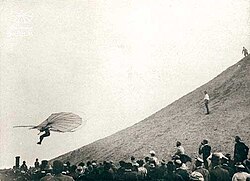
The 19th century brought scientific rigor to flight. Sir George Cayley developed gliders based on published scientific principles, paving the way for pioneers like Otto Lilienthal. Lilienthal was a crucial figure, becoming the first to make repeated successful flights and utilizing rising air to prolong his time aloft. Later, the Wright Brothers utilized glider testing as a foundational step toward their successful powered flight.
Modern Recreational Disciplines
Today, the most common application of gliding is for sport and recreation. This field is divided into several distinct categories based on wing structure and pilot control.
Sailplanes
Sailplanes are high-performance gliders designed for soaring. They feature a high lift-to-drag ratio, allowing pilots to travel vast distances by catching thermals (rising columns of warm air). Modern sailplanes can achieve incredible glide ratios, with some reaching as high as 60:1.
Hang Gliders
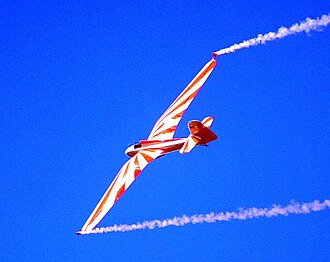
Hang gliding evolved significantly following the 1951 patent of the flexible Rogallo wing. Unlike sailplanes, hang gliders often involve the pilot lying in a harness. They range from simple foot-launched models to sophisticated Class 2 gliders with rigid structures and movable aerodynamic surfaces like spoilers.
Paragliders
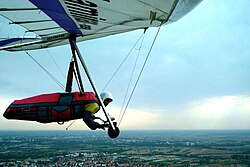
Paragliding is perhaps the most accessible form of unpowered flight. A paraglider is a foot-launched aircraft where the pilot sits in a harness suspended below a fabric wing. The wing's shape is maintained by ram-air pressure—air entering vents in the front of the wing. Because they are lightweight and pack into backpacks, they are highly portable and economical.
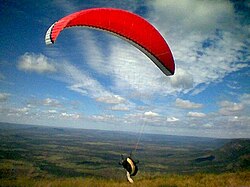
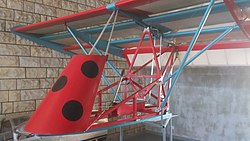
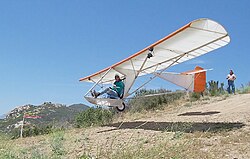
Comparison of Flight Types
| Feature | Paraglider | Hang Glider | Sailplane/Glider |
|---|---|---|---|
| Undercarriage | Pilot's legs | Wheeled or skids | Wheeled undercarriage |
| Pilot Position | Sitting in harness | Prone, seated, or supine | Sitting in a seat |
| Max Speed | Slowest (approx. 60 km/h) | Intermediate | Fastest (up to 280 km/h) |
| Glide Ratio | Approx. 10:1 | Approx. 17:1 to 20:1 | 38:1 to 60:1 |
| Portability | High (packs in backpack) | Moderate (requires rigging) | Low (requires trailer) |
Military and Research Applications
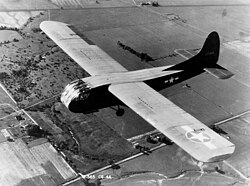
Beyond recreation, gliders have played vital roles in warfare and space exploration. During World War II, military gliders like the American Waco CG-4A were used to transport troops and heavy equipment directly into combat zones. While effective for rapid assembly of troops, they were eventually superseded by larger transport aircraft and parachute technology.
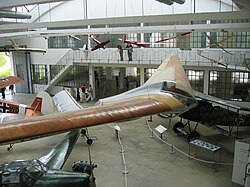
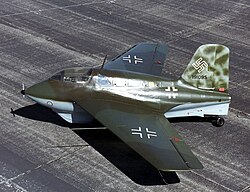
In the realm of research, unpowered flying wings and lifting bodies have been used to study aerodynamics. Lifting bodies use the fuselage itself to generate lift, a concept essential for spacecraft re-entry. This research eventually contributed to the development of the Space Shuttle, which landed entirely as a glider after re-entering the atmosphere at Mach 25.
Frequently Asked Questions
What is the difference between a glider and a sailplane?
While the terms are often used interchangeably, a sailplane is a specific type of high-performance glider designed specifically for soaring long distances using rising air currents.
How do paragliders stay inflated in the air?
Paragliders use a ram-air design. As the wing moves through the air, pressure forces air into cells at the leading edge, which inflates the fabric and creates the necessary aerodynamic shape.
Can gliders fly without an engine?
Yes, most gliders are designed to fly entirely without an engine, relying on the movement of air and meteorological phenomena to maintain altitude.
What are the advantages of military gliders?
During WWII, gliders allowed for the delivery of heavy equipment and the rapid assembly of troops in a combat zone, which was more efficient than the dispersal caused by traditional paratroopers.
What is a glide bomb?
A glide bomb is an unpowered weapon equipped with aerodynamic surfaces. This allows it to follow a gliding flightpath rather than a simple ballistic one, enabling the launching aircraft to remain at a safe distance from the target.