Test Pilot History and Evolution: From Early Aviation to the Space Age
A test pilot is a highly specialized aviator trained to fly and evaluate experimental, newly produced, or modified aircraft. Unlike standard pilots, they utilize specific flight test techniques—a series of controlled maneuvers designed to assess the performance, stability, and handling qualities of an aircraft. This critical role serves as the bridge between aeronautical engineering and safe, operational flight.
![Léon Lemartin, the world's first professional test pilot,[1] by contract to Louis Blériot, August 20, 1910.](/images/6a/2d/6a2d4907b3511791f8f3df4da052a2f4a927995935787a2bc2ae93781ac316ed.jpg)
The Evolution of Flight Testing
The profession of test piloting has transitioned from a high-risk endeavor into a sophisticated scientific discipline. The first professional test pilot by contract was Léon Lemartin, who worked for Louis Blériot on August 20, 1910.
Systematic test flying began to take shape during the First World War at the Royal Aircraft Establishment (RAE) in the United Kingdom, where an "Experimental Flight" was established at the Central Flying School. Throughout the 1920s, the field advanced through the efforts of the RAE and the National Advisory Committee for Aeronautics (NACA) in the United States. In the 1950s, NACA was transformed into NASA (the National Aeronautics and Space Administration).
As researchers gained a deeper understanding of aircraft stability and handling, the role evolved into a qualitative scientific profession. During the 1950s, the risks were extreme, with test pilots losing their lives at a rate of approximately one per week. Today, while piloting experimental aircraft remains more dangerous than standard flying, the fatality rate has been significantly reduced. This safety improvement is due to advancements such as:
- Mature aircraft technology
- Enhanced ground-testing protocols
- Advanced performance simulation
- Fly-by-wire technology (electronic interfaces that replace manual flight controls)
- The use of unmanned aerial vehicles (UAVs) to test experimental features
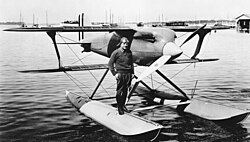
From Test Pilots to Astronauts
The rigorous training and composure required of test pilots made them the ideal candidates for space exploration. At the insistence of President Dwight D. Eisenhower, the Mercury Seven—the first American astronauts—were all military test pilots. This tradition of selecting test pilots for spaceflight continued with many subsequent astronaut classes.
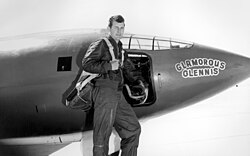
Specializations and Training
Test pilots generally fall into two primary categories:
- Experimental and Engineering Test Pilots: These specialists investigate the fundamental characteristics of new aircraft types during their development phase.
- Production Test Pilots: These pilots focus on confirming the characteristics of aircraft as they emerge from the production line.
Many professionals perform both roles throughout their careers. Training is often obtained through highly selective military academies, civilian institutions, or manufacturer-specific development programs.
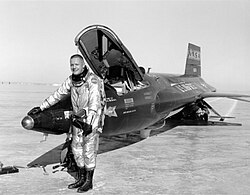
Global Test Pilot Training Institutions
Specialized schools exist worldwide to prepare pilots for the complexities of flight testing. Below is a summary of prominent institutions:
| Institution Name | Location | Type/Affiliation |
|---|---|---|
| Empire Test Pilots' School | RAF Boscombe Down, UK | World's oldest test pilot school |
| US Air Force Test Pilot School | Edwards Air Force Base, USA | Military |
| US Naval Test Pilot School | Patuxent River, Maryland, USA | Military |
| EPNER | Istres, France | French National School |
| Fedotov Test Pilot School | Zhukovsky, Russia | Russian Aviation Industry |
| International Test Pilots School | London, Ontario, Canada | Civilian |
| National Test Pilot School | Mojave, California, USA | Civilian (Not-for-profit) |
Key Facts
- Léon Lemartin was the first professional test pilot under contract (1910).
- The Mercury Seven astronauts were all military test pilots.
- Modern safety is driven by fly-by-wire technology and simulation.
- Test pilots are divided into experimental and production roles.
- The Empire Test Pilots' School is the oldest institution of its kind.
Frequently Asked Questions
What is the difference between an experimental and a production test pilot?
Experimental test pilots focus on investigating the characteristics of entirely new aircraft during the development stage, while production test pilots confirm that aircraft coming off the assembly line meet established specifications.
Why were test pilots chosen to be the first astronauts?
Because of their specialized training in handling unpredictable aircraft and their experience with high-performance maneuvers, test pilots possessed the temperament and skill required for early spaceflight.
How has technology made test piloting safer?
Safety has improved through better ground-testing, advanced flight simulations, the implementation of fly-by-wire systems, and the use of unmanned aerial vehicles for testing experimental features.
Where can one study to become a test pilot?
Training is available through military schools like the US Air Force Test Pilot School, or civilian institutions such as the National Test Pilot School in California and the International Test Pilots School in Canada.
What is a flight test technique?
A flight test technique is a specific, controlled maneuver used by a pilot to evaluate and measure the performance, stability, or handling qualities of an aircraft.