Ram Air Turbines: The Critical Emergency Power Systems of Modern Aviation
In the high-stakes environment of commercial aviation, redundancy is the cornerstone of safety. When an aircraft loses its primary power sources—such as engine-driven generators—pilots rely on a fail-safe mechanism known as the Ram Air Turbine (RAT). A RAT is a small wind turbine that deploys into the airstream during an emergency, utilizing the aircraft's forward velocity to generate essential electrical or hydraulic power.
The Evolution and Application of RATs in Commercial Aircraft
The use of RATs in civilian aviation dates back several decades. One of the early adopters was the Vickers VC10 in the 1960s. Unlike many contemporary aircraft that used centralized hydraulic systems, the VC10 utilized "packaged" hydraulically powered flying controls. Because these individual units were electrically powered, the VC10 required a RAT that drove an electrical generator to provide emergency redundancy, complementing its quadruple generator setup.
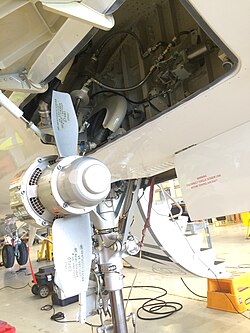
Today, RATs are standard equipment on many modern airliners. They are designed to provide the minimum power necessary to maintain flight control and critical avionics until the aircraft can land safely.
Size and Power Capacity
The scale of a RAT varies significantly depending on the aircraft's size and power requirements. The Airbus A380 currently holds the record for the largest RAT in the world, measuring 1.63 meters (64 inches) in diameter. In contrast, a more common diameter for commercial aircraft is approximately 80 centimeters (31 inches).
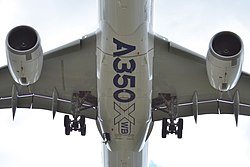
In terms of output, a typical large RAT on a commercial jet can produce between 5 and 70 kW, depending on the specific generator used. Smaller models designed for low airspeed environments may generate as little as 400 watts.
Specialized Use in Agricultural Aviation
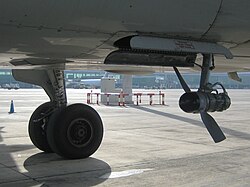
Beyond emergency power for airliners, RATs serve a practical purpose in crop dusting. In these aircraft, RATs power centrifugal pumps that pressurize spray systems used to deliver liquid agents to cropland.
The decision to use a RAT in this context is primarily driven by safety and regulatory compliance. In the United States, using a RAT allows the FAA-certified engine and power systems to remain unmodified, as there is no need for an engine power takeoff to drive the pump. Furthermore, placing the pump low or below the exterior of the airframe simplifies plumbing and allows for a gravity feed from the spray tanks, eliminating the need for priming.
This configuration also ensures that if a pump fails or seizes, the aircraft's flying ability and primary systems remain unaffected; only the spray system becomes non-functional.
Key Facts
- Purpose: Provides emergency electrical or hydraulic power when primary engines/generators fail.
- Largest Example: The Airbus A380 features the world's largest RAT at 1.63 meters in diameter.
- Power Range: Output varies from 400 watts in small models to 70 kW in large commercial units.
- Agricultural Use: Used in crop dusters to power spray pumps without modifying the main engine.
- Safety Benefit: Decouples emergency or auxiliary systems from primary flight systems to prevent total failure.
Summary of RAT Specifications
| Aircraft/Application Type | Typical Diameter | Power Output Range | Primary Function |
|---|---|---|---|
| Airbus A380 | 1.63 meters | Up to 70 kW | Emergency Power |
| Standard Commercial Jet | ~80 centimeters | 5 to 70 kW | Emergency Power |
| Low Airspeed Models | Small | ~400 watts | Emergency Power |
| Crop Dusters | Variable | Pump-specific | Spray System Pressurization |
Civilian Incidents Involving RAT Deployment
The deployment of a RAT is a clear indicator of a serious technical failure. Over the decades, several notable incidents have seen these systems save aircraft and crews. These include the famous "Gimli Glider" (Air Canada Flight 143) in 1983 and the "Azores Glider" (Air Transat Flight 236) in 2001.
Other recorded deployments include:
- British Airways Flight 910 (1974)
- Ethiopian Airlines Flight 961 (1996)
- Hapag-Lloyd Flight 3378 (2000)
- Pinnacle Airlines Flight 3701 (2004)
- US Airways Flight 1549 (2009)
- Air Canada Flight 361 (2016)
- SmartLynx Estonia Flight 9001 (2018)
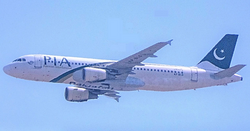
- Pakistan International Airlines Flight 8303 (2020)
- LATAM Paraguay Flight 1325 (2022)
- Virgin Atlantic Flight 105 (2024)
- Air India Flight 171 (2025)
- LATAM Flight 603 (2025)
Frequently Asked Questions
What exactly is a Ram Air Turbine?
A Ram Air Turbine is a small wind turbine that is deployed from the fuselage or wing of an aircraft during a power failure. It uses the rushing air (ram air) to spin a generator or hydraulic pump, providing emergency power to critical systems.
Why did the Vickers VC10 use an electrical RAT instead of a hydraulic one?
The VC10 used "packaged" hydraulic flying controls that were individually powered electrically. Therefore, to provide redundancy for these specific systems, the aircraft required an electrical generator rather than a hydraulic pump.
How much power can a RAT actually produce?
Depending on the size and generator, a large commercial RAT can produce between 5 and 70 kW, while smaller, low-airspeed versions may produce as little as 400 watts.
How are RATs used in crop dusting?
In agricultural aircraft, RATs are used to power centrifugal pumps for spray systems. This allows the pump to be placed at the lowest point of the plumbing for gravity feed and ensures that a pump failure does not affect the aircraft's flight systems.
What is the largest RAT in existence?
The largest RAT is found on the Airbus A380, with a diameter of 1.63 meters (64 inches).