Introgressive Hybridization in Plants: Natural and Artificial Genetic Flow
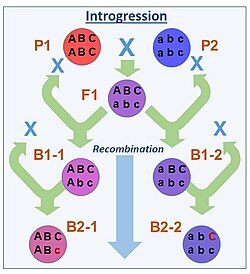
Introgressive hybridization, commonly referred to as introgression, is the movement of genetic material between divergent lineages. This process occurs through repeated backcrossing, which happens when a hybrid offspring breeds back with one or both of its original parental species. Unlike a simple one-time hybrid cross, introgression allows specific genes to integrate into the genome of a different species over multiple generations.
While early researchers believed that hybridization in nature was rare due to the production of sterile or unfit offspring, modern phylogenetic testing has revealed that the ability to produce fertile hybrids varies significantly across the plant kingdom.
Key Facts
- Introgression is the flow of genetic material via repeated backcrossing between divergent lineages.
- Hybridization of the Habitat occurs when environmental disturbances encourage species that typically do not cross to hybridize.
- Artificial introgression is used by breeders to introduce traits like drought tolerance and pest resistance into crops.
- Introgression can be asymmetrical, where one species contributes more genetic material than the other.
- Genomic sequencing has identified complex outcomes, including trispecies hybrids in certain poplar populations.
Sources of Genetic Variation
The rate of hybridization varies by genus, but external factors often accelerate the process. The concept of Hybridization of the Habitat suggests that when a natural habitat is disturbed, species that would normally remain separate may begin to hybridize and backcross with relative ease.
Beyond natural occurrences, plant breeders intentionally manipulate hybridization to optimize desired traits such as appearance and hardiness. This artificial introgression has been vital for the development of major crop species, including corn, wheat, barley, rye, and certain types of rice. By forcing introgression, scientists can hone in on specific characteristics, such as pest resistance or drought tolerance, that are found in wild relatives.
Examples of Natural Introgression
Irises
Studies of Iris fulva, Iris hexagona, and Iris brevicaulis show that these species can form crosses where their habitats overlap, despite having distinct phenotypic differences in size, color, and pattern. The resulting offspring exhibit a wide array of flower sizes and color combinations. Notably, Iris fulva demonstrates asymmetrical introgression, transferring more genetic material into the hybrids than the other two species.
Sunflowers
In the common sunflower (Helianthus annuus ssp. texanus), researchers observed differential introgression between the nuclear genome and chloroplasts. Morphological differences in certain populations suggested hybridization with H. debilis ssp. cucumennfolius. Analysis revealed that H. a. texanus contained chloroplast DNA from H. d. cucumennfolius, proving a unidirectional flow of genetic material.
Poplars
Hybridization is frequent among poplars in overlapping populations, though the extent varies by species. In the Rocky Mountain range of the U.S. and Canada, extensive introgression was found among P. balsamifera, P. angustifolia, and P. trichocarpa, with genomic sequencing revealing the existence of trispecies hybrids. Additionally, a hybrid zone in Utah showed a unidirectional flow of introgression from P. angustifolia to P. fremontii.
Examples of Artificial Introgression
Wheat Improvement
The development of commercial wheat has relied heavily on crossing domesticated species with wild relatives. For example, the wild species Agropyron elongatum has been introgressed into domesticated wheat (Triticum aestivum). This process resulted in hybrids with increased root and shoot biomass and superior adaptation to water stress, significantly improving overall crop fitness.
Daffodil Breeding
Daffodils (genus Narcissus) can produce fertile or semi-fertile offspring even from wide crosses. While natural introgression occurs, breeders use artificial introgression to cross species that are geographically separated. This allows for the creation of unique varieties, such as crosses between Poets’ Narcissi and yellow trumpet Narcissi, providing the vast diversity found in modern gardens.
Summary of Introgression Examples
| Species/Genus | Type | Key Outcome/Trait | Directionality |
|---|---|---|---|
| Irises | Natural | Diverse colors and flower sizes | Asymmetrical (I. fulva dominant) |
| Sunflowers | Natural | Chloroplast DNA transfer | Unidirectional |
| Poplars | Natural | Trispecies hybrids | Variable/Unidirectional |
| Wheat | Artificial | Drought adaptation, higher biomass | Wild to Domesticated |
| Daffodils | Artificial | Ornamental variety | Cross-geographic |
Frequently Asked Questions
What is the difference between hybridization and introgression?
Hybridization is the initial crossing of two different lineages to produce a hybrid. Introgression is the subsequent movement of genes from one species into the gene pool of another through repeated backcrossing of those hybrids with the parental species.
What is "Hybridization of the Habitat"?
This phenomenon occurs when disturbances in a natural environment break down barriers between species, leading those that typically do not hybridize to begin crossing and backcrossing.
How is artificial introgression used in agriculture?
Breeders cross domesticated crops with wild relatives to introduce beneficial traits, such as pest resistance or drought tolerance, which are then stabilized in the crop population through backcrossing.
Can introgression happen between more than two species?
Yes. Genomic sequencing in poplar trees (Populus) has demonstrated the existence of trispecies hybrids in areas where multiple species converge.
Is introgression always equal between the two parent species?
No. Introgression can be asymmetrical, meaning one species contributes more genetic material to the offspring than the other, as seen in certain Iris species.