Plant Breeding: The Science of Enhancing Crop Traits and Food Security
Plant breeding is the scientific process of altering plant traits to produce desired characteristics. By focusing on the genetic makeup of plants, breeders work to improve the quality of products used by both humans and animals. The ultimate goal is to develop crop varieties that possess superior traits for specific applications, ranging from increased nutritional value to better resistance against environmental challenges.
Modern agriculture relies heavily on these advancements. Breeders target a wide array of traits, including biotic stress tolerance (resistance to living organisms like pests and diseases) and abiotic stress tolerance (resilience to non-living factors like drought or salinity). They also focus on increasing grain or biomass yield, enhancing end-use quality—such as taste and concentrations of proteins, sugars, or vitamins—and improving ease of processing for tasks like milling, baking, or malting.
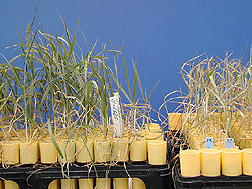
Key Facts
- Plant breeding aims to improve crop yield, nutritional value, and resistance to pests and environmental stress.
- A 2023 study estimated that without plant breeding, Europe would have produced 20% fewer arable crops over the last 20 years.
- Breeding can reduce environmental impact; lack of breeding could lead to using an additional 21.6 million hectares of land and emitting 4 billion tonnes of carbon.
- Techniques range from traditional selective breeding to advanced molecular biology and genomic selection.
- Plant breeding is a critical tool for global food security, helping crops adapt to changing climates and regional environments.
The Evolution of Breeding Techniques
Plant breeding has evolved from simple selection to highly sophisticated molecular methods. At its core, the process involves managing genes—the biological instructions that determine a plant's qualitative and quantitative traits. As breeders select for specific outcomes, they often narrow the genetic diversity of a variety to focus on specific, high-performing biotypes.
Classical Breeding and Early History
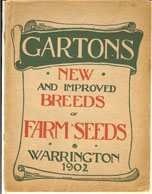
Historically, breeding relied on selecting the most desirable plants for propagation. In the late 19th century, pioneers like John Garton began commercializing new varieties through controlled cross-pollination. One of the earliest successes was the Abundance Oat, introduced in 1892.
The early 20th century saw a revolution when breeders applied Gregor Mendel's findings on inheritance to predict the frequencies of different traits in seedling populations. This era also saw the discovery of heterosis (hybrid vigor) by George Harrison Shull, which describes the tendency of offspring to outperform both parents. This principle was famously applied to maize to produce high-yielding hybrids.
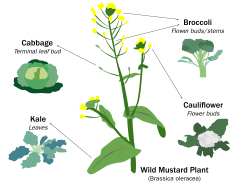
Modern and Molecular Approaches
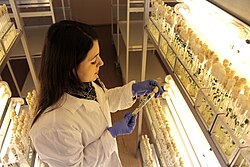
Today, the field incorporates complex technologies to accelerate progress. These include:
- Marker-assisted selection (MAS): Using genetic markers to identify desirable traits early in the breeding process.
- Genomic selection (GS): Using genome-wide information to predict the performance of plants.
- Speed breeding: A method introduced by Watson et al. (2018) to accelerate plant generation cycles.
- Genetic modification: Directly altering the genetic material to achieve specific outcomes.
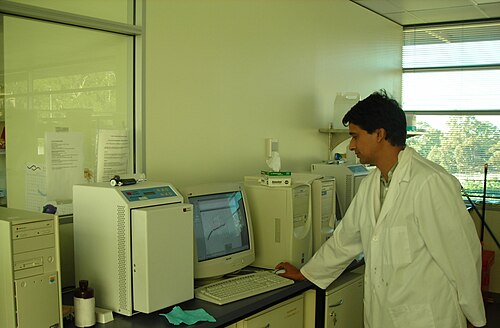
Impact on Global Food Security and Environment
Plant breeding is a vital component of global food security. By developing varieties that are higher yielding, disease-resistant, and drought-tolerant, breeders ensure stable food supplies in diverse environments. For example, wheat species originally bred for Morocco are now being used to create new varieties for northern France, and soybeans have expanded their cultivation from southern France into southern Germany.
The environmental benefits are equally significant. Efficient breeding helps optimize water and nutrient use (such as nitrogen and phosphorus) and improves weed competitiveness. This reduces the need for excessive chemical inputs and land expansion.
Nutritional and Livestock Improvements
Breeding also enhances the nutritional density of crops. Since 1960, improvements in forage nutritional value—specifically in vitro dry matter digestibility (IVDMD)—have had a direct impact on livestock. Even a 1% increase in IVDMD can lead to a 3.2% increase in daily weight gains for beef cattle (Bos Taurus), demonstrating the profound link between plant science and animal agriculture.

Summary of Breeding Objectives
| Category | Specific Traits Targeted |
|---|---|
| Yield & Growth | Increased grain/biomass yield, early maturity, weed competitiveness. |
| Stress Tolerance | Resistance to salinity, drought, extreme temperatures, and pests/diseases. |
| Quality | Improved flavor, nutrition (vitamins, proteins), and longer storage life. |
| Resource Efficiency | Improved water use and nutrient (nitrogen/phosphorus) use efficiency. |
Frequently Asked Questions
What is the difference between biotic and abiotic stress?
Biotic stress refers to pressures caused by living organisms, such as viruses, fungi, bacteria, and insect pests. Abiotic stress refers to non-living environmental factors, such as drought, salinity, and extreme temperatures.
How does plant breeding help the environment?
Plant breeding creates crops that are more efficient with water and nutrients, reducing the need for intensive chemical use. It also increases yields on existing farmland, which helps prevent the need to clear new land for agriculture, thereby reducing carbon emissions.
What is heterosis in plant breeding?
Also known as hybrid vigor, heterosis is the phenomenon where the offspring (progeny) of a specific cross perform better than both of their parent plants in terms of traits like yield or growth.
Why is plant breeding important for food security?
It allows for the creation of crops that can grow in harsh environments, resist widespread diseases, and produce more food per acre, ensuring a stable food supply for a growing global population.
What is speed breeding?
Speed breeding is a modern technique designed to accelerate the time it takes to produce new plant varieties by manipulating environmental conditions to speed up the plant's natural growth cycles.