Wheat: The Essential Cereal Grain Shaping Human Civilization
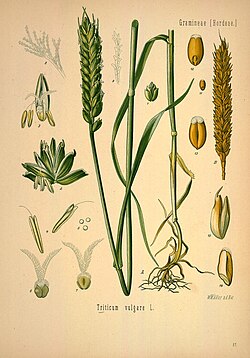
Wheat is one of the most significant crops in human history, serving as a foundational food source for populations across the globe. Belonging to the family Poaceae and the genus Triticum, this versatile cereal grain has evolved from wild grasses into a highly sophisticated agricultural staple. From its complex genetic structures to its diverse nutritional profile, wheat plays a central role in global food security and economy.
Key Facts
![Wheat prices in England, 1264–1996[114]](/images/bb/95/bb956c0c432100c1c92f4bd965ca9c7d0e60972a99e541b12d2ffc16bd62c51d.webp)
- Scientific Name: Genus Triticum.
- Primary Species: Includes bread wheat (T. aestivum), durum (T. durum), and einkorn (T. monococcum).
- Nutritional Powerhouse: High in carbohydrates, protein (approx. 12.6g per 100g), and essential minerals like manganese and zinc.
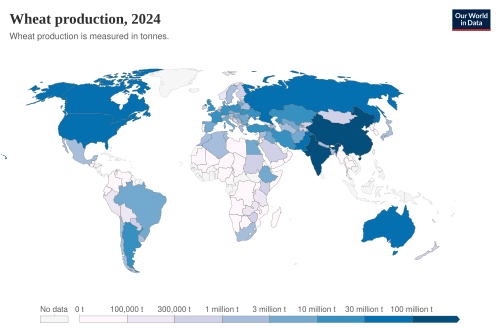
- Global Production: Leading producers include China, India, and Russia.
- Genetic Complexity: Wheat species vary by ploidy, ranging from diploid (2N) to hexaploid (6N).
The Biological Diversity of Wheat
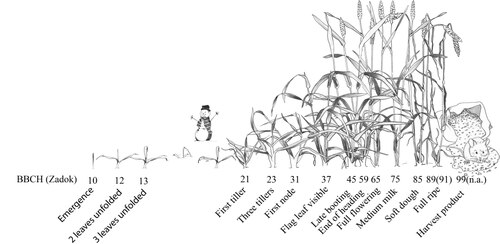
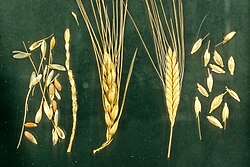
Wheat is not a single uniform plant but a collection of species with varying genetic makeup. Scientists categorize these species by their ploidy levels—the number of sets of chromosomes present in a cell. This genetic variation determines the characteristics of the grain, such as its texture, gluten content, and suitability for different types of food.
Classification by Ploidy
Understanding the different types of wheat requires looking at their chromosomal structure:
- Diploid (2N): The simplest form, such as Einkorn (T. monococcum).
- Tetraploid (4N): Includes Durum (T. durum), Emmer (T. turgidum), and Khorasan/Kamut (T. turgidum subsp. turanicum).
- Hexaploid (6N): The most common forms used in modern baking, including Common/Bread wheat (T. aestivum) and Spelt (T. spelta).
![A 2007 view of wheat origins by repeated hybridisation and polyploidy.[60] Not all species are shown.](/images/b4/60/b460d6425b7d51312ea9b0719802772fdbc8bbb0b71836997a2db6154bdae6e7.webp)
Nutritional Profile and Food Uses
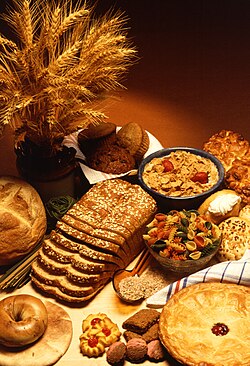
Wheat is a primary source of energy for much of the world's population. It is highly valued for its carbohydrate content and its ability to be processed into a wide range of products, from fine flours to whole-grain cereals.
A typical 100g serving of wheat provides approximately 327 kcal of energy. It is particularly rich in dietary fiber (12.2g) and protein (12.61g). Furthermore, it offers significant amounts of essential micronutrients, including manganese (173% DV), zinc (24% DV), and iron (18% DV).
Nutritional Summary Table
| Nutrient | Amount | Daily Value (%DV) |
|---|---|---|
| Energy | 327 kcal | - |
| Carbohydrates | 71.18 g | - |
| Protein | 12.61 g | - |
| Dietary Fibre | 12.2 g | - |
| Manganese | - | 173% |
| Zinc | - | 24% |
| Iron | - | 18% |
Global Production and Agronomy
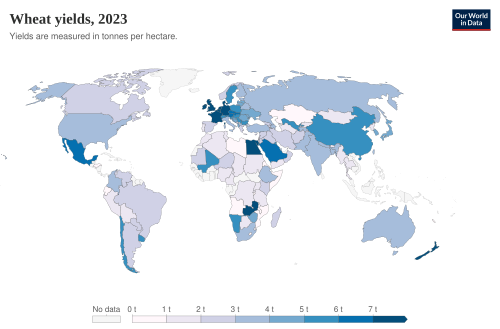
Wheat cultivation is a massive global industry. Production varies significantly by region, with China and India leading the world in total output. Modern agronomy focuses on optimizing yields—the amount of grain produced per unit of land—through advanced breeding and farming techniques.
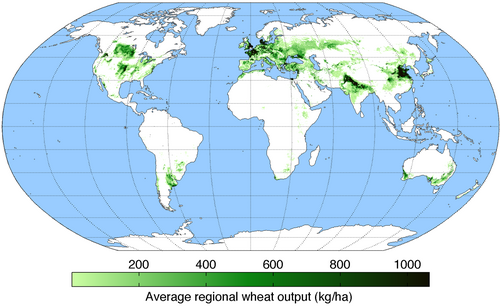
For spring wheat, environmental conditions are critical. The crop grows best at temperatures between 21 and 24°C. While it can tolerate a range from 4°C to 35°C, extreme temperatures can be detrimental; germination below 4°C or maturation above 35°C can significantly reduce the overall crop yield.
![Wheat yields in Europe[163] – Breeding has increased yields over time](/images/69/44/69448687e940ebb2970c3f022840025d4ef6e8976f45c8d2394142ddd2d8473f.webp)
Challenges in Wheat Farming
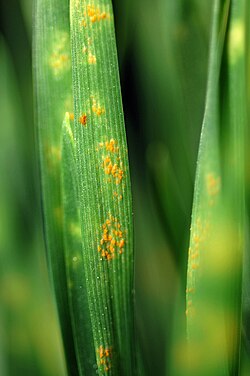
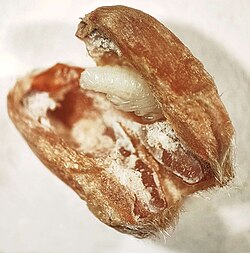
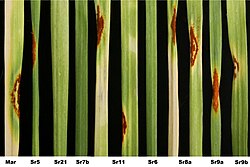
Farmers face constant challenges from biological threats. Diseases, such as stem rust (caused by the fungus Puccinia graminis f. sp. tritici), can devastate entire fields. Additionally, animal pests like the wheat weevil (Sitophilus granarius) can damage stored kernels.
History and Art
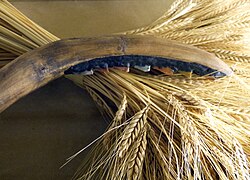
The history of wheat is intertwined with the history of human settlement. From the Neolithic period, where stone microblades were used for harvesting, to the complex global trade networks of today, wheat has been a constant companion to human progress.
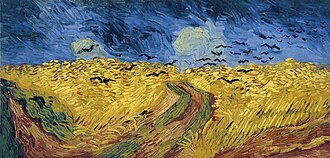
Wheat has even captured the imagination of artists. The golden fields of wheat have been a recurring subject in fine art, most notably in the works of Vincent van Gogh.
Frequently Asked Questions
What are the main types of wheat?
The most common types are bread wheat (T. aestivum), used for most baked goods, and durum wheat (T. durum), which is often used for pasta. Other varieties include spelt, emmer, and einkorn.
Why is gluten important in wheat?
Gluten is a group of proteins found in wheat that provides elasticity and structure to dough, which is essential for the texture of bread and other baked products.
What affects wheat crop yields?
Yields are influenced by temperature, water availability, soil quality, and the presence of pests or diseases like stem rust. Modern breeding aims to improve yields and disease resistance.
Which countries produce the most wheat?
According to FAOSTAT data, China and India are among the largest producers of wheat globally, followed by Russia and the United States.
Can wheat be grown in different climates?
Yes, though specific varieties are better suited to certain conditions. For example, spring wheat thrives in specific temperature ranges, and different species have evolved to handle various environmental stresses.