Demetrius II Nicator: The Turbulent Reign of a Seleucid King
The history of the Seleucid Empire—the vast Greek-led state established after the death of Alexander the Great—is often a chronicle of dynastic strife and external pressure. Few figures embody this instability more than Demetrius II Nicator (meaning "the Victor"). His life was a dramatic cycle of ascension, exile, and a desperate attempt to reclaim a fading empire.
Born around 160 BC to Demetrius I Soter and likely Laodice V, Demetrius II's early life was marked by tragedy. When he was a young boy, his father, mother, and older brother were killed during a power struggle with the usurper Alexander Balas. Demetrius was forced to flee to Crete, where he lived under the care of guardians until he was old enough to challenge for the throne.
Key Facts
- Full Name: Demetrius II Nicator ("the Victor").
- Reign Periods: September 145 – July/August 138 BC and 129 – 125 BC.
- Dynasty: Seleucid.
- Key Rivals: Alexander Balas, Diodotus Tryphon, and Alexander II Zabinas.
- Major Captivity: Held prisoner in Hyrcania by the Parthians for nearly a decade.
- Death: Killed in 125 BC near Tyre after being betrayed by his wife, Cleopatra Thea.
The First Reign: Victory and Volatility (145–138 BC)
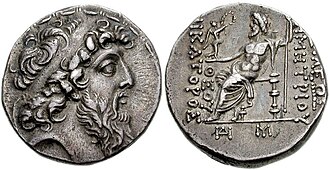
Demetrius II returned to Syria in 147 BC with a force of Cretan mercenaries. His path to power was smoothed by Ptolemy VI Philometor of Egypt, who initially supported Alexander Balas but switched sides to Demetrius. To cement this alliance, Ptolemy VI arranged for his daughter, Cleopatra Thea, to divorce Balas and marry Demetrius.
The conflict culminated at the Battle of the Oenoparus river, where the combined forces of Ptolemy VI and Demetrius II defeated Alexander Balas. While Balas fled to Arabia and was killed, Ptolemy VI also died shortly after the battle. Now free from his "tutor," Demetrius II expelled the Egyptian troops and asserted full control over Syria.
Internal Strife and the Rise of Tryphon
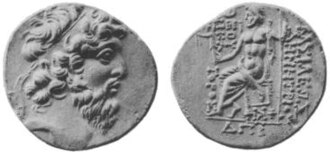
Demetrius's early success was short-lived. Financial instability led him to debase the coinage and cut soldiers' wages. Furthermore, he brutally punished the citizens of Antioch for their previous support of Balas, leading to violent riots. The city was only brought back under control by Jewish troops, who burned large sections of the capital, deepening the locals' hatred for the king.
This instability allowed a general named Diodotus to rebel. Diodotus proclaimed the infant son of Alexander Balas as King Antiochus VI Dionysus. After the child's death, Diodotus took the throne himself as Tryphon. The empire was split, with Demetrius ruling from Seleucia Pieria and Tryphon controlling Antioch.
Parthian Conquest and Captivity
While the Seleucids fought internally, the Parthian Empire under Mithridates I seized the opportunity to expand. By 141 BC, the Parthians had captured Mesopotamia. Demetrius II marched east to reclaim these lands but was defeated in the Iranian mountains and taken prisoner in 138 BC.
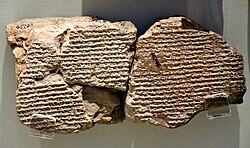
Demetrius spent several years in captivity in Hyrcania. During this time, the Parthians treated him with a strange mix of kindness and humiliation. He was married to the Parthian princess Rhodogune, yet when he attempted to escape twice, King Mithridates mocked him by gifting him a golden set of dice, treating the former king like a restless child.
In 130 BC, the Parthian King Phraates II released Demetrius in a calculated move to spark a civil war between him and his brother, Antiochus VII Sidetes. The plan failed; Demetrius returned to Syria and reclaimed his throne.
The Second Reign and Final Downfall (129–125 BC)
Demetrius's second reign was a struggle for survival. He returned to a kingdom that was a shadow of its former self and a wife, Cleopatra Thea, who detested him. Despite the decline, Demetrius attempted a bold gamble around 128 BC: an invasion of Egypt to support Queen Cleopatra II against her brother, Ptolemy VIII.
The expedition was a disaster. His troops mutinied in the desert, and Ptolemy VIII responded by backing a rival claimant, Alexander II Zabinas. Demetrius spent his final years fighting a losing war against Zabinas, eventually losing the capital of Antioch.
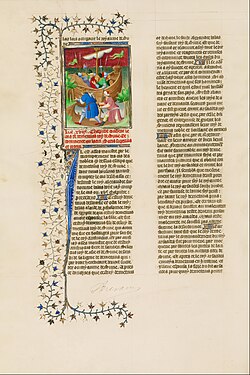
In 126 BC, following a defeat at Damascus, Demetrius fled to Ptolemais. In a final act of betrayal, Cleopatra Thea closed the city gates against him. He was captured and killed on a ship near Tyre in 125 BC.
Summary of Demetrius II's Life
| Category | Details |
|---|---|
| Reign Periods | 145–138 BC and 129–125 BC |
| Key Alliances | Ptolemaic Egypt (initially), Simon Thassi (Hasmoneans) |
| Major Defeats | Parthian mountains (138 BC), Damascus (126 BC) |
| Spouses | Cleopatra Thea, Rhodogune of Parthia |
| Successor | Alexander II Zabinas |
Frequently Asked Questions
Why was Demetrius II called "Nicator"?
Nicator is the Greek word for "Victor," a title adopted to project strength and legitimacy after his victory over the usurper Alexander Balas.
How did the Parthians treat Demetrius during his captivity?
The Parthians treated him with political kindness, even arranging a marriage to Princess Rhodogune, but they also humiliated him with toys (golden dice) after his failed escape attempts.
What was the significance of his relationship with the Hasmoneans?
Demetrius II granted extensive freedoms to Simon Thassi, the leader of the Jews. These grants are viewed by historians as a pivotal moment toward the full independence of the Hasmonean Jewish state.
Why did Cleopatra Thea betray him at the end of his life?
Ancient sources suggest she detested him, likely due to his unpopularity, his failures as a leader, and the general decline of the empire during his tenure.
What happened to the Seleucid Empire after his death?
He was succeeded by the usurper Alexander II Zabinas, while Cleopatra Thea continued to rule in Ptolemais alongside their sons, Seleucus V and Antiochus VIII.