Alexander II Zabinas: The Disputed King of the Seleucid Empire
The history of the Seleucid Empire is often a tangled web of dynastic feuds, usurpers, and foreign interference. Among the most enigmatic figures of this era is Alexander II Zabinas, who reigned as the King of Syria from 128 to 123 BC. A man of disputed origins, Alexander II rose to power not through a clear line of succession, but through the strategic calculations of the Ptolemaic dynasty in Egypt.
His reign represents a critical flashpoint in the struggle between the descendants of Seleucus IV and Antiochus IV, two branches of the royal house that plunged the empire into decades of civil war. While he successfully seized the capital of Antioch and defeated his primary rival, his legitimacy remained a subject of intense debate among ancient historians and modern scholars alike.
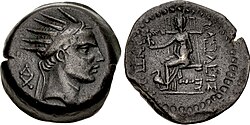
Key Facts
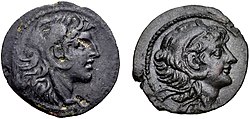
- Reign: 128–123 BC.
- Dynasty: Seleucid (claimed descent from Antiochus IV).
- Patron: Ptolemy VIII of Egypt.
- Primary Rival: Demetrius II.
- Surname: "Zabinas," a Semitic name meaning "the bought one" or "bought from the god."
- Fate: Defeated by Antiochus VIII; died by execution or suicide in 123 BC.
The Mystery of Parentage and Legitimacy
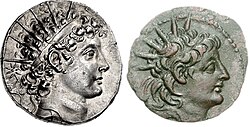
The identity of Alexander II is one of the great puzzles of Hellenistic numismatics. Ancient sources offer conflicting accounts: some suggest he was the son of Alexander I, while others claim he was the adopted son of Antiochus VII. However, the prevailing academic consensus is that his claims to the Seleucid throne were likely fraudulent.
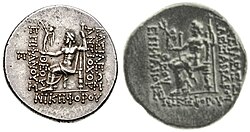
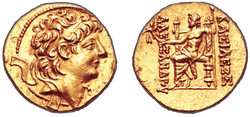
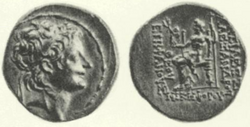
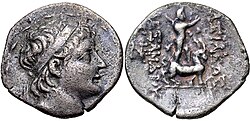
His surname, Zabinas, provides a clue to his origins. In Semitic languages, the name is typically translated as "the bought one," implying he may have been a mercenary or a commoner elevated to royalty. Conversely, some argue it could mean "bought from the god," which would support a claim of divine or royal legitimacy. To solidify his image, Alexander II used his coinage to emphasize a connection to Antiochus IV, the father of Alexander I, attempting to visually link himself to a respected royal lineage.
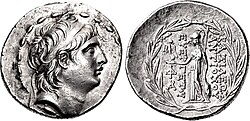
The Rise to Power
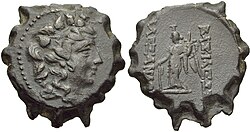
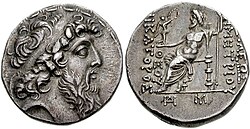
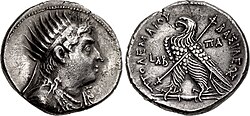
Alexander II's ascent was a direct result of the geopolitical rivalry between Syria and Egypt. In 128 BC, King Demetrius II of Syria invaded Egypt to support his mother-in-law, Cleopatra II, in a civil war against her brother and husband, King Ptolemy VIII. This invasion provoked Ptolemy VIII, who responded by inciting revolts within Syria against Demetrius II.
Ptolemy VIII chose Alexander II as an "anti-king" to challenge Demetrius II. Backed by Egyptian troops, Alexander II captured the Syrian capital of Antioch in the spring of 128 BC. The Syrian populace, weary of Demetrius II's rule, was reportedly eager to accept any alternative leader.
Expanding the Domain
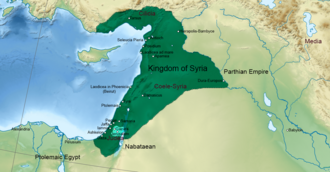
After securing Antioch, Alexander II quickly expanded his control to include Tarsus and Laodicea ad mare. While some cities like Apamea had already declared independence from Demetrius II, they did not immediately submit to Alexander II's authority. His early reign was characterized by a desperate need to consolidate power while maintaining the support of his Egyptian patrons.
The War Against Demetrius II
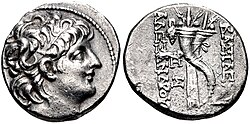
The conflict between the two kings devastated the region, particularly Judea, as both armies marched through the territory. This instability led the Jewish leadership to send an embassy to Rome between 127 and 125 BC, requesting that the Roman Senate prohibit royal soldiers from marching through Jewish lands.
Alexander II's military fortunes peaked in 125 BC. After capturing Ashkelon and Samaria, he decisively defeated Demetrius II near Damascus. The defeated king fled to Ptolemais, but was expelled by his own wife, Cleopatra Thea. Demetrius II was eventually killed by the commander of Tyre while seeking asylum.
Relations with Judea
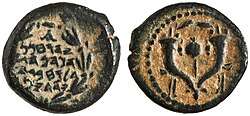
Evidence suggests that Alexander II may have reached a diplomatic agreement with the Jewish leader John Hyrcanus I. This treaty likely established a territorial boundary at Gazara, allowing Hyrcanus I to control lands to the south while Alexander II maintained authority over the north, including Samaria.
The Peak of Power and the Fall
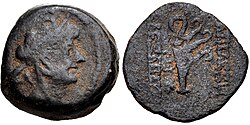
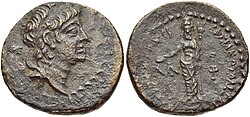
Following the death of Demetrius II, Alexander II reached the height of his influence, commanding a force of 40,000 soldiers. He brought Seleucia Pieria and Cilicia under his control and minted coins in several major cities, including Beirut, Damascus, and Tarsus.
However, his victory was short-lived. In Ptolemais, Cleopatra Thea refused to recognize him. After the assassination of her son Seleucus V, she appointed her younger son, Antiochus VIII, as co-ruler. Supported by Egyptian forces, Antiochus VIII launched a campaign that systematically stripped Alexander II of his territories.
The End of the Line
The final collapse occurred in the first half of 123 BC. After losing Ashkelon, Alexander II was defeated in a final battle. Accounts of his death vary: Josephus records that he was killed in battle, while Eusebius claims he committed suicide by poison to avoid the shame of defeat. With his death, the line of Antiochus IV—whether real or claimed—became extinct.
Summary of Alexander II's Reign
| Category | Details |
|---|---|
| Period of Rule | 128–123 BC |
| Key Ally | Ptolemy VIII (Egypt) |
| Major Victory | Defeat of Demetrius II near Damascus (125 BC) |
| Major Cities Controlled | Antioch, Seleucia Pieria, Tarsus, Beirut, Damascus |
| Cause of Downfall | War with Antiochus VIII |
Frequently Asked Questions
Who was Alexander II Zabinas?
Alexander II Zabinas was a Seleucid monarch who ruled Syria from 128 to 123 BC. He is widely considered a pretender to the throne, placed in power by the Ptolemaic King of Egypt to destabilize the Syrian empire.
What does the name "Zabinas" mean?
The name is Semitic and is most commonly translated as "the bought one," which suggests he may not have been of royal birth. Some interpretations suggest it could mean "bought from the god."
How did Alexander II come to power?
He was supported by Ptolemy VIII of Egypt, who wanted to undermine King Demetrius II. With Egyptian military aid, Alexander II captured the capital city of Antioch in 128 BC.
What happened to Demetrius II?
After being defeated by Alexander II near Damascus in 125 BC, Demetrius II fled to Ptolemais and then to Tyre, where he was killed by the city's commander.
How did Alexander II's reign end?
He was defeated by Antiochus VIII in 123 BC. Depending on the historical source, he was either killed in battle or committed suicide by taking poison.