Antiochus VII Sidetes: The Last Great Seleucid King
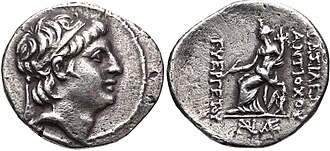
In the twilight of the Hellenistic age, the Seleucid Empire struggled to maintain its vast territories against internal strife and external aggression. Amidst this decline rose Antiochus VII Sidetes (c. 164/160 BC – 129 BC), a ruler who briefly restored the prestige and power of his dynasty. Known also as Antiochus Euergetes ("the Benefactor") and Antiochus the Pious, he was the final Seleucid monarch to wield significant authority before the empire collapsed into a small Syrian rump state.
Key Facts
- Reign: July/August 138 to 129 BC.
- Titles: Sidetes (from the city of Side) and Euergetes (the Benefactor).
- Major Achievements: Defeated the usurper Diodotus Tryphon and temporarily reclaimed Mesopotamia, Babylonia, and Media.
- Death: Killed in 129 BC at the Battle of Ecbatana.
- Legacy: His death marked the end of the Seleucid Empire as a major geopolitical power.
Early Life and Ascent to Power
Antiochus VII was the son of Demetrius I Soter and possibly Laodice V. He ascended to the throne in 138 BC following the capture of his older brother, Demetrius II Nicator, by the Parthians. To solidify his position, Antiochus married Cleopatra Thea, the former wife of his brother. Together, they had a son, Antiochus IX Cyzicenus.
Upon taking power, Antiochus VII sought to reverse the territorial losses that had plagued the empire for decades. His early military campaigns were focused on stabilizing the western regions and eliminating internal rivals.
The Siege of Jerusalem and the Title of Euergetes
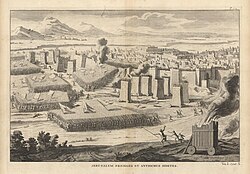
One of the most notable episodes of his early reign occurred in 134 BC, when Antiochus defeated the usurper Diodotus Tryphon at Dora and subsequently laid siege to Jerusalem. During the conflict, Antiochus demonstrated a rare level of religious tolerance by granting a seven-day truce to allow the Jewish people to celebrate a religious festival.
This gesture of respect deeply impressed the Jewish leadership. According to the historian Josephus, the Hasmonean leader John Hyrcanus paid Antiochus three thousand talents—sourced from King David's sepulchre—to spare the city. Because of his respectful treatment of their faith, the Jews bestowed upon him the name Euergetes, meaning "the Benefactor." This diplomatic success ensured that Jewish forces would later assist him in his eastern campaigns.
The Eastern Campaign and the Parthian Conflict
Antiochus VII spent the final years of his life attempting to reclaim the eastern territories that had been seized by Mithridates I, the "Great King" of the Parthians. Leading the last great royal army of the Seleucids—which included a contingent of Judean troops under John Hyrcanus—Antiochus marched east and achieved two significant victories over Mithridates.
These triumphs allowed him to restore Mesopotamia, Babylonia, and Media to the Seleucid Empire. However, the victory was short-lived. While the army spent the winter in quarters, the Macedonian tradition of heavy drinking and feasting led to rising tensions between the Syrian troops and the local populations.
The Battle of Ecbatana and Death
While the Seleucids were distracted, the new Parthian ruler, Phraates II, raised a fresh army and incited rebellions in the occupied towns of Media. To further destabilize the empire, Phraates released Demetrius II, Antiochus's older brother, who returned to Syria to challenge his brother's claim to the throne.
In the winter of 130–129 BC, several Median towns revolted. Antiochus marched to support an isolated garrison with only a small force, likely consisting of his Royal Guards. In a barren valley, he was ambushed and killed by Phraates II and a large Parthian force in the Battle of Ecbatana. While Greco-Roman historians record that he died in combat, Parthian sources and the historian Appian claimed he committed suicide out of fear.
Succession and Aftermath
The confirmed heir to the throne was Antiochus IX Cyzicenus. However, historical fragments from Posidonius mention a king named Seleucus who was captured in Media by King Arsaces. Some scholars, including Felix Jacoby and Ian G. Kidd, suggest this Seleucus may have been a son of Antiochus VII captured during the chaos following his father's death.
Following the death of Antiochus VII, the Seleucid realm was permanently restricted to Syria, ending its era as a dominant empire.
| Category | Details |
|---|---|
| Full Name | Antiochus VII Euergetes (Sidetes) |
| Reign Period | 138 – 129 BC |
| Key Adversaries | Diodotus Tryphon, Mithridates I, Phraates II |
| Territories Recovered | Mesopotamia, Babylonia, Media |
| Cause of Death | Killed in action (or suicide) at the Battle of Ecbatana |
Frequently Asked Questions
Why was Antiochus VII called "Sidetes"?
The nickname Sidetes is derived from Side, a city located in Asia Minor.
How did Antiochus VII earn the title "Euergetes"?
He earned the title, meaning "the Benefactor," due to his respectful treatment of the Jewish people and their religion during the siege of Jerusalem in 134 BC.
What was the significance of the Battle of Ecbatana?
The Battle of Ecbatana resulted in the death of Antiochus VII and the loss of the eastern territories, effectively ending the Seleucid Empire's status as a major power and restricting its territory to Syria.
Who succeeded Antiochus VII?
His confirmed heir was Antiochus IX Cyzicenus, though there is historical debate regarding a possible son named Seleucus who may have been captured by the Parthians.
What role did John Hyrcanus play in Antiochus VII's reign?
John Hyrcanus was the Hasmonean leader who paid a large sum to spare Jerusalem and later provided Judean troops to support Antiochus VII in his campaigns against the Parthians.