Alexander I Balas: The Usurper King of the Seleucid Empire
The history of the Seleucid Empire is often a chronicle of dynastic struggle, but few figures are as enigmatic as Alexander I Balas. Ruling from 150 BC to 145 BC, Balas rose from obscurity to seize the throne of Syria, claiming a royal lineage that many ancient historians believed was a fabrication. His brief but turbulent reign was marked by strategic alliances, the steady erosion of eastern territories, and a brutal civil war that ultimately led to his downfall.
Key Facts
- Reign: 150 BC – August 145 BC.
- Claim to Fame: Seized the Seleucid throne by claiming to be the son of Antiochus IV Epiphanes.
- Major Alliances: Supported by the Kingdom of Pergamon and later the Ptolemaic Kingdom of Egypt.
- Territorial Loss: Lost critical eastern satrapies, including Media, to the Parthian Empire.
- Death: Killed in 145 BC after being defeated at the Battle of the Oenoparus River.
The Mysterious Origins of a Pretender
Alexander Balas emerged on the political stage with a bold claim: he asserted he was the son of King Antiochus IV Epiphanes and Laodice IV. However, ancient historians such as Polybius and Diodorus argued that this was a lie, claiming Alexander and his sister, Laodice VI, were actually commoners from Smyrna (modern-day İzmir, Turkey).
Modern scholars remain divided. Some believe the story of his humble origins was merely propaganda spread by his enemies. Others point to the involvement of Attalus II of Pergamum, who may have promoted Alexander as a puppet candidate to destabilize the reigning King Demetrius I Soter, who had interfered in Cappadocia.
By 153 BC, Alexander was brought to Rome by Heracleides, a former minister. The Roman Senate recognized him as the legitimate Seleucid king, providing him with the political legitimacy needed to launch a bid for power.
The War for the Throne (152–150 BC)
With the backing of mercenaries and Roman recognition, Alexander invaded Phoenicia in 152 BC, capturing Ptolemais Akko. He quickly expanded his control to include Tyre, Beirut, Byblos, and Seleucia Pieria. To solidify his image, Alexander used numismatics (the study of coins) as a propaganda tool. He minted coins depicting Zeus Nicephorus, mirroring the style of Antiochus IV, and adopted the title Theopator ("Divinely Fathered").
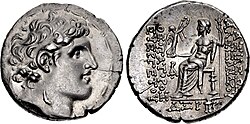
His coinage also portrayed him in the likeness of Alexander the Great, featuring long flowing hair and strong features to project military strength. He further secured his position by winning over Jonathan Apphus, the leader of the Judaean faction, by granting him the high priesthood in Jerusalem. This alliance provided the military edge needed to defeat and kill Demetrius I in July 150 BC.
A Fragile Reign and the Ptolemaic Alliance
Upon taking the throne in Antioch, Alexander's administration began with a purge of Demetrius I's courtiers. To secure his borders, he entered an alliance with Ptolemy VI Philometor of Egypt, sealing the deal by marrying the princess Cleopatra Thea.
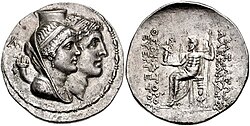
This marriage was highly publicized through special coinage showing the royal couple together. Interestingly, Cleopatra Thea is depicted with divine attributes, such as a cornucopia (horn of plenty) and a calathus (ritual basket), and is placed in front of the king. This has led some historians to suggest that Alexander was merely a puppet of the Ptolemaic dynasty.
The Collapse of the Eastern Frontier
While Alexander focused on the politics of the west, the Seleucid Empire's eastern satrapies (provincial governorates) collapsed. The Parthian Empire, under Mithridates I, seized the opportunity to invade Media by 148 BC. Soon after, the regions of Hyrcania, Persis, and Elymais fell or asserted independence.
By 147 BC, the Parthians had reached Babylonia, threatening the capital of Seleucia-on-Tigris. Ancient sources claim Alexander was too distracted by a life of luxury and debauchery to intervene, leaving the defense of the east to incompetent commanders. Regardless of the cause, the empire's reach in Asia was permanently diminished during his tenure.
The Return of Demetrius II and the Fall of Balas
The stability of Alexander's reign ended in 147 BC when Demetrius II Nicator, the son of the king Alexander had overthrown, returned with Cretan mercenaries. Civil war erupted once more, and Alexander found himself fighting on two fronts: against Demetrius II and a revolt in Cilicia.
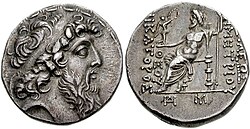
Ptolemy VI of Egypt initially intervened to support Alexander, but the alliance shattered when Ptolemy discovered a plot by Alexander's chancellor, Ammonius, to assassinate him. In a swift political reversal, Ptolemy switched sides, remarried his daughter Cleopatra Thea to Demetrius II, and marched against Alexander.
Alexander was decisively defeated at the Battle of the Oenoparus River. While attempting to flee to Arabia to seek refuge with the dynast Zabdiel Diocles, Alexander was killed. His severed head was delivered to Ptolemy VI, who himself died shortly after from battle wounds.
| Category | Details |
|---|---|
| Claimed Parentage | Antiochus IV Epiphanes and Laodice IV |
| Key Allies | Attalus II of Pergamon, Ptolemy VI of Egypt, Jonathan Apphus |
| Major Losses | Media, Hyrcania, and other eastern satrapies to Parthians |
| Final Defeat | Battle of the Oenoparus River (145 BC) |
| Successor | Demetrius II Nicator |
Frequently Asked Questions
Was Alexander I Balas actually a member of the Seleucid dynasty?
It is highly debated. While he claimed to be the son of Antiochus IV Epiphanes, ancient historians like Polybius and Diodorus asserted he was a commoner from Smyrna. Modern scholars are split on whether these claims were true or merely political propaganda.
How did Alexander Balas use coins to maintain power?
He used coins to create a visual link to the legitimate dynasty, depicting Zeus Nicephorus as Antiochus IV had done, and portraying himself in the style of Alexander the Great to project military strength and divine right.
Why did the Parthian Empire expand so rapidly during his reign?
The Seleucid Empire was crippled by internal civil wars and political instability. Alexander Balas failed to mount military expeditions to the east, allowing Mithridates I of Parthia to seize Media and other key territories with little resistance.
What led to the betrayal by Ptolemy VI?
Ptolemy VI switched sides after discovering that Alexander's chancellor, Ammonius, was plotting to assassinate him. When Alexander refused to punish Ammonius, Ptolemy allied with Demetrius II instead.
What happened to Alexander's son, Antiochus?
His infant son, Antiochus, was sent to the Arabian dynast Zabdiel Diocles for safety. Later, in 145 BC, the general Diodotus declared the boy king to serve as a figurehead for a rebellion against Demetrius II.