de Havilland Ghost: The Turbojet That Powered Early Commercial Aviation
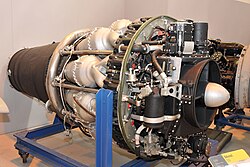
The de Havilland Ghost stands as a landmark in aviation history, not only as a powerful piece of engineering but as the world's first gas turbine engine to enter airline service with BOAC. Originally designated as the Halford H-2, this turbojet—a type of jet engine that uses a gas turbine to produce thrust—was the second production design from the de Havilland Engine Company.
Developed as a scaled-up version of the earlier de Havilland Goblin, the Ghost provided the necessary power for a new generation of aircraft, ranging from the pioneering de Havilland Comet airliner to the agile Saab 29 Tunnan fighter. Its versatility and reliability helped transition aviation from the piston-engine era into the jet age.
Key Facts
- First in Class: The first gas turbine engine to be used in commercial airline service.
- Design Origin: Developed by Frank Halford as a larger version of the Goblin engine.
- World Record: Powered a modified Vampire Mk I to an altitude record of 59,446 ft on March 23, 1948.
- Global Production: Built under license in Sweden (as the RM 2), Italy (by Fiat), and Switzerland (by Sulzer Brothers).
- Peak Performance: The Ghost 105 variant achieved a maximum take-off thrust of 5,300 lbf.
Design and Development
The development of the Ghost began in 1943, coinciding with the early work on the de Havilland Comet. To meet the Comet's power requirements, designer Frank Halford scaled up his H-1 (Goblin) design. The resulting H-2 featured ten larger combustion chambers, replacing the sixteen smaller ones found in the Goblin. To optimize airflow, Halford implemented bifurcated "split intakes," which effectively created twenty inlets via the diffuser ducts.
While the prototype was under construction, de Havilland acquired Halford's firm and established the de Havilland Engine Company, officially renaming the H-1 and H-2 as the Goblin and Ghost, respectively. The engine began running in 1944 and took its first flight in 1945, predating the aircraft it was designed to power.
International Adoption and the Saab 29 Tunnan
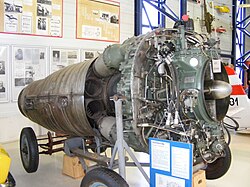
The Ghost's capabilities attracted international interest, leading to its selection for the Swedish "JxR" fighter project. This project evolved into the Saab 29 Tunnan, which incorporated swept-wing designs based on German data received via Switzerland. For the production of the Tunnan, the engine was manufactured under license by Svenska Flygmotor (later Volvo Aero) as the RM 2.
Major Aircraft Applications
The Ghost powered several iconic aircraft, each pushing the boundaries of speed and altitude:
- de Havilland Comet: The Comet I first flew on July 27, 1949, using the Ghost 50 interim powerplant (5,000 lbf) before the Rolls-Royce Avon became available for the Comet 2.
- de Havilland Venom: Developed to provide the Royal Air Force with a larger engine and greater load-carrying capacity than the Vampire, the Venom first flew with the Ghost on September 2, 1949.
- de Havilland Sea Venom: A naval interceptor variant of the Venom used by the Fleet Air Arm.
- Saab 29 Tunnan: A Swedish fighter that utilized the license-built RM 2 version of the engine.
Technical Specifications and Variants
The Ghost evolved through numerous iterations to increase thrust and efficiency. The Ghost 105 represented a high point in its development, featuring a single-stage centrifugal flow compressor and a single-stage axial flow turbine.
| Variant | Thrust (lbf) | Thrust (kN) | Notes |
|---|---|---|---|
| Ghost 45 | 4,400 | 20 | Standard variant |
| Ghost 48 Mk.1 (103) | 4,850 | 21.6 | Used in Venom |
| Ghost 50 Mk.1 | 5,000 | 22 | Used in Comet I |
| Ghost 105 | 5,150 - 5,300 | 22.9 - 24 | High-performance variant |
| RM 2B | 6,200 (wet) | 27.58 | Swedish version with afterburner |
Ghost 105 General Characteristics
- Length: 129 in (3,300 mm)
- Diameter: 52.7 in (1,340 mm)
- Dry Weight: 2,135 lb (968 kg)
- Overall Pressure Ratio: 4.6
- Turbine Inlet Temperature: 1,400 °F (760 °C)
- Thrust-to-Weight Ratio: 2.5
Frequently Asked Questions
What was the de Havilland Ghost's primary claim to fame?
The de Havilland Ghost was the first gas turbine engine in the world to be used in a commercial airline service, powering the BOAC fleet.
How did the Ghost differ from the de Havilland Goblin?
The Ghost was a scaled-up version of the Goblin. It replaced the Goblin's sixteen small combustion chambers with ten larger ones and utilized a bifurcated split-intake system to increase airflow.
Which countries produced the Ghost under license?
The engine was produced under license in Sweden by Svenska Flygmotor (Volvo Aero), in Italy by Fiat, and in Switzerland by Sulzer Brothers.
What was the RM 2B variant?
The RM 2B was a Swedish license-built version of the Ghost that featured an afterburner, increasing its "wet" thrust to 6,200 lbf (27.58 kN).
What world record was achieved using the Ghost engine?
On March 23, 1948, pilot John Cunningham reached a world altitude record of 59,446 ft (18,119 m) flying a modified Vampire Mk I powered by a Ghost engine.