Charles II: The Merry Monarch and the Restoration of the British Throne
Charles II remains one of the most complex figures in British history. Known as the "Merry Monarch," his life was a dramatic arc that spanned the depths of exile and the heights of royal restoration. As a member of the House of Stuart, he navigated a volatile political landscape, transitioning from a prince in a war-torn land to a king who sought to balance the powers of the crown and Parliament.
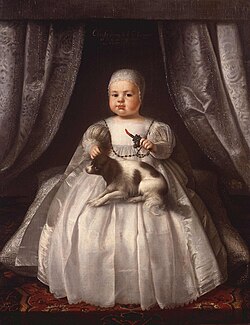
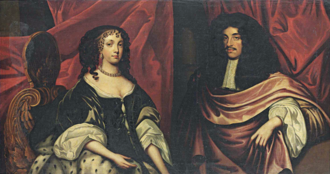
Born on May 29, 1630, at St James's Palace, Charles was the eldest surviving child of King Charles I and Henrietta Maria of France. His early years were overshadowed by the First English Civil War, a conflict that would eventually lead to the execution of his father and the temporary abolition of the monarchy.
Key Facts
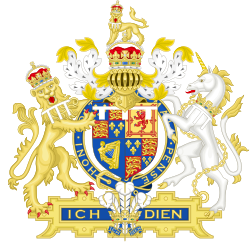
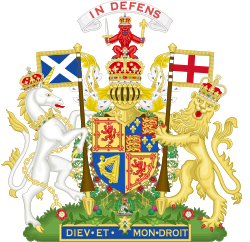
- Reign: King of Scotland (1649–1651); King of England, Scotland, and Ireland (1660–1685).
- Restoration: Returned to the throne on May 29, 1660, ending the English Interregnum.
- Spouse: Catherine of Braganza, married in 1662.
- Major Events: Survived the Great Plague (1665) and the Great Fire of London (1666).
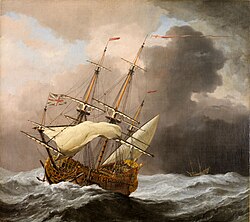
- Naval Legacy: Took a direct, personal interest in the management and deployment of the Royal Navy.
Early Life, Civil War, and Exile
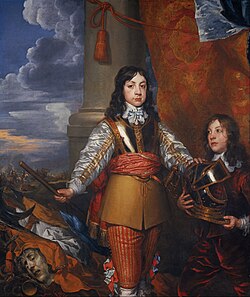
The outbreak of the First English Civil War in 1642 thrust the young Prince Charles into military affairs. Alongside his brother James, he witnessed the Battle of Edgehill and operated from the Royalist capital in Oxford. By 1645, Charles was appointed the titular head of Royalist forces in the West Country, but Parliamentarian victories soon forced him to flee.
Following his father's execution on January 30, 1649, the Parliament of Scotland proclaimed Charles II king. However, England entered the English Interregnum—a period where the monarchy was replaced by a republican government. This era was dominated by Oliver Cromwell, who eventually defeated Charles II at the Battle of Worcester on September 3, 1651.
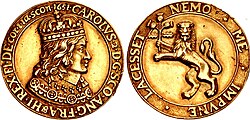
Defeat sent Charles into a grueling nine-year exile across mainland Europe, including stays in France, the Spanish Netherlands, and the Dutch Republic. During this time, he lived under the protection of his cousin, Louis XIV of France, while Cromwell ruled as Lord Protector.
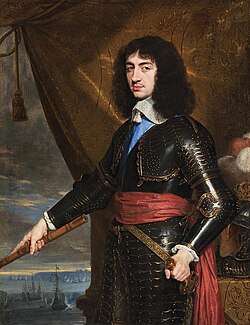
The Restoration of 1660
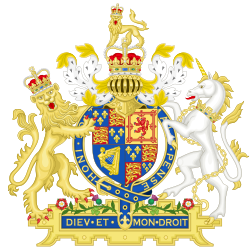
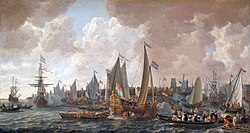
The political stability of the Commonwealth crumbled after Cromwell's death in 1658. In 1660, a political crisis paved the way for the return of the monarchy. Charles was invited back to Britain, arriving in London to public acclaim on May 29, 1660—his 30th birthday.
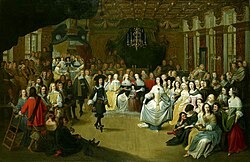
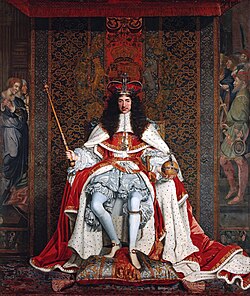
His return marked the beginning of the Restoration, a period of cultural rebirth and political realignment. He was formally crowned at Westminster Abbey on April 23, 1661, signaling the official return of the Stuart dynasty to the English throne.
Challenges of the Reign
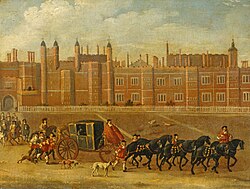
Despite the initial joy of his return, Charles II's reign was marked by significant crises. In 1665, the Great Plague of London struck, killing up to 7,000 people per week at its peak. The King and his court fled to Salisbury to escape the contagion, returning only in February 1666.
Financially, the crown struggled. In an unpopular move, Charles sold the strategic port of Dunkirk to Louis XIV for approximately £375,000 to alleviate the Treasury's burden, as the outpost cost £321,000 annually to maintain.
Naval Ambitions and Scientific Interest
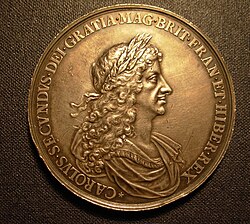
Charles II possessed a profound interest in naval affairs and science. Unlike many monarchs, he was a frequent participant in Admiralty Board meetings. Records from Samuel Pepys indicate that between 1673 and 1679, the management of the navy was performed under the king's immediate direction, with the Duke of York providing advice.
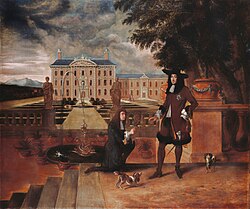
His curiosity extended to the natural world, as evidenced by his interest in botany and the first successful growth of a pineapple in England.
Conflict with Parliament and Later Years
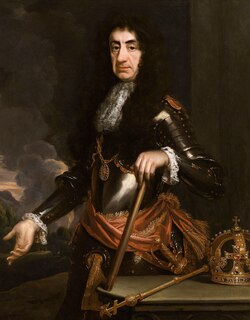
The latter part of Charles's reign was defined by tension over religion and succession. The Exclusion Bill, an attempt by Parliament to prevent the Catholic James, Duke of York, from inheriting the throne, led to a series of political clashes. Charles dissolved Parliament multiple times between 1679 and 1681 to prevent the bill's passage.
By the 1680s, popular support for the Exclusion Bill waned, and Charles experienced a surge of loyalty. He spent the remainder of his reign ruling without a Parliament, asserting more absolute control over the state.
Death and Legacy
Charles II died on February 6, 1685, at Whitehall Palace at the age of 54. He was buried in Westminster Abbey on February 14, 1685. He was succeeded by his brother, James II & VII.
While he left no legitimate heirs with his wife, Catherine of Braganza, he fathered numerous illegitimate children with various mistresses, many of whom were granted dukedoms and titles.
![Louise de Kérouaille with unknown attendant, painted in France by Pierre Mignard, 1682[170]](/images/72/78/7278c71b65500090041eb64f42a54a7e2e3af4d055bdceaa4ce4fb04aa14a7b0.jpg)
| Category | Details |
|---|---|
| Full Name | Charles II |
| House | Stuart |
| Reign (England/Ireland) | May 29, 1660 – February 6, 1685 |
| Reign (Scotland) | January 30, 1649 – September 3, 1651 |
| Spouse | Catherine of Braganza (m. 1662) |
| Predecessor | Charles I (de jure); Council of State (de facto) |
| Successor | James II & VII |
Frequently Asked Questions
Why was Charles II called the "Merry Monarch"?
He earned this nickname due to his perceived wit, his love of pleasure, and the general atmosphere of celebration and cultural revival that accompanied the Restoration of the monarchy in 1660.
What was the English Interregnum?
The English Interregnum was the period between 1649 and 1660 when England was a republic (the Commonwealth) rather than a monarchy, eventually led by Oliver Cromwell as Lord Protector.
How did Charles II influence the Royal Navy?
Charles II took a direct role in naval administration, frequently attending Admiralty Board meetings and personally making decisions regarding the deployment of warships and the appointment of commissioned officers.
What was the Exclusion Bill?
The Exclusion Bill was a proposed piece of legislation intended to bar Charles II's brother, James, from succeeding to the throne because of James's Catholic faith.
Did Charles II have any legitimate children?
No, Charles II had no legitimate children with his wife, Catherine of Braganza, although he fathered many illegitimate children with various partners.