Mildmay Fane, 2nd Earl of Westmorland
Mildmay Fane, the 2nd Earl of Westmorland, was a multifaceted figure of the 17th century. A nobleman, politician, and prolific writer, Fane navigated the turbulent waters of Stuart England, serving under three different monarchs and contributing significantly to the literary landscape of his time. Known as a Knight of the Bath (KB), his life spanned the transition from the Jacobean era through the English Civil War to the Restoration.
Born on January 24, 1602, in Mereworth, Kent, Fane was the son of Francis Fane, the 1st Earl of Westmorland, and Mary Mildmay. He received his education at Emmanuel College, Cambridge, matriculating in 1618, which provided the intellectual foundation for his later literary pursuits.
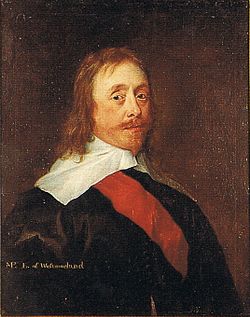
Key Facts
- Full Name: Mildmay Fane, 2nd Earl of Westmorland.
- Political Roles: Member of Parliament for Peterborough (1621–1624) and Kent (1625).
- Literary Milestone: Published Otia Sacra in 1648, the first time an English peer published his own verse.
- Political Allegiance: Supported the Royalist party during the English Civil War.
- Administrative Role: Served as Lord Lieutenant of Northamptonshire from 1660 to 1666.
- Total Literary Output: Over 900 poems in English and Latin, and eight plays or entertainments.
Political Career and Public Service
Fane's entry into public life began early. He served as a Member of Parliament (MP) for Peterborough between 1621 and 1624 under King James I, and later represented Kent in 1625 under King Charles I. On March 23, 1629, he succeeded his father as the Earl of Westmorland and Lord le Despenser.
During the English Civil War, Fane's loyalty lay with the Crown. This Royalist stance was underscored by a personal connection: King Charles I had served as the godfather to Fane's eldest son in 1635. Although his political convictions led to a brief period of imprisonment by Parliament, he eventually retired to his estate, Apethorpe Hall in Northamptonshire.
Following the Restoration of the monarchy, Fane returned to public service under King Charles II, serving as the Lord Lieutenant of Northamptonshire from 1660 until his death in 1666.
Literary Contributions and Writing
While his political life was marked by the conflicts of the era, Fane's private life was dedicated to the arts. He was a friend of the poet Robert Herrick and a prolific author of poetry, masques, and stage plays. A masque is a form of festive courtly entertainment that combines music, dance, and acting.
In 1648, Fane self-published Otia Sacra, a collection of 137 poems. This was a landmark event, marking the first instance of a peer of England publishing his own poetry. His body of work was expanded significantly in 2001 when a larger collection of approximately 500 poems, written between 1621 and 1665, was published. These manuscripts were preserved at the Westmorland papers in the Northamptonshire Record Office, the Houghton Library at Harvard University, and Fulbeck Hall in Lincolnshire.
Fane also utilized Apethorpe Hall as a theater for "politicized entertainments." During the 1640s, his children and servants performed six of his plays. Notable works include:
- Candia Restaurata (1641): A masque for which Fane designed the sets, stage effects, and music.
- Virtue's Triumph (1644): A play featuring personifications of Truth, Nobility, and Learning.
- De Pugna Animi (1650): A work centered on Lord Mens (Mind) resisting the revolt of the five senses.
- The Change (1642): A play written while Fane was imprisoned in the Tower of London.
Family and Legacy
Fane married twice during his life. His first marriage in 1620 was to Grace Thornhurst, with whom he had one son and five daughters. His second marriage was to Mary Vere, daughter of Horace Lord Vere of Tillsbury.
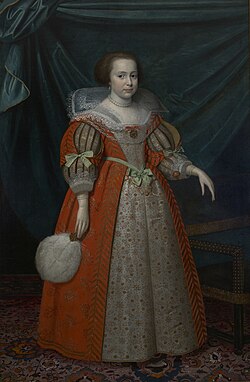
Through these marriages, Fane had two sons who both eventually held the title of Earl of Westmorland: Charles (the 3rd Earl) and Vere (the 4th Earl). The Fane family was characterized by a strong intellectual streak; Mildmay's brother, Sir Francis Fane, was also a writer and a Knight of the Bath, and his sister, Rachael Fane, wrote her own masques and entertainments performed at Apethorpe Hall.
| Category | Details |
|---|---|
| Lifespan | January 24, 1602 – February 12, 1666 |
| Education | Emmanuel College, Cambridge |
| Political Offices | MP for Peterborough, MP for Kent, Lord Lieutenant of Northamptonshire |
| Major Publication | Otia Sacra (1648) |
| Key Literary Works | Over 900 poems; 8 plays/masques |
| Family Motto | "NE VILE FANO" (Disgrace not the altar) |
Frequently Asked Questions
Why was the publication of Otia Sacra significant?
It was the first time a peer of England published his own collection of verse, breaking a precedent regarding the public dissemination of poetry by the nobility.
What was Mildmay Fane's role during the English Civil War?
Fane was a supporter of the Royalist party. Due to his allegiance to King Charles I, he was briefly imprisoned by Parliament before retiring to Apethorpe Hall.
What themes were present in Fane's plays?
His works often featured allegorical figures. For example, Virtue's Triumph used personifications of Ambition, Impudence, Lies, and Deceits, while De Pugna Animi focused on the struggle of the Mind against the five senses.
Who were the children of Mildmay Fane?
With Grace Thornhurst, he had Charles Fane (3rd Earl of Westmorland) and five daughters. With Mary Vere, he had Vere Fane (4th Earl of Westmorland), Lady Mary Fane, Rachael, Catherine, Susan, and Elizabeth Fane.
Where can Fane's surviving manuscripts be found?
His poems are preserved in the Westmorland papers at the Northamptonshire Record Office, the Houghton Library at Harvard University, and Fulbeck Hall in Lincolnshire.