Oliver Cromwell: The Rise and Rule of the Lord Protector
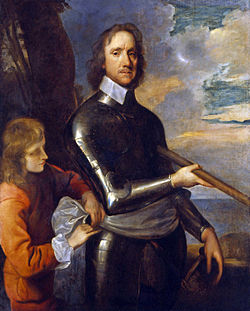
Oliver Cromwell (1599–1658) stands as one of the most polarizing and influential figures in British history. A farmer, soldier, and statesman, Cromwell rose from relative obscurity to become the Lord Protector—the head of state of the Commonwealth of England, Scotland, and Ireland. His journey from a Member of Parliament to the leader of a republic involved the overthrow of the monarchy and the execution of a king, forever altering the political landscape of the British Isles.
Cromwell's ascent was fueled by his military genius and his unwavering religious and political convictions. He became a central figure during the Wars of the Three Kingdoms, leading the Parliamentarian forces against the Royalists in a struggle for power and faith.
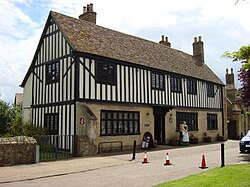
Key Facts
- Role: Lord Protector of the Commonwealth (1653–1658).
- Military Rank: Lieutenant-General of Cavalry; leader of the New Model Army.
- Major Achievement: Led the Parliamentarian victory in the English Civil War.
- Controversy: A leading advocate for the execution of King Charles I in 1649.
- Legacy: Established a republican government before the eventual restoration of the monarchy.
Early Life and Political Beginnings
Born on April 25, 1599, in Huntingdon, Cromwell was educated at Sidney Sussex College, Cambridge. Before his military fame, he entered the political arena as a Member of Parliament, representing Cambridge from 1628 to 1629 and later Huntingdon from 1640 to 1653.
Cromwell's personal life was marked by both devotion and tragedy. He married Elizabeth Bourchier, with whom he had several children. While his son Richard would eventually succeed him as Lord Protector, other children, including his eldest son Oliver, died young—the latter succumbing to typhoid fever while serving as an officer.
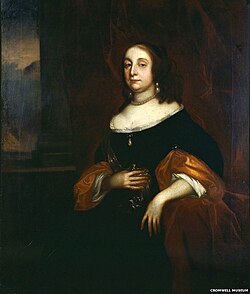
Military Ascent and the English Civil War
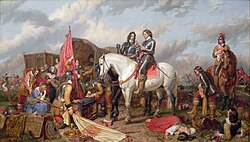
Cromwell first gained military prominence in the militia and the Eastern Association. He earned the nickname "Old Ironsides" for the discipline and resilience of his cavalry. His tactical brilliance was evident in pivotal clashes such as the Battle of Marston Moor (1644) and the Battle of Naseby (1645), the latter of which effectively broke the Royalist military power.
In 1645, Cromwell became a key leader of the New Model Army, a professionalized fighting force that prioritized merit over social status. This army became the primary instrument of Parliament's victory over King Charles I.
The Regicide and the Commonwealth
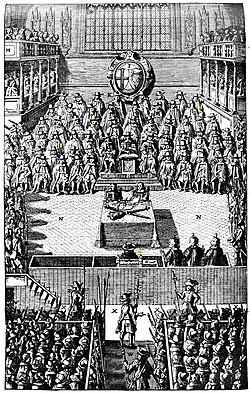
Following the defeat of the Royalists, Cromwell became a leading voice calling for the trial and execution of Charles I. On January 4, 1649, the King was tried for treason, and his subsequent execution marked the end of the monarchy and the birth of the Commonwealth of England.
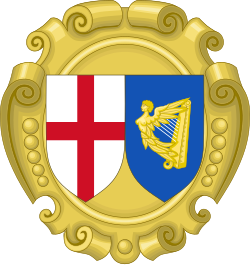
The Commonwealth was a republican state, symbolized by the Arms of the Commonwealth. However, stability remained elusive. Cromwell led brutal military campaigns in Ireland (1649–1650) and Scotland (1650–1651), including victories at the Battle of Dunbar and the Battle of Worcester, to secure the new regime's authority across the Three Kingdoms.
The Protectorate (1653–1658)
Frustrated by the inefficiency of the Rump Parliament and the subsequent Barebone's Parliament, Cromwell dissolved the legislative bodies and assumed the title of Lord Protector on December 16, 1653. This role granted him near-monarchical power, though he remained a nominal republican.
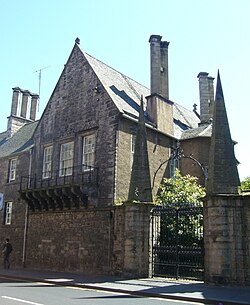
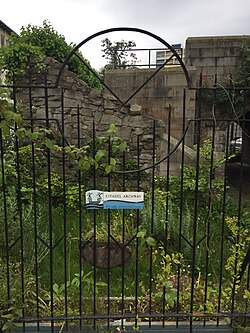
During his rule, Cromwell managed foreign affairs, including the First Anglo-Dutch War and the Anglo-Spanish War. He also resided in Edinburgh at Moray House while attempting to manage the Scottish Kirk and the claims of Charles II.
Death and Posthumous Fate
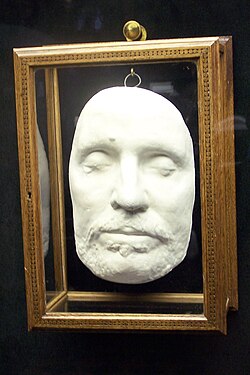
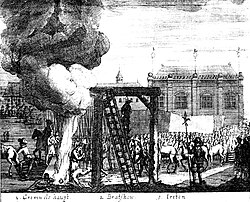
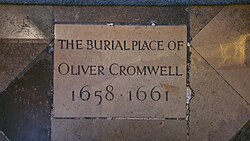
Oliver Cromwell died on September 3, 1658, at the age of 59. He was buried in Westminster Abbey, but his peace was short-lived. Following the restoration of the monarchy under Charles II, Cromwell's body was exhumed in 1661. In a symbolic act of vengeance, he and fellow regicides John Bradshaw and Henry Ireton underwent a posthumous execution, where their bodies were hanged and their heads displayed on spikes.
Historical Legacy
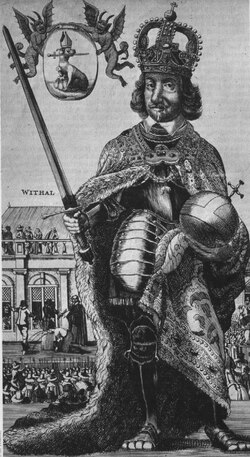
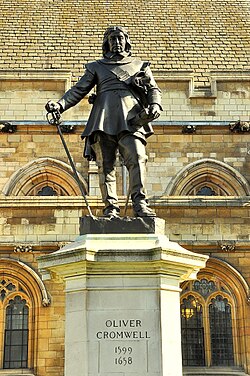
Cromwell remains a deeply divisive figure. To some, he was a champion of liberty and a pioneer of parliamentary sovereignty; to others, he was a usurper and a military dictator. Satirical views of the time often depicted him as a usurper of royal power, while later monuments, such as the 1899 statue outside the Palace of Westminster, reflect a more complex historical appreciation.
![Bust of Oliver Cromwell (1762), by Joseph Wilton, at the Victoria & Albert Museum[191]](/images/79/3d/793dc0946c724ff4ef9f55694f17b629016288ccfbac668198b3a0f82a5ee185.jpg)
| Period | Role/Title | Key Event/Achievement |
|---|---|---|
| 1628–1653 | Member of Parliament | Represented Cambridge and Huntingdon |
| 1642–1653 | Military Commander | Led New Model Army; Victory at Naseby |
| 1649 | Regicide | Advocated for the execution of Charles I |
| 1653–1658 | Lord Protector | Ruled as head of the Commonwealth |
Frequently Asked Questions
Why was Oliver Cromwell called "Old Ironsides"?
He earned this nickname due to the exceptional discipline, strength, and resilience of his cavalry troops during the English Civil War.
What was the New Model Army?
The New Model Army was a professionalized Parliamentarian force established in 1645 that promoted officers based on ability and merit rather than social rank.
Did Oliver Cromwell become a King?
No. Although he held the title of Lord Protector and possessed power similar to a monarch, he officially rejected the crown to maintain the republican nature of the Commonwealth.
What happened to Cromwell after he died?
After being buried in Westminster Abbey, his body was exhumed in 1661 by the restored monarchy and subjected to a posthumous execution.
Which battles were most significant in Cromwell's career?
The Battle of Naseby (1645) was crucial in defeating the Royalists in England, while the Battle of Dunbar and the Battle of Worcester were key to securing control over Scotland.