James VI and I: The Monarch Who United the Crowns
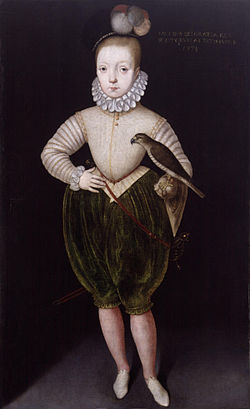
James VI and I stands as one of the most complex figures in British history. Born into the turmoil of 16th-century Scotland, he ascended to the Scottish throne as an infant and eventually achieved a historic milestone: the Union of the Crowns. By becoming King of England and Ireland upon the death of Elizabeth I, he linked three kingdoms under a single ruler, laying the early groundwork for what would eventually become the United Kingdom.
While he sought a closer political union between Scotland and England, the two nations remained sovereign states during his reign. They maintained their own separate laws, judiciaries, and parliaments, existing in a state of personal union where one man wore multiple crowns.
Key Facts
- Full Name: James Charles Stuart.
- Reign in Scotland: 24 July 1567 – 27 March 1625 (as James VI).
- Reign in England and Ireland: 24 March 1603 – 27 March 1625 (as James I).
- House: Stuart.
- Parents: Henry Stuart, Lord Darnley, and Mary, Queen of Scots.
- Spouse: Anne of Denmark.
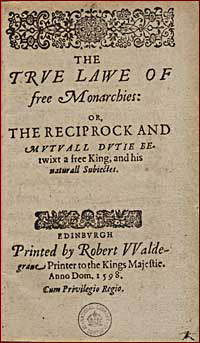
- Notable Works: Daemonologie and The True Law of Free Monarchies.
Early Life and the Scottish Throne
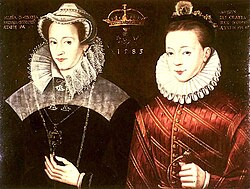
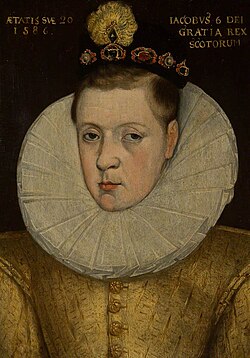
James was born on 19 June 1566 at Edinburgh Castle. His early years were marked by instability; he became King of Scotland in 1567 at a very young age, following the abdication of his mother, Mary, Queen of Scots. Because of his youth, his early reign was managed by a series of regents—temporary guardians who exercised royal power—including the Earls of Moray, Lennox, Mar, and Morton.
As he matured, James developed a keen interest in theology, law, and the arts. By the time he reached adulthood, he was establishing himself as an intellectual monarch, though his early years were spent navigating the treacherous waters of Scottish nobility.
Intellectual Pursuits and the Theory of Monarchy
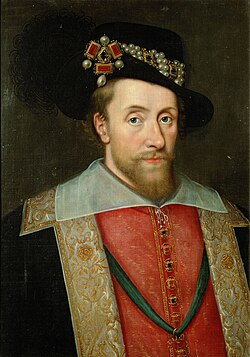
James was a prolific writer and a patron of literature. He was deeply invested in the Divine Right of Kings, the belief that a monarch derives their right to rule directly from God and is not accountable to any earthly authority. He articulated this theological basis for monarchy in his work, The True Law of Free Monarchies.
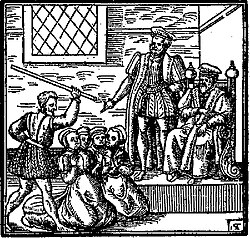
His intellectual curiosity extended to the supernatural. In 1597, he published Daemonologie, a treatise on witchcraft. This fascination led to his active involvement in witch hunts, reflecting the spiritual anxieties of the era.
The Union of the Crowns
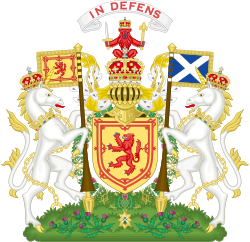
The transition of power from the Tudor dynasty to the Stuart dynasty was carefully orchestrated. In the final years of Queen Elizabeth I's life, Robert Cecil, her chief minister, maintained secret correspondence with James to ensure a peaceful succession. When Elizabeth died on 24 March 1603, James was proclaimed King of England and Ireland that same day.
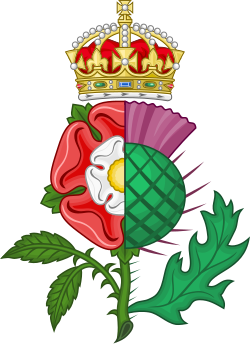
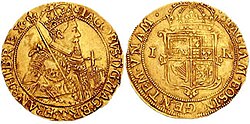
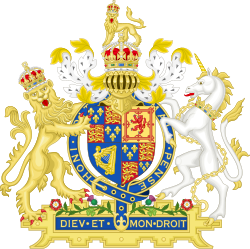
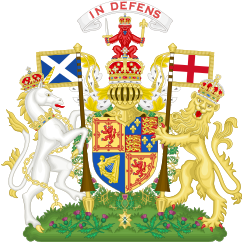
In 1604, James issued a proclamation changing his official style to "King of Great Brittaine, France and Ireland, Defender of the Faith." Although he claimed the title "King of France"—a tradition held by English monarchs since 1340—he held no actual power in France.
Life in England and the Jacobean Era
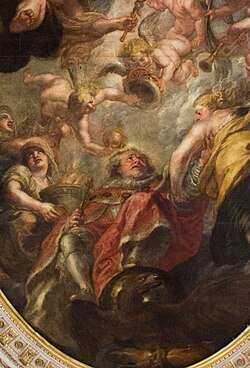
James's English reign was marked by both architectural ambition and political tension. He commissioned the Banqueting House at Whitehall, designed by architect Inigo Jones, which featured a magnificent ceiling by Peter Paul Rubens depicting James being carried to heaven by angels.
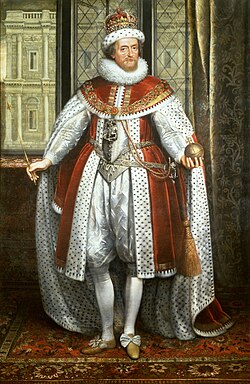
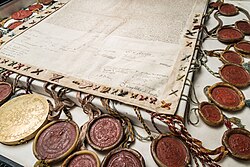
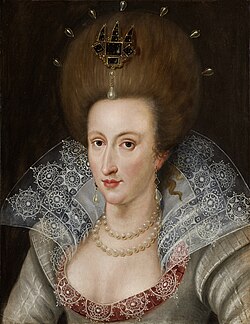
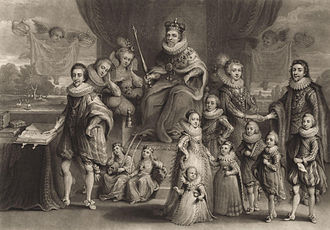
His personal life was centered around his marriage to Anne of Denmark. Their marriage contract was signed in 1589, and together they had seven children who survived infancy, though only three reached adulthood, including their successor, Charles I.
Despite his intellectual capabilities, James's reign was not without controversy. He faced the Gunpowder Plot, struggled with Parliament over finances and authority, and dealt with the "Spanish match"—attempts to secure a peace treaty with Spain through marriage.
Legacy and Final Years
In his later years, James suffered from severe arthritis and other ailments that left him frequently indisposed. He died on 27 March 1625, at the age of 58, at Theobalds House in Hertfordshire. He was buried in Westminster Abbey.
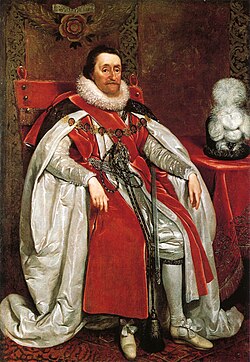
Historians have long debated his character, with some calling him "the wisest fool in Christendom"—wise in trivial matters but foolish in weighty affairs. However, modern research often emphasizes his intelligence and his role as a serious ruler who navigated the complex transition between two sovereign nations.
| Category | Details (Scotland) | Details (England & Ireland) |
|---|---|---|
| Title | James VI | James I |
| Reign Start | 24 July 1567 | 24 March 1603 |
| Reign End | 27 March 1625 | 27 March 1625 |
| Predecessor | Mary, Queen of Scots | Elizabeth I |
| Successor | Charles I | Charles I |
Frequently Asked Questions
Why is he called both James VI and James I?
He is known as James VI because he was the sixth king of Scotland and James I because he was the first king of England and Ireland from the House of Stuart.
What was the Union of the Crowns?
The Union of the Crowns occurred in 1603 when James VI of Scotland inherited the English throne upon the death of Elizabeth I, bringing both kingdoms under one monarch.
What was James's view on the power of the monarchy?
James believed in the Divine Right of Kings, arguing that monarchs were appointed by God and therefore held absolute authority over their subjects.
Did James actually rule France?
No. While he used the title "King of France" as part of his official style, this was a traditional claim held by English monarchs and did not reflect actual governance of French territory.
What were some of his most famous writings?
His most notable works include Daemonologie, which focused on witchcraft, and The True Law of Free Monarchies, which detailed his theories on royal power.