James Francis Edward Stuart: The Life of the Old Pretender
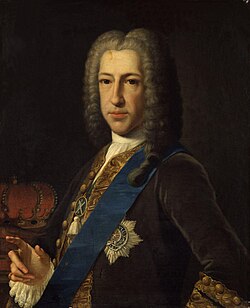
James Francis Edward Stuart, historically remembered as the Old Pretender, spent his entire life as the senior claimant to the thrones of England, Ireland, and Scotland. Born into the height of royal power, his life became a lifelong struggle for restoration, marked by exile, failed invasions, and the unwavering support of the Jacobites—those who believed in the divine right of the Stuart line.
As the only surviving son of King James II and Mary of Modena, he was the heir-apparent to three kingdoms. However, the political and religious volatility of the late 17th century ensured that he would spend more time as a king in exile than as a sovereign in power.
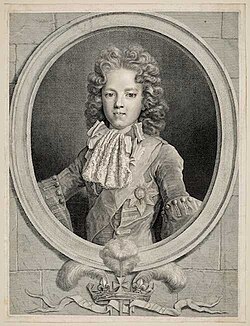
Key Facts
- Lifespan: 16 September 1701 – 1 January 1766.
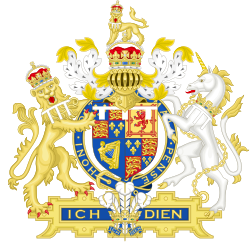
- Titles: Prince of Wales, Duke of Cornwall, and Duke of Rothesay.
- Claim: Senior House of Stuart claimant to the thrones of England, Ireland, and Scotland.
- Religion: Devout Roman Catholicism.
- Family: Father of Charles Edward Stuart ("Bonnie Prince Charlie") and Henry Benedict Stuart.
- Final Residence: Palazzo Muti, Rome.
Early Life and the Glorious Revolution
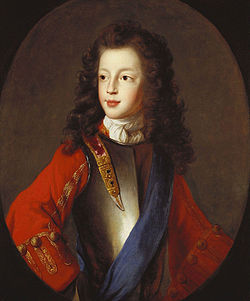
James was born on 10 June 1688, at St. James's Palace in London. His birth brought immediate joy to his parents, both Catholics, and he was created Prince of Wales in July 1688. However, this stability was short-lived. The Glorious Revolution of 1688 saw his father, James II, deposed and exiled.
In a daring escape on 9 December 1688, Mary of Modena disguised herself as a laundress to smuggle the infant James to France. He was raised at the Château de Saint-Germain-en-Laye under the protection of Louis XIV. Despite being in exile, the French court treated the Stuart family as ruling monarchs. James received a military education from veterans of the Irish Army, Richard Hamilton and Dominic Sheldon.
The Struggle for the Throne
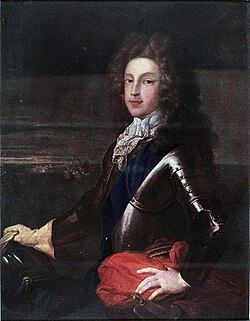
Upon the death of his father in September 1701, James claimed the thrones of England, Ireland, and Scotland. While Louis XIV of France, Spain, and the Papal States recognized him as the rightful king, the English government viewed him as a threat. On 2 March 1702, he was attainted for treason in London, and his titles were legally forfeited.
Throughout the early 18th century, James made several attempts to reclaim his birthright. In 1708, backed by France, he attempted to land at the Firth of Forth, but bad weather and the fleet of Admiral Sir George Byng thwarted the effort.
The Question of Conversion
During the reign of Queen Anne, British politicians Robert Harley and Lord Bolingbroke entered into secret correspondence with James. They suggested that his accession to the throne would be far more feasible if he converted to Protestantism. A devout Catholic, James steadfastly refused, stating, "I have chosen my own course, therefore it is for others to change their sentiments."
This refusal paved the way for the accession of George I, the Elector of Hanover, in August 1714. James denounced the Hanoverians as a "foreign family" and "aliens to our country."
The Jacobite Risings and Exile in Rome
The Jacobites—supporters of the Stuart claim—launched uprisings in 1715 in Scotland and Cornwall. James landed at Peterhead in December 1715, but his efforts were hampered by severe illness and the icy Scottish winter. After the defeats at the Battle of Sheriffmuir and the Battle of Preston, he returned to France in February 1716.
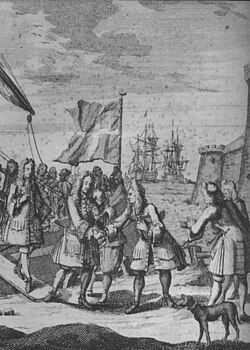
Following the failure of the 1715 rising and the subsequent defeat of a smaller expedition at the Battle of Glen Shiel in 1719, James moved to Papal territories. He eventually settled in Rome at the Palazzo Muti, provided by Pope Clement XI. With a life annuity of 12,000 Roman scudi, he established a lavish court-in-exile, though he frequently struggled with bouts of melancholy.
Marriage and Legacy
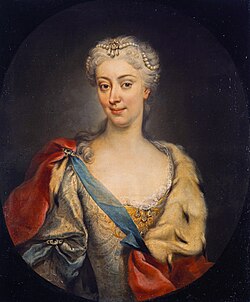
On 3 September 1719, James married Maria Clementina Sobieska, the granddaughter of King John III Sobieski of Poland. The couple had two sons who would continue the Stuart claim: Charles Edward Stuart, famously known as "Bonnie Prince Charlie," and Henry Benedict Stuart, who became a cardinal of the Catholic Church.
The last major effort to restore the dynasty was the 1745 Rising led by his elder son, Charles. While this brought the Stuarts closer to the throne than ever before, it ultimately failed. In his later years, James remained a figurehead for the cause, though French support waned as the Hanoverian dynasty solidified its grip on Great Britain.
Death and Final Rest
James Francis Edward Stuart died on 1 January 1766, at the age of 77, at the Palazzo Muti in Rome. He was buried in the crypt of St. Peter's Basilica. His claimed reign lasted over 64 years, a duration that remained unsurpassed by any British monarch until Queen Elizabeth II in 2016.
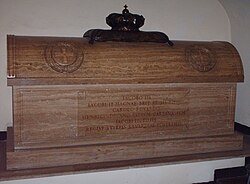
Following his death, the papacy gradually shifted its recognition toward the Hanoverian dynasty, leading to a relaxation of the anti-Catholic "penal laws" in Britain and Ireland.
| Category | Details |
|---|---|
| Born | 10 June 1688, St. James's Palace, London |
| Died | 1 January 1766, Palazzo Muti, Rome |
| Parents | James II of England and Mary of Modena |
| Spouse | Maria Clementina Sobieska (m. 1719) |
| Key Conflicts | 1708 Invasion attempt, 1715 Rising, 1719 Rising, 1745 Rising |
| Burial Site | St. Peter's Basilica, Vatican City |
Frequently Asked Questions
Why was James Francis Edward Stuart called the "Old Pretender"?
He was called the "Old Pretender" to distinguish him from his son, Charles Edward Stuart (the "Young Pretender"), as both claimed the British throne despite not being recognized by the reigning government.
Why was he excluded from the succession to the throne?
As a Roman Catholic, James was excluded from the succession by the Bill of Rights 1689, which sought to ensure a Protestant monarchy in England.
Did he ever successfully rule in Britain?
No. Although he claimed the thrones of England, Ireland, and Scotland from 1701 until 1766, he never exercised actual power within the British Isles, spending most of his life in France and Italy.
What happened to the Stuart claim after his death?
The claim passed to his son Charles Edward Stuart, and later to his younger son Henry Benedict Stuart. However, the papacy eventually withdrew its support, recognizing the Hanoverian dynasty instead.
Who were the Jacobites?
The Jacobites were supporters of the House of Stuart who believed that James Francis Edward Stuart and his descendants were the rightful heirs to the British thrones.