Arabidopsis thaliana: The Essential Model Organism in Plant Biology
In the vast world of botanical research, few species hold as much significance as Arabidopsis thaliana. Commonly known as thale cress, this small flowering plant belongs to the Brassicaceae family and has become the cornerstone of modern plant science. Because of its rapid lifecycle, small size, and well-characterized genome, it serves as a biological blueprint for understanding how plants grow, develop, and interact with their environment.
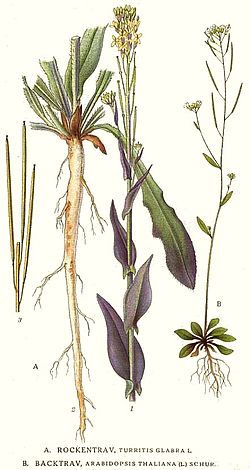
Key Facts
- Scientific Name: Arabidopsis thaliana (L.) Heynh.
- Family: Brassicaceae (the mustard family).
- Primary Use: A premier model organism for plant genetics, genomics, and developmental biology.
- Genome Characteristics: Features a highly studied nuclear, chloroplast, and mitochondrial genome.
- Research Applications: Used to study everything from flower development to plant-pathogen immunity and even growth in lunar regolith.
Taxonomy and Biological Classification
Arabidopsis thaliana is classified within the kingdom Plantae, specifically under the clade of Embryophytes (land plants) and Tracheophytes (vascular plants). As an Angiosperm, it is a flowering plant, falling into the Eudicot and Rosid clades. Its precise scientific classification allows researchers to compare its genetic traits with other members of the Brassicales order.
| Rank | Taxon |
|---|---|
| Kingdom | Plantae |
| Clade | Embryophytes |
| Clade | Tracheophytes |
| Clade | Angiosperms |
| Clade | Eudicots |
| Order | Brassicales |
| Family | Brassicaceae |
| Genus | Arabidopsis |
| Species | A. thaliana |
Genomics and Cellular Biology
The genetic architecture of Arabidopsis is one of its most valuable assets. Scientists have extensively mapped its nuclear genome, as well as its chloroplast and mitochondrial genomes. The chloroplast genome, in particular, provides vital insights into plant energy production and heredity.
![Chloroplast genome map of A. thaliana:[36][37] Introns are in grey. Some genes consist of 5′ and 3′ portions. Strand 1 and 2 genes are transcribed clockwise and counterclockwise, respectively. The innermost circle provides the boundaries of the large and small single-copy regions (LSC and SSC, violet) separated by a pair of inverted repeats (IRa and IRB, black).](/images/e0/a5/e0a5b8309c1af77e2a4d24a81baf6285865556435b7b50cafbe712281bef3544.webp)
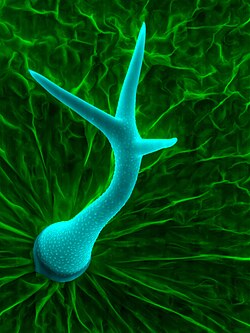
At the cellular level, researchers utilize advanced microscopy to study unique structures. For instance, the plant features trichomes—specialized leaf hairs made of a single cell that play roles in defense and environmental interaction.
DNA Repair and Physiological Responses
Arabidopsis is a frequent subject in studies regarding DNA repair mechanisms and circadian biology (the internal biological clock). Researchers also investigate how the plant responds to physical stimuli, a process known as thigmomorphogenesis (the response to touch or mechanical stress), and how it senses light to regulate growth.
Developmental Biology
One of the most significant breakthroughs achieved through Arabidopsis research is the ABC model of flower development. This model explains how different sets of genes interact to determine the identity of floral organs, such as sepals, petals, stamens, and carpels.
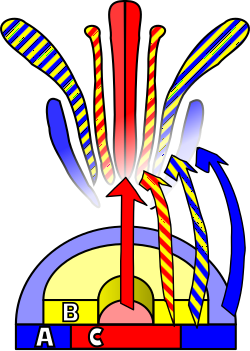
Mutations in these developmental pathways can lead to striking physical changes. For example, certain mutants can produce double flowers, a phenomenon that has been documented since 1873.

Leaf and Root Development
Beyond flowers, the plant's leaf and root development are heavily studied. The complex microbial networks that form on the roots—including bacteria, fungi, and protists—provide a window into how plants interact with their soil environment.
![Microbial consortia naturally formedon the roots of Arabidopsis thaliana Scanning electron microscopy pictures of root surfaces from natural A. thaliana populations showing the complex microbial networks formed on rootsa) Overview of an A. thaliana root (primary root) with numerous root hairs, b) Biofilm-forming bacteria, c) Fungal or oomycete hyphae surrounding the root surface, d) Primary root densely covered by spores and protists, e, f) Protists, most likely belonging to the Bacillariophyceae class, g) Bacteria and bacterial filaments, h, i) Different bacterial individuals showing great varieties of shapes and morphological features[88]](/images/86/07/86075978e800f8113ebc21e2036f2d31b66d39143925ded6e1cd8b6bd76ba96f.png)
Plant-Pathogen Interactions and Immunity
Arabidopsis is a vital tool for understanding how plants defend themselves against various threats. The plant employs complex immune responses to combat pathogens, including bacteria, fungi, oomycetes, viruses, and nematodes.
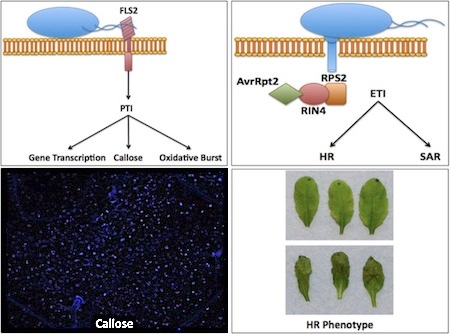
Immunity in Arabidopsis often involves two main layers: PAMP-triggered immunity (recognition of common microbial signatures) and effector-triggered immunity (a more specific response to specialized pathogen proteins). These interactions are essential for developing crops that are more resistant to disease.
Frequently Asked Questions
Why is Arabidopsis thaliana used as a model organism?
It is used because of its small size, short life cycle, ease of cultivation, and its small, well-sequenced genome, which makes genetic manipulation and observation highly efficient.
What is the ABC model of flower development?
The ABC model is a genetic framework developed through Arabidopsis research that describes how specific gene combinations control the development of different parts of a flower.
How does Arabidopsis respond to pathogens?
The plant uses a multi-layered immune system to recognize microbial patterns (PAMPs) and specific pathogen effectors, triggering defense responses like callose deposition or hypersensitive responses.
Can Arabidopsis grow in space or on the Moon?
Yes, research has been conducted on the germination and growth of Arabidopsis in lunar regolith and under microgravity conditions to understand plant life in space environments.
What are trichomes in Arabidopsis?
Trichomes are specialized, single-cell hair-like structures found on the leaves that serve various physiological and defensive functions.