Sea Kale: The Salt-Tolerant Gourmet Vegetable of the Coast
Along the rugged coastlines of Europe and the British Isles grows a remarkable plant known as sea kale (Crambe maritima). A member of the Brassicaceae family, this plant is a close relative of the common cabbage, but it possesses a unique ability to thrive in environments where most other vegetation would perish. From its role in shaping coastal dunes to its history as a high-priced Victorian delicacy, sea kale is as much a botanical curiosity as it is a culinary treasure.
What is Sea Kale?
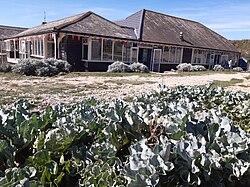
Sea kale is a halophytic flowering plant, meaning it is salt-tolerant and specifically adapted to survive in saline environments. It is a mound-forming, spreading perennial that typically grows up to 75 cm (30 in) in height and 60 cm (24 in) in width.
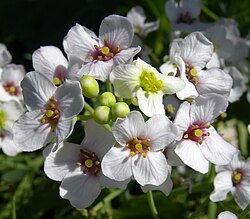
The plant is characterized by its large, fleshy, glaucous leaves—which have a waxy, blue-grey coating—and abundant white flowers. After flowering, the plant produces globular pods, each containing a single seed.
Natural Distribution and Habitat
Sea kale is a European endemic, meaning it is found naturally only in Europe. Its distribution is split into two primary discontinuous coastal regions. It is found along the Black Sea coasts of Ukraine (including the Crimea), Romania, Bulgaria, and Turkey. However, it is largely absent from the Mediterranean, North Africa, and the Middle East.
In Western Europe, it recurs from northern France and the British Isles up to the Baltic Sea. In the United Kingdom, it is most common on the southeast coast, particularly along Chesil Beach in Dorset, though it also appears in East Anglia, Cumbria, northern Wales, and the extreme southwest of Scotland. It is very rare in Northern Ireland, with records limited to Counties Down and Antrim. Additionally, it can be found uncommonly along the coast of Norway, specifically within the Færder National Park.
Ecological Role
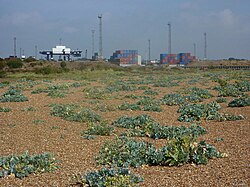
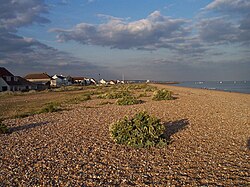
Because of its salt tolerance, sea kale typically grows above the high tide mark on beaches consisting of sand, pebbles, or rock. In Britain, it is often found on vegetated shingle beaches alongside curled dock and yellow horned poppy.
On the southern Baltic coasts of Estonia, Finland, and Sweden, sea kale is a dominant species in endangered shingle beach habitats. In these regions, it grows in association with various other salt-tolerant plants, such as Leymus arenarius and Beta vulgaris subsp. maritima. Interestingly, clumps of sea kale can trap wind-blown sand, which may eventually initiate the formation of coastal dunes.
Cultivation and Culinary History
Sea kale has a long history as a food source. As early as the 18th century, residents of Kent, Sussex, and Hampshire harvested emerging shoots from wild root crowns in early spring. This practice was documented by Phillip Miller in his 1731 Gardener's Dictionary.
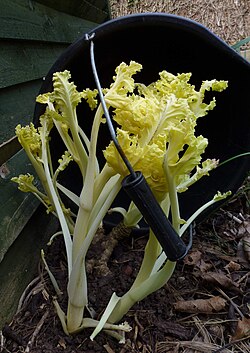
By the late 18th and early 19th centuries, cultivation became more sophisticated. Botanists like William Curtis and John Maher developed methods to produce blanched shoots—stems that are kept pale and tender by excluding light during growth. This was achieved by growing the root crown in a ceramic cylinder capped with a blanching pot, then covering the setup with several feet of fresh manure. The heat from the decomposing manure forced the plant to "bolt" (grow rapidly) as early as December.
The plant's popularity peaked during the Victorian Era. According to Mrs Beeton's Book of Household Management, sea kale was in general use, though it was one of the most expensive vegetables available. Its prestige was such that it was served at the Royal Pavilion in Brighton for Prince Regent George IV and was grown by Thomas Jefferson at Monticello between 1820 and 1825.
Due to the practice of "forcing" plants in their natural wild habitats, wild stocks in Britain were severely depleted, leading to a ban on in situ collection in the early 20th century. While it fell out of favor for a time, sea kale has seen a revival in the 21st century among British chefs and is now grown commercially by several farmers. In the Netherlands, a small experimental plot on the island of Texel is irrigated with adulterated seawater to study the plant.
Key Facts
- Scientific Name: Crambe maritima.
- Family: Brassicaceae (related to cabbage).
- Special Ability: Halophytic (salt-tolerant).
- Growth Habit: Perennial, mound-forming, up to 75 cm tall.
- Primary Habitat: Coastal shingle and sandy beaches of Europe.
- Culinary Use: Blanched stems, often compared to asparagus.
- Historical Status: A luxury Victorian vegetable.
Sea Kale Summary
| Feature | Details |
|---|---|
| Common Names | Sea kale, seakale, crambe |
| Distribution | European endemic (Black Sea, Baltic Sea, British Isles, Northern France) |
| Physical Traits | Glaucous leaves, white flowers, globular pods |
| Ecological Role | Dune initiation and shingle beach stabilization |
| Taste Profile | Similar to asparagus with hints of cabbage |
Frequently Asked Questions
What does sea kale taste like?
When boiled for twenty minutes and served with melted butter, sea kale is said to resemble asparagus, though it possesses subtle hints of cabbage.
Where can sea kale be found in the wild?
It grows naturally along the coasts of mainland Europe and the British Isles, specifically on shingle or sandy beaches above the high tide mark.
How is sea kale "blanched" for eating?
Blanching involves growing the shoots in the dark to keep them pale and tender. Historically, this was done using ceramic pots and layers of manure or soil to provide heat and block sunlight.
Is sea kale still available today?
Yes, while it is no longer a staple, it has become fashionable again in the 21st century and is grown commercially by some farmers in Britain.
Why is sea kale important for the environment?
As a halophyte, it thrives in harsh coastal conditions where other plants cannot. By trapping wind-blown sand, it helps in the early stages of coastal dune formation.
Is sea kale the same as Crambe hispanica?
No. While they were confused in the past, Crambe maritima is distinct. Crambe hispanica replaces it in the Iberian Peninsula, Italy, and Greece.