Sea Kale: The Coastal Delicacy with a Rich Culinary History
Perched along the rugged coastlines of Europe and the British Isles grows a unique, salt-tolerant plant known as sea kale (*Crambe maritima*). A member of the Brassicaceae family—making it a relative of the common cabbage—this resilient perennial has transitioned from a wild coastal inhabitant to a highly sought-after culinary delicacy.
As a halophyte, or salt-tolerant plant, sea kale thrives in environments where most other vegetation struggles. It is typically found on coastal beaches above the high tide mark, specifically in habitats featuring sand mixed with pebbles or rock. In many regions, these plants play a vital ecological role; by trapping wind-blown sand, clumps of sea kale can actually initiate the formation of coastal dunes.
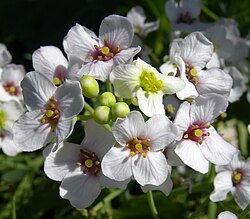
Key Facts
- Scientific Name: Crambe maritima
- Family: Brassicaceae (the mustard or cabbage family)
- Type: Halophytic (salt-tolerant) perennial
- Primary Use: Culinary (blanched shoots)
- Habitat: Coastal shingle beaches and sandy shores
- Growth Habit: Mound-forming, reaching up to 75 cm tall
Botanical Description and Ecology
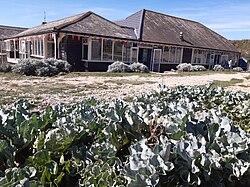
Sea kale is a spreading, mound-forming perennial that can grow up to 75 cm (30 in) in height and 60 cm (24 in) in width. It is characterized by large, fleshy, glaucous (blue-green or waxy) leaves that resemble collard greens. During its flowering stage, the plant produces abundant white flowers and globular pods, each containing a single seed.
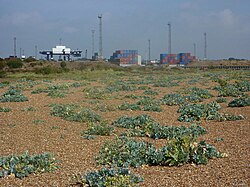
The plant's distribution is primarily European. It is found along the Black Sea coasts of Bulgaria, Romania, Turkey, and Ukraine, and extends from northern France through the British Isles to the Baltic Sea. While it was once thought to inhabit parts of the Middle East, those populations are now classified as a different species, Crambe hispanica. In the UK, it is notably found on the southeast coast, including extensive stretches of Chesil Beach in Dorset, as well as parts of East Anglia, Cumbria, Wales, and Scotland.
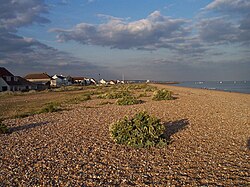
Habitat and Plant Communities
In Britain, sea kale is a common sight on vegetated shingle beaches, often growing alongside yellow horned poppy and curled dock. On the southern Baltic coasts of Sweden, Finland, and Estonia, it acts as a dominant species in fragile plant communities, sharing its habitat with various species such as Glaucium flavum and Silene uniflora.
Culinary History and Cultivation
The history of sea kale as a food source dates back to at least the 18th century. Early records from the 1730s describe locals in Sussex harvesting emerging shoots from naturally occurring root crowns in early spring. By the mid-19th century, the plant had gained significant popularity in Britain.
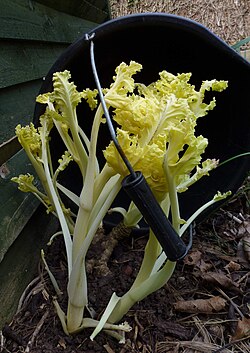
The most prized part of the plant is the blanched shoot. To prepare this, the root crown is grown in a controlled environment—traditionally a ceramic cylinder—and covered to prevent light from reaching the emerging stems. This process, known as forcing, results in tender, pale shoots. Historically, this was achieved by heaping manure over the pots to generate heat through decomposition, allowing the plant to bolt as early as December.
Famous figures have enjoyed this coastal treat; Thomas Jefferson grew sea kale at Monticello between 1820 and 1825, and it was served at the Royal Pavilion in Brighton. During the Victorian era, it was considered a luxury vegetable, often compared to asparagus in texture and flavor, though it retained subtle hints of cabbage.
Modern Status
While wild stocks in Britain were once depleted due to over-harvesting and in-situ forcing, the practice was banned in the early 20th century to protect the species. However, the 21st century has seen a culinary revival, with British chefs bringing sea kale back into fashion. Today, it is commercially grown by several farmers in Britain, and experimental plots, such as those on the Dutch island of Texel, even utilize irrigated seawater for cultivation.
Summary of Sea Kale Characteristics
| Feature | Description |
|---|---|
| Growth Form | Mound-forming perennial |
| Leaf Type | Large, fleshy, glaucous |
| Flower Color | White |
| Preferred Soil | Shingle, sand, and pebble-rich coastal soil |
| Culinary Profile | Tender, resembles asparagus with cabbage notes |
Frequently Asked Questions
What does it mean that sea kale is a halophyte?
A halophyte is a plant that is specially adapted to grow in soil or water with high salt concentrations. This allows sea kale to thrive on coastal beaches where most other plants would perish from salt toxicity.
How is sea kale prepared for eating?
The most common culinary method involves eating the blanched shoots. These are typically boiled for about twenty minutes and served with melted butter, offering a flavor profile similar to asparagus with a hint of cabbage.
Is sea kale a relative of cabbage?
Yes, sea kale belongs to the Brassicaceae family, which includes cabbage, broccoli, and mustard. This relationship is reflected in its leaf structure and flavor profile.
Why was sea kale once considered an expensive vegetable?
During the Victorian era, sea kale was a high-status food. Its cost was driven by the labor-intensive process of forcing the shoots in specialized containers to ensure they were blanched and tender.
Where can sea kale be found in the wild?
It is found along the coasts of mainland Europe and the British Isles, particularly on shingle beaches and sandy areas above the high tide mark.