White Wagtail (Motacilla alba)
The white wagtail (Motacilla alba) is a slender, energetic passerine bird belonging to the family Motacillidae, which also encompasses longclaws and pipits. Known for its distinctive, near-constant tail-wagging motion, this species is a common sight across the Palearctic zone, spanning most of Europe, Asia, and parts of North Africa, with a small breeding presence in western Alaska.
While some populations remain resident in milder climates, many white wagtails are migratory, traveling to Africa, India, and Southeast Asia for the winter. In Great Britain and Ireland, the black-backed subspecies known as the pied wagtail (M. a. yarrellii) is the most prevalent.
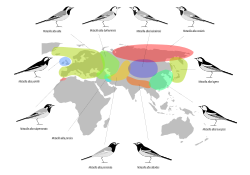
Key Facts
- Scientific Name: Motacilla alba
- Conservation Status: Least Concern (IUCN 3.1)
- Diet: Primarily insectivorous, feeding on terrestrial and aquatic invertebrates.
- Distinctive Behavior: Constant wagging of the tail, likely as a signal of vigilance to predators.
- Global Population: Estimated between 130 and 230 million individuals.
- National Symbol: The national bird of Latvia.
Taxonomy and Systematics
First described by Carl Linnaeus in the 1758 edition of Systema Naturae, the name Motacilla alba derives from Latin, where alba means "white." The genus name Motacilla was originally intended to mean "little mover," though later interpretations linked it to the bird's characteristic tail movement.
Modern genetic research suggests a complex evolutionary history. While some mtDNA (mitochondrial DNA) data indicates the species may be polyphyletic—meaning it does not stem from a single common ancestor—other studies suggest significant gene flow between races, supporting its classification as a single species. Researchers generally divide the species into two primary groups: the alba group and the alboides group.
Physical Description and Vocalization
The white wagtail is a slender bird typically measuring between 16.5 and 19 cm in length, though East Asian subspecies can reach up to 21 cm. They have an average weight of 25 g and can live up to 12 years in the wild.
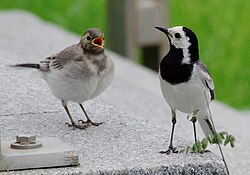
Their vocalizations include a sharp "chissick" call. While they possess a regular song, it is used less for territorial defense and more as a contact call for males to attract females.
Subspecies and Distribution
There are between 9 and 11 recognized subspecies of M. alba, varying primarily in plumage and geographic range. They occupy diverse habitats, avoiding only deserts, and have adapted remarkably well to urban environments, often foraging in car parks and nesting in man-made structures.
| Subspecies | Common Name / Range | Distinguishing Features |
|---|---|---|
| M. a. yarrellii | Pied Wagtail (UK/Ireland) | Much blacker back than nominate race. |
| M. a. alba | Nominate Subspecies | Standard white wagtail plumage. |
| M. a. personata | Masked Wagtail (Central Asia) | All-black head with a white face mask. |
| M. a. subpersonata | Moroccan Wagtail (Morocco) | More black on the head; non-migratory. |
| M. a. lugens | Black-backed Wagtail (East Asia) | Black eyestripe and white remiges. |
| M. a. alboides | Himalayan region | Black back, white wing panel, and black head markings. |
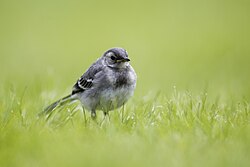
Behavior and Ecology
Feeding Habits
As insectivores, white wagtails consume a wide variety of invertebrates, including beetles, dragonflies, spiders, worms, and flies. They may also eat small fish fry. Notably, non-migratory populations continue to feed on insects throughout the winter, unlike many other temperate insectivorous birds that switch to plant-based diets.
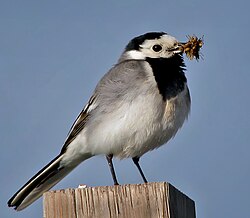
Nesting and Breeding
White wagtails are monogamous and defend specific breeding territories from April to August. Both parents contribute to building the nest—a rough cup of twigs, grass, and hair—which is typically tucked into crevices in stone walls, riverbanks, or buildings. In rare instances, nests have been found in walrus skulls or inside the nests of golden eagles.
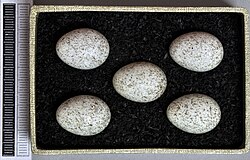
A clutch typically consists of three to eight cream-colored, reddish-brown spotted eggs. After an incubation period of 12 to 16 days, the chicks hatch and fledge within 12 to 15 days. While the common cuckoo may attempt to parasitize their nests, white wagtails usually desert the nest if an alien egg is detected.
Conservation Status
The white wagtail is classified as Least Concern by the IUCN. With a massive range exceeding 10 million square kilometers and a population of up to 230 million, the species is stable. Their ability to exploit human-made structures for nesting and paved areas for foraging has allowed them to thrive in urban settings.
Frequently Asked Questions
Why do white wagtails wag their tails?
While the exact reason is debated, research suggests it may be a signal of vigilance to potential predators, though other theories suggest it could flush out prey or signal submissiveness.
What is the difference between a white wagtail and a pied wagtail?
The pied wagtail (M. a. yarrellii) is a subspecies of the white wagtail found primarily in the British Isles, characterized by a significantly blacker back and throat.
Where do white wagtails nest?
They prefer crevices in stone walls, riverbanks, and human-made structures like bridges and buildings. They are highly adaptable and have even been known to nest in beaver dams.
Are white wagtails migratory?
It depends on the region. Birds in the mildest parts of their range, such as the Mediterranean and western Europe, are residents, while those in northern latitudes migrate to Africa or Asia.
What do white wagtails eat in the winter?
Unlike many other insectivorous birds that switch to seeds or fruit, non-migratory white wagtails continue to feed on insects and small invertebrates during the winter months.