The Aird: A Historical District of Inverness-shire
Located on the south side of the Beauly Firth, between the rivers Beauly and Ness, the Aird is a district of Inverness-shire with a rich tapestry of clan history and medieval lordship. Its name is derived from the Scottish Gaelic An Àird, which translates to "the high place." Today, the region encompasses the villages of Kirkhill, Kiltarlity, Lentran, and Inchmore.
The Aird is most recognized as the traditional heartland of the Clan Fraser of Lovat, and it remains the site of their ancestral family seat, Beaufort Castle. However, the earliest records of leadership in the region point to Iain Mac Eoin Nan Gleann, known in English as John Bisset of the Glens, who is recognized as the first known Lord of the Aird.
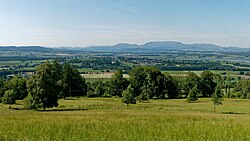
Key Facts
- Location: South side of the Beauly Firth, between the rivers Beauly and Ness.
- Etymology: From the Scottish Gaelic An Àird ("the high place").
- Clan Association: Traditional territory of the Clan Fraser of Lovat.
- Key Landmark: Beaufort Castle.
- Modern Administration: Gives its name to the Aird and Loch Ness Highland Council ward.
Medieval Lordship and Territorial Boundaries
The Aird was first documented as a provincial lordship between 1203 and 1221. It existed as a single, unified territory until 1259, at which point it was divided among the husbands and three female heirs of John Bissett of Lovat.
Defining the exact boundaries of the lordship is challenging, as its extent remains uncertain. It is confirmed to have included the parishes of Convinth, Farnua, Kiltarlity, and Dunballoch, all of which were part of the Province of Moray. There is also evidence suggesting the parish of Glenelg on the west coast may have been included.
Notably, the Aird was unique among Moravian lordships because it likely extended beyond the province's borders. This included land within the Province of Ross, specifically the parish of Kilmorack and Edirdovar (modern-day Redcastle) on the Black Isle.
Military History and Ancient Battlefields
The landscape of the Aird is marked by sites of ancient conflict. One such location is Blar Nam Feinne (grid reference NH595433) on Cnoc na Moine. Local tradition holds that this site saw a battle in the early 11th century between King Malcolm and Thorfinn of Norway.
Later history suggests the Aird was also the site of the defeat of Donald Balloch during the 15th century. The remnants of these conflicts are still visible in the terrain; approximately 20 burial mounds or cairns have survived forestry operations, though many have been partially mutilated over time.
| Category | Details |
|---|---|
| Gaelic Name | An Àird ("the high place") |
| Primary Clan | Clan Fraser of Lovat |
| Key Villages | Kirkhill, Kiltarlity, Lentran, Inchmore |
| Historical Lordship | Documented 1203–1221; divided in 1259 |
| Provinces Involved | Moray and Ross |
Frequently Asked Questions
What does the name "The Aird" mean?
The name comes from the Scottish Gaelic An Àird, which means "the high place."
Which clan is most closely associated with the Aird?
The Aird is the traditional heart of the Clan Fraser of Lovat's territory and contains their family seat, Beaufort Castle.
Who was the first known Lord of the Aird?
The first known Lord was Iain Mac Eoin Nan Gleann, referred to in English as John Bisset of the Glens.
What significant battles took place in the Aird?
The area is reputed to be the site of an 11th-century battle between King Malcolm and Thorfinn of Norway at Blar Nam Feinne, as well as the 15th-century defeat of Donald Balloch.
How was the lordship of the Aird divided?
In 1259, the single territory of the lordship was divided among the husbands and three female heirs of John Bissett of Lovat.