Temple of Dendur: From the Banks of the Nile to the Metropolitan Museum of Art
The Temple of Dendur is a stunning example of Roman-era Egyptian architecture, currently housed in the Metropolitan Museum of Art in New York City. Originally located in Nubia, this sandstone sanctuary served as a bridge between the Roman Empire and Egyptian spiritual traditions, dedicated to the goddess Isis and the deified Nubian brothers Pedesi and Pihor.
Commissioned around 23 BCE by Emperor Augustus, the temple was more than a religious site; it was a political tool used to legitimize Roman rule in Egypt by aligning the Emperor with local deities and customs. Today, it stands as a testament to international cooperation in cultural preservation.
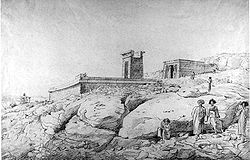
Key Facts
- Completion Date: 10 BCE
- Original Location: Tuzis (later Dendur), Nubia, Egypt
- Current Location: Metropolitan Museum of Art, New York City
- Material: Aeolian (Nubian) sandstone
- Dimensions: 4.9 m × 6.4 m × 13 m (16 ft × 21 ft × 43 ft)
- Primary Deity: Isis
The History and Purpose of the Temple
The temple was built under the direction of Petronius, the Roman governor of Egypt, at the request of Caesar Augustus. Augustus, who rose to power after defeating Mark Antony and Cleopatra in 31 BCE, frequently commissioned Egyptian-style temples to integrate himself into the cultural fabric of his new territory.
By connecting his image with Isis and the local cult of Pedesi and Pihor, Augustus ensured that the local population viewed him as a legitimate protector. When devotees brought offerings of incense, wine, and food to the temple, they were effectively nurturing the Roman ruler while seeking prosperity for their own community.
Over the centuries, the temple's purpose shifted. In the sixth century, Coptic Christians converted the structure into a church, adding a cross to the roof and covering original reliefs with plaster. By the 13th century, as Nubia became predominantly Muslim, the church was abandoned, and the site fell into decay, with some stones repurposed by locals.
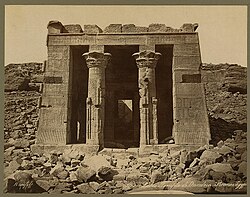
The Great Rescue: Relocation to New York
In the mid-20th century, the construction of the Aswan High Dam threatened to permanently submerge numerous ancient monuments. In 1963, UNESCO launched the International Campaign to Save the Monuments of Nubia. With the help of 50 countries, the Temple of Dendur was meticulously documented, dismantled into 661 blocks, and moved.
In 1965, Egypt gifted the temple to the United States in gratitude for the $16 million contributed toward the rescue of other Nubian monuments. After a highly publicized competition known as the "Dendur Derby," President Lyndon B. Johnson awarded the temple to the Metropolitan Museum of Art in 1967. The Met was chosen because it proposed a climate-controlled indoor environment to protect the fragile sandstone from the harsh American weather.
The 640 tons of sandstone arrived in New York via the freighter SS Concordia Star on August 29, 1968. The relocation cost approximately $9.5 million, with significant financial support provided by Lila Acheson Wallace.
Architectural Design and Layout
The temple is a modest but refined example of Ptolemaic and Roman architectural styles. It was built on a 30-meter sandstone platform overlooking the Nile and was originally enclosed by a mud-brick wall.
The Pylon and Entrance
The entrance was marked by a monumental pylon (a gateway consisting of two tapering towers), which the Egyptians called "the Luminous Mountain Horizon." A processional way, or dromos, led from this gate across an open court (wba) to the main temple building.
Interior Structure
The temple is divided into three primary sections:
- Pronaos: The front porch featuring two columns with composite tops shaped like lotus blossoms.
- Antechamber: An offering hall that served as a transition space.
- Sanctuary: The innermost holy area where the gods resided, containing a statue niche and a repository for sacred bark.
A mysterious hidden chamber, measuring 9.5 by 6 feet, is located behind the sanctuary wall, accessed by pivoting a stone block. Its exact purpose remains unknown.
Ornamental Decorations and Symbolism
The temple is rich with relief carvings that were originally painted in vibrant colors. These carvings depict Emperor Augustus as a pharaoh, making offerings to a pantheon of gods, including Amun, Horus, Osiris, and Thoth.
Specific symbolic elements include:
- The Winged Sun Disk: Representing the sky god Horus, located above the entrance.
- Flora of the Nile: Papyrus and lotus plants at the base symbolize the god Hapi.
- Royal Insignia: Cobras wearing the white crown (Upper Egypt) and red crown (Lower Egypt) adorn the south doorway.
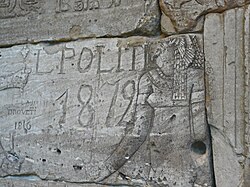
Damage and Preservation
The temple bears the marks of its long history. Graffiti dates back to 10 BCE, while 19th-century European visitors, including Rear Admiral Armar Lowry Corry, also left inscriptions. The Coptic conversion caused some structural damage, including a new doorway that cut through a carving of Isis.
The most significant environmental damage occurred between 1933 and 1963, when the Aswan Low Dam caused the temple to be submerged for nine months of every year. This repeated flooding washed away all remaining original paint from the carvings.
| Feature | Detail |
|---|---|
| Architectural Style | Roman-Egyptian (Ptolemaic influence) |
| Key Figures | Augustus, Isis, Pedesi, Pihor |
| Total Weight | 640 tons (661 blocks) |
| Relocation Year | Dismantled 1963; Arrived in NYC 1968 |
| Current Gallery | Gallery 131, The Met |
Frequently Asked Questions
Why was the Temple of Dendur moved to New York?
The temple was moved to prevent it from being permanently submerged by the waters of Lake Nasser, created by the construction of the Aswan High Dam in Egypt. It was gifted to the United States by Egypt in recognition of U.S. financial aid in saving other Nubian monuments.
Who was the temple dedicated to?
The temple was primarily dedicated to the goddess Isis, as well as two deified Nubian brothers named Pedesi and Pihor.
How did the Met protect the temple from the New York climate?
Architects Kevin Roche and John Dinkeloo designed a specialized wing with a stippled glass ceiling to diffuse light and a climate-control system to replicate the dry, hot environment of Egypt, preventing the sandstone from deteriorating.
What happened to the name "Sackler Wing"?
The Met stopped accepting contributions from the Sackler family in 2019 due to their association with the opioid crisis. In 2021, the museum removed the Sackler name from the wing and the gallery housing the temple.
What is the "Dendur Derby"?
The "Dendur Derby" was the nickname given by the press to the competition between various U.S. institutions—including museums in Boston, Washington D.C., and cities like Memphis and Cairo—to determine where the temple should be exhibited.