Nubian Monuments: The Global Mission to Save Ancient History
Between 1960 and 1980, the world witnessed one of the most ambitious archaeological engineering feats in human history. As the construction of the Aswan High Dam at the Nile's first cataract—a stretch of shallow rapids—threatened to submerge priceless ancient sites, an unprecedented international coalition rose to the challenge. This effort, known as the International Campaign to Save the Monuments of Nubia, sought to relocate 22 monuments in Lower Nubia across Southern Egypt and northern Sudan to prevent their permanent loss under the rising waters of Lake Nasser.

A Race Against the Rising Nile
The necessity for intervention arose following the 1952 Egyptian revolution, as the government prioritized national development and infrastructure. While the Egyptian state took great pride in its Pharaonic heritage, the immediate need for the Aswan Dam meant that many ancient structures were in direct path of the planned reservoir. To address this, Egypt appealed to UNESCO (the United Nations Educational, Scientific and Cultural Organization) for assistance.
The diplomatic breakthrough occurred in early 1959 when Egyptian official Okasha convinced President Nasser to seek international aid. In a significant policy shift, Egypt agreed to cover one-third of the costs and offered unique incentives to participating nations, such as granting access to threatened sites and allowing foreign archaeologists to retain half of their uncovered finds. This campaign eventually became the catalyst for the 1972 World Heritage Convention, establishing the modern system of UNESCO World Heritage Sites.
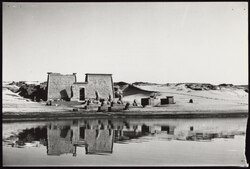
The Engineering Marvel of Abu Simbel
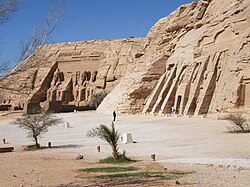
Among the most iconic sites at risk were the temples of Abu Simbel. The salvage operation, which took place between 1964 and 1968, was a monumental task costing approximately US$40 million (roughly $632 million in 2024 value). A multinational team of archaeologists, engineers, and heavy equipment operators worked to carefully cut the entire site into massive blocks, some weighing up to 30 tons.
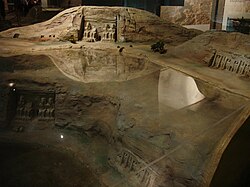
These blocks were then lifted and reassembled in a new location 65 meters higher and 200 meters back from the river, nestled within an artificial hill. This meticulous process ensured that the grandeur of the 13th-century BCE structures remained intact despite their relocation.
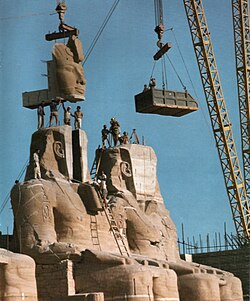
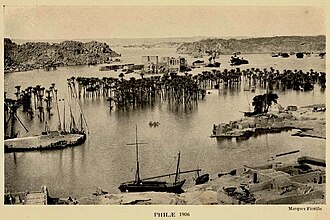
The relocation of Abu Simbel was not an isolated event. The campaign involved a complex web of logistics, including aerial surveys conducted by the Egyptian air force and ground inspections by multidisciplinary expert committees. The success of the Abu Simbel operation re-energized the global community, leading to further rescues, such as the relocation of the Philae temple complex to the nearby Agilkia Island between 1972 and 1979.
Global Cooperation and Financial Support
The campaign's success relied heavily on international diplomacy and funding. In the United States, the campaign gained significant visibility when 24 treasures from Tutankhamun's tomb toured 15 cities, an exhibition opened by Jacqueline Kennedy in 1961. While the tour was a cultural success, it was the strategic use of the Food for Peace program that secured vital funding. The U.S. government committed $12 million in equivalent Egyptian pounds, a pledge that provided the necessary momentum to proceed with the most difficult aspects of the relocation.
Summary of Relocated Monuments
| Monument | Original Location | Relocation Method/Status | Current Location |
|---|---|---|---|
| Abu Simbel (Two Temples) | Abu Simbel | Cut into blocks and moved 65m higher | Artificial hill near original site |
| Philae Temple Complex | Philae Island | Transferred to nearby island | Agilkia Island |
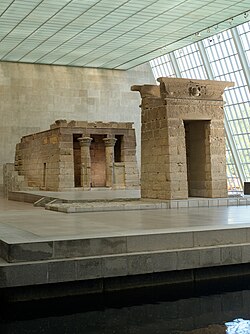
| Temple of Dendur | Dendur | Transferred as grant-in-return | Metropolitan Museum of Art, NY |
| Temple of Debod | Debod | Transferred as grant-in-return | Madrid, Spain |
| Temple of Taffeh | Taffeh | Transferred as grant-in-return | Rijksmuseum van Oudheden, Netherlands |
| Temple of Ellesyia | Ellesyia | Transferred as grant-in-return | Museo Egizio, Turin, Italy |
Key Facts
- Campaign Duration: 1960 to 1980.
- Total Monuments: 22 monuments were relocated in Lower Nubia.
- Primary Cause: The construction of the Aswan High Dam and the creation of Lake Nasser.
- Major Funding: The United States contributed approximately $18.5 million.
- Legacy: The campaign led directly to the creation of the UNESCO World Heritage Convention in 1972.
- Abu Simbel Scale: Blocks used for reassembly averaged 20 tons, with some reaching 30 tons.
Frequently Asked Questions
Why were the monuments moved?
The monuments were moved to prevent them from being submerged by the waters of Lake Nasser, which was created by the construction of the Aswan High Dam.
How were the temples actually moved?
For large structures like Abu Simbel, the temples were carefully cut into massive blocks, lifted, and reassembled in a higher, safer location.
What is a "grant-in-return"?
As part of the campaign, five temples were sent to Western museums as "grants-in-return" for the technical and financial assistance provided by those nations.
Which organization led the campaign?
The campaign was conducted under the leadership of UNESCO, supported by a coalition of fifty countries.
Is the Nubian area still a World Heritage Site?
Yes, the "Nubian Monuments from Abu Simbel to Philae" were inscribed on the UNESCO World Heritage List in April 1979.