Sursock Family: The Aristocratic Legacy of Beirut
The Sursock family (also spelled Sursuq) stands as one of the most influential Greek Orthodox Christian dynasties in Lebanese history. Originally hailing from Constantinople during the Byzantine Empire, the family established its roots in Beirut in 1712 when their forefather, Jabbour Aoun, relocated from the village of Berbara and adopted the Sursock name. Over the following centuries, the family executed what historian Leila Fawaz described as "the most spectacular social climb of the nineteenth century," evolving from successful traders into a global powerhouse of wealth and diplomacy.
By the peak of their influence, the Sursocks were recognized as one of the "Seven Families" of Beirut's aristocratic nobility. They operated within an international bourgeoisie that spanned Alexandria, Cairo, Constantinople, Paris, and Rome, maintaining strategic ties with European and Egyptian aristocracies, including French, Irish, Russian, Italian, and German nobility.
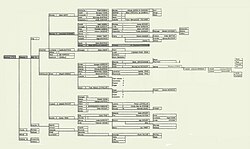
Key Facts
- Origins: Greek Orthodox family from Constantinople, settled in Beirut in 1712.
- Economic Power: Founded Sursock and Brothers and Banque Sursock et Frères (1858).
- Diplomatic Status: Served as dragomen (professional interpreters and diplomats) for various European and American consuls.
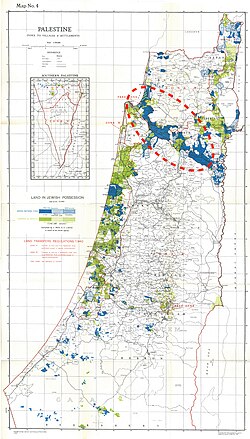
- Land Ownership: Once owned over 90,000 acres (400,000 dunams) in the Jezreel Valley.
- Cultural Contribution: Bequeathed the Sursock Museum to the city of Beirut.
The Rise to Power and Global Influence
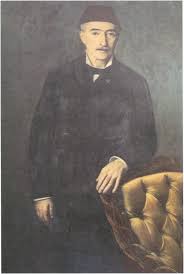
The family's ascent began in earnest during the 19th century through a combination of lucrative business ventures and political maneuvering. Dimitri Sursock founded the firm Sursock and Brothers, which became a vital agent for Lascaridi and Company in the 1850s and 60s, shipping grain across Europe to London and Cyprus. Following his death, the empire was managed by his sons: Nicolas, Moussa, Loutfallah, Khalil, Ibrahim, and Joseph.
The Sursocks leveraged their position to become protégés of several foreign powers. Members of the family, including Moussa Sursock (the 8th Duke of Cassano) and his father Alfred, traveled on Greek and Russian passports. Their deep involvement in Egyptian affairs also forged close bonds with the Egyptian monarchy, specifically Khedive Sa'id and Isma'il Pasha, which granted them preferential access to large-scale infrastructural projects.
Land Acquisitions and the Jezreel Valley
One of the most significant and controversial aspects of the family's wealth was their acquisition of land in Palestine. In 1872, the Ottoman Government sold the Marj ibn Amir (Esdraelon Valley) to the Sursocks. This region, known as the granary of ancient Palestine, consisted of some of the most fertile land in the area.
Beginning in 1910, the Palestine Land Development Company (PLDC), a Zionist agency, began purchasing this land for the Jewish National Fund (JNF). A major agreement was concluded on December 18, 1918, between the PLDC and Nagib and Albert Sursock for 71,356 dunams. Under the subsequent British Mandate, the Palestinian farmers living on these lands were classified as tenant farmers because they paid tithes to the Sursocks. This legal distinction allowed the Sursock family to sell the land and displace the population.
The resulting evictions affected approximately 1,746 Arab farmer families (8,730 people). While not legally required to provide compensation under British law, the evicted tenants received approximately $17 per person (roughly $300 in 2024 currency).
Architectural and Cultural Legacy in Beirut
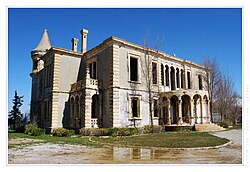
The Sursock family's wealth is immortalized in the architecture of Beirut, particularly in the Achrafieh district. Rue Sursock is named after the family, who built palatial residences that rivaled Italian palazzos. These structures remarkably survived the violence of the Lebanese Civil War.
The Sursock Museum
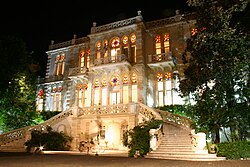
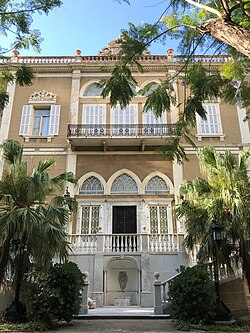
In 1912, Nicolas Sursock built a spectacular pearl-white villa blending Venetian and Ottoman architectural styles. In his will, he stipulated that the villa be converted into a museum after his death in 1952. Today, the Sursock Museum houses 5,000 pieces of art, including ceramics, glassware, and paintings from the 18th to 20th centuries.
Palaces and Public Works
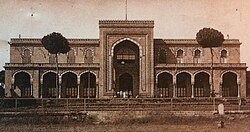
The family also developed the Moussa Sursock Palace and the Sursock House, the latter of which was expanded by Alfred Sursock to include vast gardens and a world-class collection of carpets and Italian artwork. Beyond residential luxury, the family invested in public entertainment; in 1921, they completed the Beirut Hippodrome complex, which included a movie theater and a casino.
Failed Ventures and Notable Members
Not all ambitions were realized. In 1882, the Sursocks won an Ottoman concession to build a railway across the Jezreel Valley to increase land values and streamline exports from the Hauran. Despite efforts by Sir Laurence Oliphant to secure British and German investment, the project failed after the Duke of Sutherland refused sponsorship, and the permit eventually expired.
The family produced several notable figures, including Girgi Dimitri Sursock, a scholar and Freemason who published works on Greek history. Princess Isabelle Hélène Sursock became a prominent figure in Roman high society, where she was known for shielding persecuted Jews and resisting fascists during the Mussolini era, eventually earning the rare honor of Vatican citizenship.
| Category | Key Details |
|---|---|
| Primary Business | Grain export, textile import, and banking (Banque Sursock et Frères). |
| Major Land Holding | Over 90,000 acres in the Jezreel Valley, Palestine. |
| Key Landmarks | Sursock Museum, Moussa Sursock Palace, Beirut Hippodrome. |
| Diplomatic Ties | Russia, Germany, Greece, Ireland, USA, and Egypt. |
Frequently Asked Questions
Where did the Sursock family originate?
The family originated in Constantinople during the Byzantine Empire before settling in Beirut in 1712.
What is the Sursock Museum?
It is a former private villa built by Nicolas Sursock in 1912, which was bequeathed to the city of Beirut in 1952 to serve as an art museum.
How did the Sursocks acquire land in the Jezreel Valley?
The family purchased the land, including the Marj ibn Amir, from Ottoman authorities in 1872.
What was the role of the Sursocks as dragomen?
They served as professional interpreters and diplomatic intermediaries for various European and American consuls-general in Beirut.
What happened to the tenant farmers in the Jezreel Valley?
Following the sale of the land to the Jewish National Fund, approximately 8,730 Palestinian Arab tenant farmers were evicted, with some receiving a compensation of $17 per person.