Maronite Catholic Christians in Lebanon
The Maronite Catholic Christians are a cornerstone of Lebanon's religious and political landscape. As an Eastern Catholic Syriac Church in full communion with Rome since 1180, the Maronites have played a pivotal role in the formation of the modern Lebanese state. Their history is one of resilience, moving from ascetic monastic beginnings to becoming a dominant political force in the Levant.
The cultural identity of the Lebanese people is a complex blend of indigenous Phoenician elements and various ruling cultures. Genetic research, such as the National Geographic Society's Genographic Project, suggests that genetic variation existed among communities before religious divisions occurred, meaning religion acted as a layer over an already diverse genetic foundation.
Key Facts
- Population: Estimated between 800,000 and 1,400,000.
- Religious Affiliation: Maronite Syriac Church of Antioch (Eastern Catholic).
- Political Role: Co-founded modern Lebanon with the Druze via the "Maronite–Druze dualism."
- Ecclesiastical Seat: The Maronite Patriarch is traditionally based in Bkerke, north of Beirut.
- Demographic Status: The largest Christian group in Lebanon.
Historical Origins and Evolution
The Legacy of Saint Maron
The roots of the church trace back to the fourth century with Maron, a monk and contemporary of St. John Chrysostom. Maron led an ascetic life along the Orontes River, inspired by the traditions of Anthony the Great and Pachomius. After his death in 410 AD, his disciples established a monastery that became the nucleus of the Maronite Church.
Persecution and Refuge
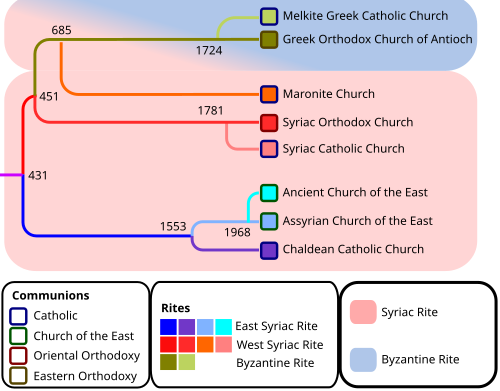
The Maronites adhered to the beliefs of the Council of Chalcedon (451 AD). Following the slaughter of 350 monks by Monophysites in Antioch, the community sought refuge in the mountains of Lebanon. This period solidified their recognition by the papacy, specifically under Pope Hormisdas between 514 and 523 AD.
The Monothelitism Controversy
During the seventh century, the Byzantine Empire attempted to unify Eastern churches through monothelitism—the doctrine that Christ had two natures but only one will. While contemporary Greek and Arab sources suggest Maronites accepted this doctrine for centuries to avoid persecution, the modern Maronite Church rejects the claim that they were ever separated from the universal Church.
The Rise of the Patriarchate
In 687 AD, following a period of instability and the evacuation of thousands of Maronites by Emperor Justinian II, the community elected their first Patriarch, John Maroun. This move toward independence occurred amidst the broader Muslim conquests of Eastern Christendom.
Political Influence and the Lebanese State
Maronite-Druze Dualism
In the early 18th century, the Maronites and the Druze established the foundation of modern Lebanon through a social and ruling system known as the "Maronite–Druze dualism." While the relationship was generally characterized by harmony, it was punctuated by conflict, most notably the 1860 civil war.
![A Christian church and Druze khalwa in Chouf Mountains: In the early 18th century the Maronites and the Druze set the foundation for what is now Lebanon.[8]](/images/28/db/28db1f5d4cae6cba7a7d31090bfcac70e59e02ce266f01bfe699762fe9b1fe47.jpg)
From the Mutasarrifate to Independence
The 1860 conflict led to the creation of the Mount Lebanon Mutasarrifate, an autonomous entity within the Ottoman Empire protected by European powers. After World War I, Maronite campaigning led to the creation of "Greater Lebanon." Under the French Mandate, Maronite influence grew substantially, dominating Lebanese politics until the civil war of 1975–1990.
Post-War Political Landscape
The 1989 Taif Accords shifted the balance of power, weakening Maronite supremacy to allow for a more equitable distribution of influence among other dominant communities, including Sunni and Shiite Muslims.
Demographics and Distribution
Maronites are primarily concentrated in the north of Beirut, the northern Mount Lebanon Governorate, the southern North Governorate, and parts of the Beqaa and South Governorates.
Precise population figures are difficult to obtain as the last official census was conducted in 1932. However, electoral data from 2022 indicates that Maronites represented approximately 19.94% of registered voters aged 21 and above.
| Year | Maronite Population | Total Population | Percentage |
|---|---|---|---|
| 1861 | 208,180 | 487,600 | 42.7% |
| 1932 | 226,378 | 785,543 | 28.8% |
| 1975 | 586,500 | 2,550,000 | 23% |
| 1988 | 999,672 | 4,044,784 | 24.7% |
Notable Maronite Figures
The Maronite community has produced numerous influential leaders, artists, and intellectuals, including:
- Political Leaders: Multiple Presidents of Lebanon, including Michel Aoun, Camille Chamoun, and Joseph Aoun (since 2025).
- Cultural Icons: The world-renowned poet and writer Khalil Gibran.
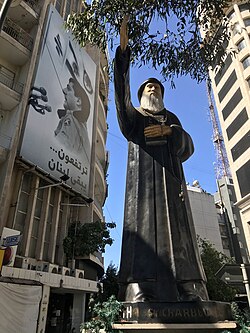
- Religious Figures: Saint Charbel and Patriarch Nasrallah Boutros Sfeir.
- Global Figures: Former automotive executive Carlos Ghosn.
Frequently Asked Questions
What is the Maronite-Druze dualism?
It was a governing and social system established in the early 18th century by Maronite Christians and Druze Muslims, which served as the foundation for the modern state of Lebanon.
Where is the Maronite Patriarch located?
The Maronite Patriarch is traditionally seated in Bkerke, located north of Beirut.
What is the relationship between the Maronite Church and the Vatican?
The Maronite Church is an Eastern Catholic Church that has affirmed its full communion with the Pope in Rome since 1180.
Why are population statistics for Maronites often estimates?
Precise numbers are challenging to determine because the last official national census in Lebanon was conducted in 1932.
What was the significance of the Taif Accords for Maronites?
The Taif Accords ended the Lebanese Civil War but also weakened the previous political supremacy of the Maronite community, redistributing power among Lebanon's various religious sects.