Sinai and Palestine Campaign: The Allied Push Against the Ottoman Empire
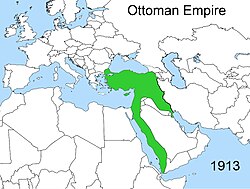
The Sinai and Palestine campaign was a pivotal series of military operations during World War I, spanning from November 17, 1914, to October 30, 1918. Fought across British Egypt and Ottoman Syria, this campaign saw the Allied Powers strive to protect the vital Suez Canal and eventually dismantle the Ottoman Empire's hold on the Levant. What began as a defensive struggle evolved into a sweeping offensive that fundamentally reshaped the map of the Middle East.
The conflict pitted a diverse coalition of Allied forces—including the United Kingdom, India, Australia, New Zealand, France, and others—against the Central Powers, primarily the Ottoman Empire supported by Germany and Austria-Hungary. The result was a decisive Allied victory and the subsequent partition of the Ottoman Empire.
Key Facts
- Duration: Nearly four years (Nov 1914 – Oct 1918).
- Primary Objective: Protection of the Suez Canal and the capture of Palestine and Syria.
- Allied Strength: Peaked at approximately 467,650 personnel by September 1918.
- Ottoman Strength: Estimated between 200,000 and 400,000 personnel by January 1918.
- Major Outcome: Total Allied victory leading to the collapse of Ottoman rule in the region.
Defending the Suez Canal (1915–1916)
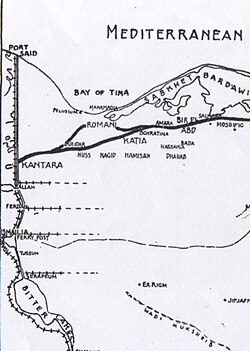
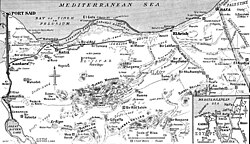
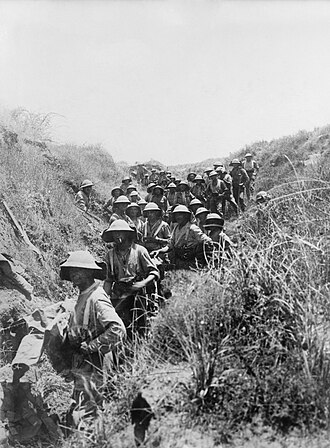
The campaign opened with a critical focus on the Suez Canal, the lifeline of the British Empire. To secure this waterway, the British established three main defensive sectors: the Southern sector (Suez to Kabrit), the Central sector (Kabrit to Ferdan), and the Northern sector (Ferdan to Port Said). These lines were manned by a mix of imperial forces, including the I ANZAC Corps (Australian and New Zealand Army Corps).
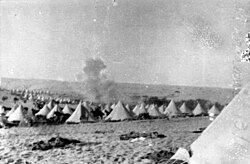
The Ottoman forces attempted to disrupt these defences, leading to early clashes and air raids. In June 1916, Ottoman bombers targeted Romani, resulting in significant casualties for the 1st Light Horse Brigade. This period of tension culminated in the Battle of Romani, which halted the Ottoman advance and shifted the momentum in favor of the Allies.
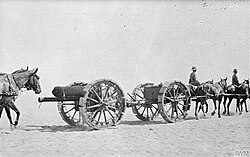
The Sinai Campaign and Manoeuvre Warfare
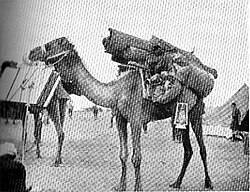
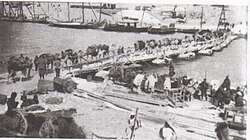
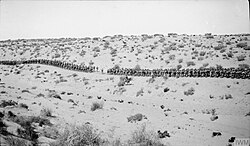
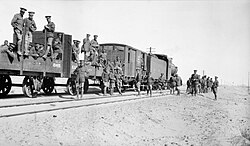
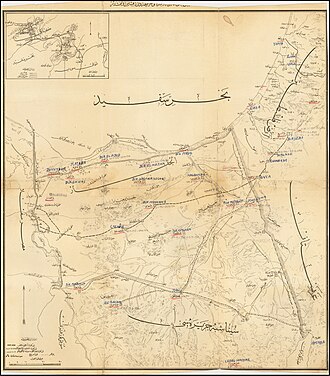
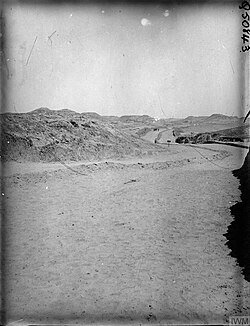
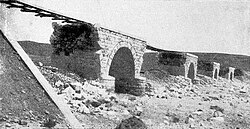
Following the victory at Romani, the Allies transitioned from a defensive posture to an offensive one. This phase was characterized by manoeuvre warfare—a strategy emphasizing movement and flexibility over static trench lines. To support this advance across the harsh desert, the British undertook massive engineering projects, including the construction of a railway and water pipelines across the Sinai Peninsula.
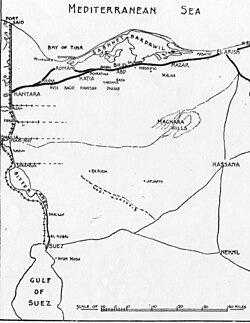
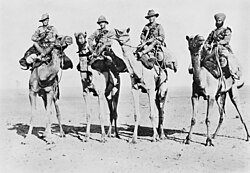
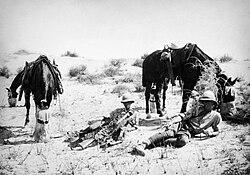
The Allied forces utilized specialized units to navigate the terrain, most notably the Imperial Camel Corps and various mounted divisions. Key victories at the Battle of Magdhaba in December 1916 and the Battle of Rafa in January 1917 effectively cleared the Sinai of Ottoman forces, bringing the first phase of the campaign to a close.
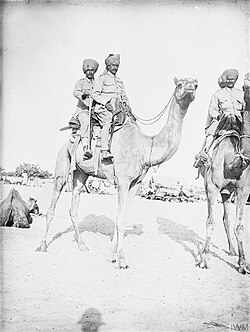
The Gaza Campaign and the Southern Offensive
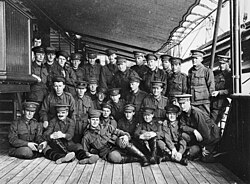
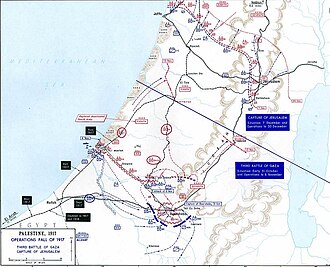
As the Allies entered Palestine, they encountered the fortified city of Gaza. The initial attempts to take the city resulted in the First and Second Battles of Gaza in April 1917, both of which ended in stalemate. This period of deadlock persisted until the arrival of General Edmund Allenby, who reorganized the Egyptian Expeditionary Force (EEF) for a more aggressive push.
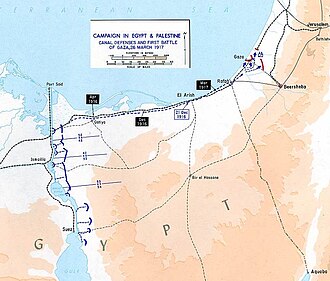
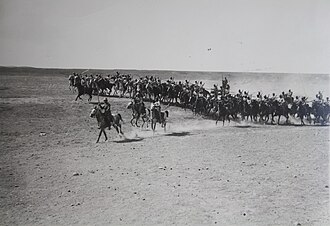
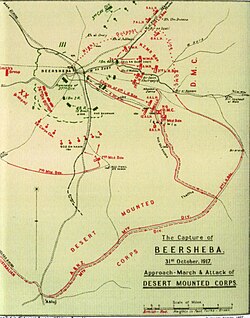
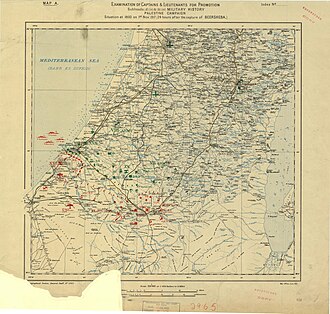
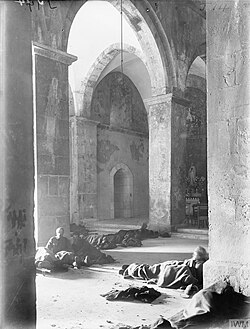
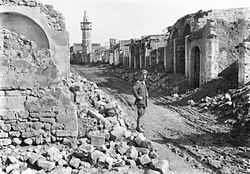
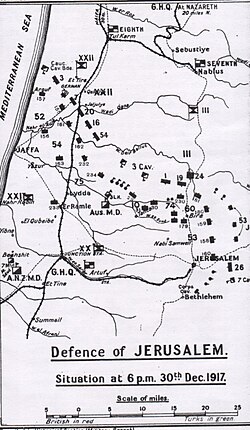
Allenby's strategy shifted toward a flanking maneuver. On October 31, 1917, the Battle of Beersheba took place, featuring a famous cavalry charge that broke the Ottoman line. This breakthrough allowed the Allies to capture Gaza and advance rapidly toward the Judean Hills, eventually leading to the capture of Jerusalem in December 1917.
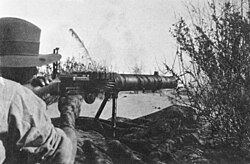
The Final Push: Megiddo and Damascus
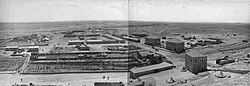
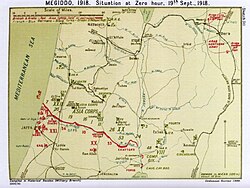
The final year of the campaign saw intense operations in the Jordan Valley and the Judean Hills. After a period of consolidation, Allenby launched the Megiddo offensive in September 1918. This masterstroke of coordination between infantry, cavalry, and air power shattered the Ottoman Seventh and Eighth Armies.
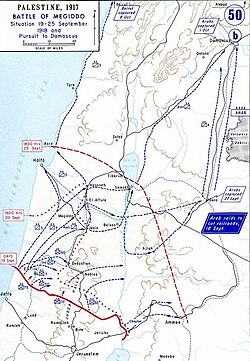
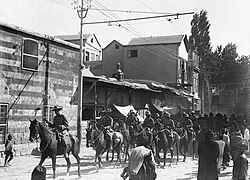
The collapse of the Ottoman front led to a rapid pursuit through Syria. Allied units, including Australian, British, French, Indian, and New Zealand forces, entered Damascus on October 2, 1918. The campaign concluded shortly after with the capture of Aleppo and the signing of the Armistice of Mudros.
Campaign Summary and Casualties
The scale of the conflict is reflected in the heavy losses sustained by both sides, particularly during the final offensives and due to the prevalence of disease in the desert environment.
| Engagement | Year | Approx. Allied Casualties | Key Outcome |
|---|---|---|---|
| Sinai Operations | 1915-16 | 2,700 | Suez Canal secured |
| 1st & 2nd Gaza | 1917 | 3,310 | Tactical stalemate |
| 3rd Gaza / Jerusalem | 1917 | 28,057 | Capture of Jerusalem |
| 2nd Jordan Advance | 1918 | 3,000 | Strategic positioning |
| Megiddo / Syria | 1918 | 101,300 (incl. POWs) | Ottoman collapse |
Frequently Asked Questions

Who were the primary belligerents in the Sinai and Palestine campaign?
The campaign was fought between the Allied Powers—led by the United Kingdom and its Empire (including India, Australia, New Zealand, and South Africa), France, and Italy—and the Central Powers, primarily the Ottoman Empire with support from Germany and Austria-Hungary.
What was the strategic importance of the Suez Canal?
The Suez Canal was the primary maritime link between Britain and its colonies in Asia, particularly India. Protecting it was essential for maintaining imperial communications and troop movements.
How did the terrain affect the military strategy?
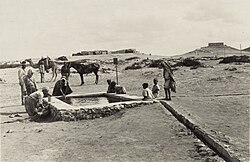
The harsh desert environment necessitated the use of mounted troops (cavalry and camels) and massive logistical efforts to provide water and transport via newly constructed railways.
What was the significance of the Battle of Beersheba?
The Battle of Beersheba was a turning point that broke the stalemate at Gaza. The successful capture of the town allowed the Allied forces to flank the Ottoman defenses and begin their advance toward Jerusalem.
What was the final result of the campaign?
The campaign ended in a decisive Allied victory, resulting in the capture of Damascus and Aleppo and contributing to the eventual partition of the Ottoman Empire.