Sir Harry Chauvel: The Legendary Commander of the Desert Mounted Corps
General Sir Harry Chauvel stands as one of the most distinguished figures in Australian military history. A master of mounted warfare, he was the first Australian to attain the rank of lieutenant general and later general, and the first to lead a corps. His leadership during the First World War, particularly as commander of the Desert Mounted Corps, resulted in some of the most decisive victories and rapid pursuits in the history of modern warfare.
Born into a grazing family in New South Wales, Chauvel's lifelong connection to horses and the land provided the foundation for his expertise in cavalry and mounted infantry operations. From the rugged terrains of the Boer War to the sands of the Middle East, his career spanned over six decades of service to the Australian Army.
Key Facts
- Firsts: First Australian to reach the rank of lieutenant general and the first to command a corps.
- Major Command: Led the Desert Mounted Corps during the Sinai and Palestine Campaign.
- Defining Victory: Orchestrated the capture of Beersheba and the subsequent pursuit to Damascus.
- Service Span: Active duty from 1884 to 1930, with a recall to service from 1940 to 1945.
- Highest Rank: General.
Early Life and the Boer War
Henry George "Harry" Chauvel was born on 16 April 1865, in Tabulam, New South Wales. The son of a grazier, he grew up on a vast station of 96,000 acres, where he developed an early aptitude for horsemanship. He began his military journey in 1886 as a second lieutenant in the Upper Clarence Light Horse before moving to Queensland, where he joined the Queensland Mounted Infantry in 1890.
Chauvel's first major overseas experience came during the Second Boer War. He commanded a company of the Queensland Mounted Infantry and distinguished himself by capturing a Maxim gun while fighting alongside New Zealanders. He later led a mixed force of British, Australian, Canadian, and New Zealand troops, known as "Chauvel's Mounted Infantry." For his bravery and leadership, he was mentioned in despatches and appointed a Companion of the Order of St Michael and St George (CMG).
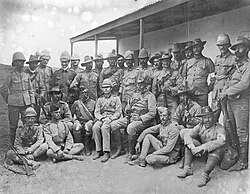
Upon returning to Australia in 1901, Chauvel became an officer in the newly federated Australian Army. He spent the following years refining the doctrine of mounted infantry—soldiers who used horses for mobility but fought on foot—emphasizing the need for better field discipline, stronger leadership, and efficient medical evacuation.
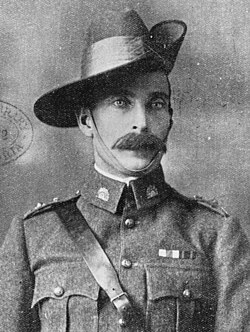
The First World War: From Gallipoli to the Desert
At the outbreak of World War I, Chauvel was promoted to colonel. He arranged for the Australian Imperial Force (AIF) to be diverted to Egypt, where he took command of the 1st Light Horse Brigade in December 1914. In May 1915, his troops were sent dismounted to the Gallipoli Peninsula, where Chauvel managed some of the most perilous sections of the front line.
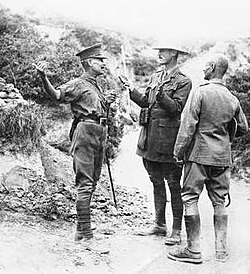
By November 1915, he was promoted to temporary major general and took charge of the 1st Division, overseeing the final phase of the campaign and the subsequent evacuation. His success at Gallipoli paved the way for his return to mounted operations in the Sinai Peninsula.
The Sinai and Palestine Campaign
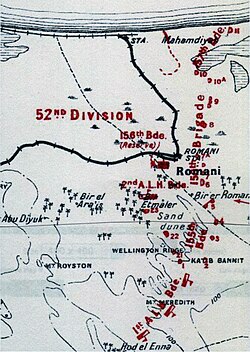
In March 1916, Chauvel assumed command of the Anzac Mounted Division. He led his forces to victory at the Battle of Romani and the Battle of Magdhaba. His rise continued in April 1917 when he took over the Desert Column, which was later renamed the Desert Mounted Corps. This appointment made him the first Australian to command a corps and the first to reach the rank of lieutenant general.
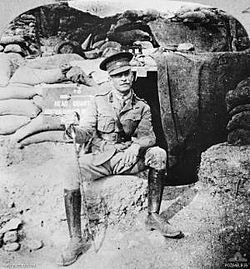
One of the most iconic moments of his career occurred in October 1917 at the Battle of Beersheba. Chauvel's light horsemen executed one of history's last great cavalry charges, capturing the town and its critical water supplies. This victory opened the way for the eventual capture of Jerusalem.
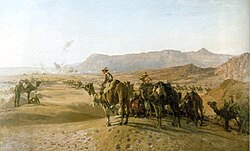
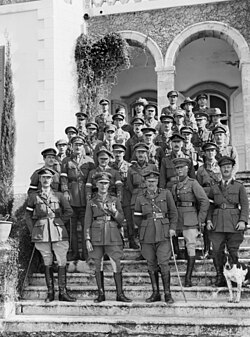
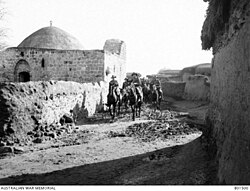
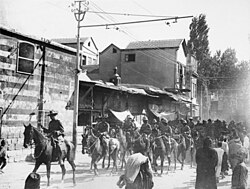
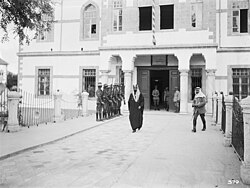
The campaign culminated in 1918 with the Battle of Megiddo. Chauvel executed a secret redeployment of three mounted divisions, launching a surprise attack that shattered enemy lines. This led to one of the fastest pursuits in military history, ending with the capture of Damascus on 2 October 1918.
Later Career and Legacy
Following the war, Chauvel served as Inspector General and later as Chief of the General Staff from 1923 to 1930. Despite facing political pressure to cut military spending, he worked to maintain the structure of the Australian Army. In November 1929, he became the first Australian promoted to the rank of full general.
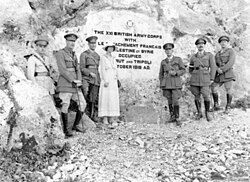
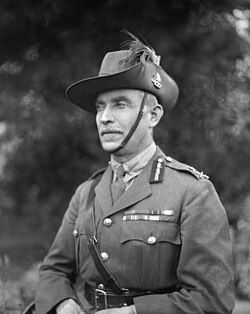
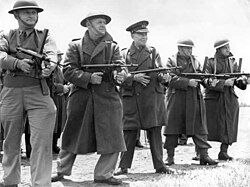
During the Second World War, Chauvel was recalled to duty as the Inspector in Chief of the Volunteer Defence Corps (VDC), continuing his service until his retirement. He passed away on 4 March 1945, in Melbourne, Victoria, at the age of 79.
| Period | Role/Command | Key Conflict/Event |
|---|---|---|
| 1899–1902 | Company Commander, QMI | Second Boer War |
| 1914–1915 | Commander, 1st Light Horse Brigade | Gallipoli Campaign |
| 1916 | Commander, Anzac Mounted Division | Battle of Romani & Magdhaba |
| 1917–1919 | Commander, Desert Mounted Corps | Beersheba & Capture of Damascus |
| 1923–1930 | Chief of the General Staff | Inter-war Army Administration |
| 1940–1945 | Inspector in Chief, VDC | Second World War |
Frequently Asked Questions
What was Sir Harry Chauvel's most significant achievement?
His most significant achievement was leading the Desert Mounted Corps to a series of decisive victories in the Sinai and Palestine Campaign, including the famous cavalry charge at Beersheba and the capture of Damascus.
Was Chauvel the first Australian to reach the rank of General?
Yes, he was the first Australian to attain the rank of lieutenant general and later the first to be promoted to the rank of full general in November 1929.
What is the difference between cavalry and the Light Horse units Chauvel led?
While often associated with cavalry charges, the Light Horse were primarily mounted infantry. This means they used horses for rapid movement across the desert but typically dismounted to fight on foot using rifles.
Did Sir Harry Chauvel serve in the Second World War?
Yes, although he had retired in 1930, he was recalled to duty during the Second World War to serve as the Inspector in Chief of the Volunteer Defence Corps.
Where was Sir Harry Chauvel born and buried?
He was born in Tabulam, New South Wales, and is buried in the Springvale Botanical Cemetery in Victoria.