Salim Ali Al-Salam: The Visionary Leader of Beirut's Modernization
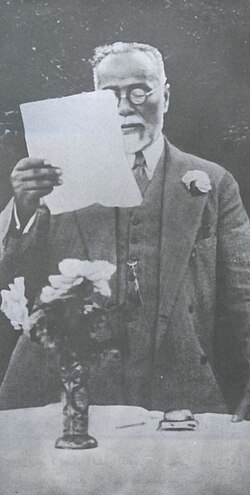
At the turn of the 20th century, Beirut was a city in transition, caught between the traditions of the Ottoman Empire and the encroaching influence of Western modernity. Standing at the center of this metamorphosis was Salim Ali Al-Salam (1868–1938), also known as Abu Ali Salam. A merchant, politician, and philanthropist, Al-Salam was more than just a public official; he was a bridge between worlds, embodying a rare blend of traditional piety and an enlightened, progressive outlook.
From his role as the President of the Municipality of Beirut to his leadership in the Arab nationalist movement, Al-Salam dedicated his life to the decentralization and modernization of his homeland. His legacy persists today, not only in the history books but in the very geography of Beirut, where a main avenue bears his name.
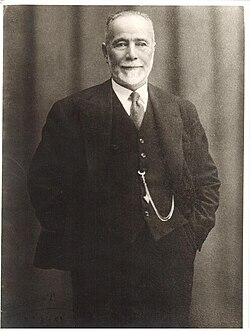
Key Facts
- Public Offices: Served as President of the Municipality of Beirut, Deputy to the Ottoman Parliament, and President of al-Makassed.
- Political Leadership: Led the Beirut Reform Movement and served on the Executive Committee of the First Arab Congress (1913).
- Educational Advocacy: Promoted modern education for both men and women, including sending his children to study in England.
- Resistance: Opposed both the political repression of Jamal Pasha during WWI and the subsequent French Mandate.
- Social Impact: Challenged social conventions by supporting his daughter Anbara's decision to appear unveiled in public.
Early Life and Rise to Prominence
Salim Salam's intellectual foundation was multicultural from the start. He attended a Christian missionary school to learn French and an Ottoman school for Turkish. After the death of his father when he was seventeen, Salam took over the family business, establishing himself as a successful merchant specializing in staples at the Beirut seaport. He further diversified his interests through agricultural and construction projects.
His economic success quickly translated into civic leadership. By 1895, he was a member of the Chamber of Commerce, and by 1903, he served as Vice President of the Court of Commerce. In 1890, he married Kulthum Barbir, the granddaughter of Ahmad Al Agharr, a prominent figure who had served as mufti, qadi, and naqib al-ashraf (head of the descendants of Muhammad). Together, they raised twelve children, fostering a household that valued both faith and global education.
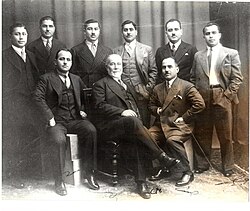
A Modern Outlook in a Traditional Society
Historians and contemporaries describe Salim Salam as a man of contradictions who harmonized them perfectly. While he remained a devout Muslim, he was entirely unfanatical. He maintained close friendships with Christian notables and the Greek Orthodox archbishop of Beirut, often visiting them informally with his sons.
This openness extended to his children's education. Despite pushback from conservative peers, he sent his sons to the Syrian Protestant College (now the American University of Beirut) and hired a Greek Catholic priest to teach them French. In 1910, he took the unprecedented step of sending his eldest son, Ali, to England to study agricultural engineering.
Perhaps the most striking example of his progressive nature was his relationship with his daughter, Anbara. In the 1920s, Anbara became the first Muslim woman in Lebanon to appear in public unveiled. This decision was made with her father's blessing, reflecting his belief in individual agency and modernization.
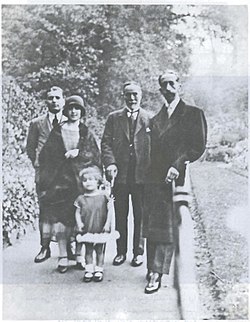
Civic Leadership and Institutional Reform
In 1908, Salim Salam reached the pinnacle of local governance when he was appointed President of the Municipality of Beirut. He inherited a municipality plagued by debt and crumbling infrastructure. Through a hands-on approach and comprehensive reforms, he worked to restore the city's financial and moral foundations.
His commitment to social progress was further evidenced in 1909 when he became president of al-Makassed, the Muslim Society of Benevolent Intentions. Under his leadership, the organization shifted toward modern pedagogical methods, hiring specialized teachers with higher degrees. By 1912, he had turned the organization from a deficit-ridden entity into a thriving institution with revenues exceeding 180 thousand piasters.
The Fight for Arab Identity and Independence
As the Ottoman Empire struggled, Salim Salam emerged as a champion for Arab rights. In 1913, he was elected executive officer of the Beirut Reform Movement, which advocated for the decentralization of the empire and the management of Arab provinces by local people.
That same year, he traveled to Paris for the First Arab Congress. As a member of the Executive Committee, he helped formulate demands for the Arabic language to be made official in Arab provinces and for the employment of Arab troops within their own lands. This congress is widely regarded as a turning point in the crystallization of a distinct Arab national identity.
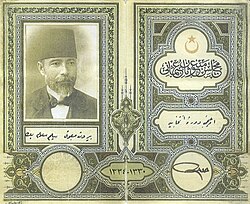
In 1914, Salam was elected as a deputy from Beirut to the Ottoman Parliament. He attempted to organize an "Arab Bloc" of deputies in Istanbul to advocate for public education and women's rights, though the outbreak of World War I disrupted these plans.
Resistance Against Repression and Mandates
During World War I, Salim Salam became a staunch opponent of Jamal Pasha, the Ottoman commander whose campaign of persecution led to the execution of many Arab nationalists in Beirut and Damascus. Disenchanted with Ottoman rule, Salam supported the Arab Revolt led by Sharif Hussein of Mecca and his son, Emir Faisal.
As the war ended in 1918, Salam played a pivotal role in negotiating the departure of the Ottoman governor of Beirut, Ismail Hakki Bey. However, the brief window of Arab self-governance was short-lived; by October 10, 1918, the French army entered Beirut, establishing the French Mandate.
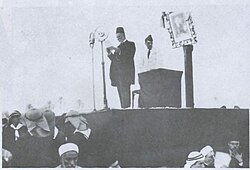
Salam remained an outspoken critic of French rule. His resistance led to two separate arrests: a four-month imprisonment in 1919 and a five-month exile to the village of Douma in 1922. Even in his later years, he continued to organize popular assemblies, such as the "Conferences of the Coast and the Four Districts" in 1933 and 1936, to call for independence and Arab unity.
Summary of Salim Ali Al-Salam's Career
| Domain | Position/Role | Key Contribution |
|---|---|---|
| Municipal | President of Municipality of Beirut | Financial reform and infrastructure improvement. |
| Educational | President of al-Makassed | Modernized pedagogy and increased institutional revenue. |
| Political | Ottoman Parliament Deputy | Advocated for Arab education and women's rights. |
| Nationalist | Executive Committee, First Arab Congress | Formulated demands for Arab official language and autonomy. |
| Activism | Leader of Reform Movement | Pushed for decentralization of the Ottoman Empire. |
Frequently Asked Questions
Who was Salim Ali Al-Salam?
Salim Ali Al-Salam was a prominent Beiruti merchant and politician (1868–1938) who served as the President of the Municipality of Beirut and a deputy to the Ottoman Parliament. He is remembered as a progressive leader who balanced traditional Islamic values with a modern, enlightened outlook.
What was the Beirut Reform Movement?
The Beirut Reform Movement was a political initiative led by Salim Salam and others in 1913. It called for the modernization of the Ottoman Empire and the decentralization of power, arguing that the internal affairs of Arab provinces should be managed by local residents.
How did Salim Salam influence women's rights?
He advocated for the education of women in the Ottoman Parliament and supported his daughter, Anbara, in her decision to study in London and appear in public unveiled, defying the strict social conventions of Beirut at the time.
What was his role during the French Mandate?
Salim Salam was a fierce opponent of the French Mandate in Lebanon. He organized popular assemblies to demand independence and Arab unity, which resulted in him being imprisoned in 1919 and exiled to Douma in 1922.
What is al-Makassed?
Al-Makassed is a leading charitable organization in Beirut dedicated to promoting modern education among Muslims. As its president, Salim Salam improved teaching quality and stabilized the organization's finances.