Avenue des Français: The Evolution of Beirut's Historic Seaside Promenade
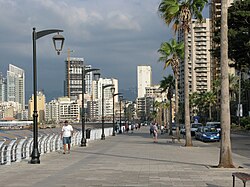
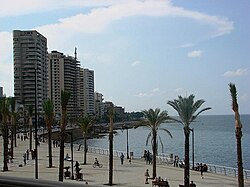
Long before the modern skyline of Beirut took shape, the city's relationship with the Mediterranean was defined by the Avenue des Français. This wide, palm-lined seaside street served as Beirut's first seaside promenade, blending European urban planning with the natural beauty of the Levant. Today, while the original street has transformed, its legacy lives on through the contemporary Shoreline Walk.
The Golden Age of the Avenue
The Avenue des Français was born from an urban renewal project during the Mandate for Syria and the Lebanon. It was created by widening the former Rue Minet El Hosn, transforming a simple road into a sophisticated esplanade. To build this waterfront marvel, engineers enlarged the levee using wreckage from the old town and constructed a retaining wall from the ruins of a Byzantine basilica.
With its broad sidewalks and lush palm trees, the avenue quickly became the social heart of the city, frequented by Beirut's most prominent families. Its prestige was so great that in 1925, postcards were printed comparing it to the famous Promenade des Anglais in Nice to attract French tourists to the region.
Architectural Landmarks and Luxury
The avenue was home to some of the city's most iconic establishments. In 1932, the legendary Hotel St. Georges was built facing Saint George Bay, followed shortly by the Hotel Normandy. Between these two giants sat Lucullus, a renowned French restaurant owned by the Bassoul family, famous for serving bouillabaisse every Friday. This era of luxury established the foundation for the Corniche Beirut, one of the city's most beloved public spaces.
Loss and Burial: The War Years
The prosperity of the Avenue des Français came to an abrupt end during the war. The area was eventually covered by a massive landfill known as the Normandy dump, named after the hotel that once stood there. This landfill extended the land northward by more than 600 meters, effectively erasing the original coastline and burying the avenue beneath layers of debris.
The Modern Revival: The Shoreline Walk
In the wake of the conflict, Solidere—the company tasked with the redevelopment of the Beirut Central District—sought to reclaim the city's lost connection to the sea. They commissioned the architectural firm Gustafson Porter to design the Shoreline Walk, a pedestrian promenade that traces the exact line of the original, lost coastline.
The Shoreline Walk is more than just a path; it is a sequence of five open-space squares and gardens: Harbour Square, All Saints Square, Zeytouneh Square, Santiyeh Garden, and the Shoreline Gardens. The latter is situated directly on the site of the historic Avenue des Français.
To honor the past, Gustafson Porter integrated a linear water feature within the Shoreline Gardens as a contemporary interpretation of the original sea wall. This design successfully re-established the east-west connection that the Avenue des Français provided for generations.
Key Facts
- Origin: Created by widening Rue Minet El Hosn during the Mandate for Syria and the Lebanon.
- Construction: The retaining wall was built using ruins from a Byzantine basilica.
- Famous Hotels: Home to the Hotel St. Georges (est. 1932) and Hotel Normandy.
- Disappearance: Buried by the "Normandy dump" landfill, which extended the coast by over 600m.
- Modern Successor: Now part of the Shoreline Walk, designed by Gustafson Porter for Solidere.
| Era | Name/Feature | Primary Characteristic |
|---|---|---|
| Mandate Period | Avenue des Français | Palm-lined seaside promenade with luxury hotels. |
| War Years | Normandy Dump | Landfill that buried the original coastline. |
| Post-War/Modern | Shoreline Walk | Pedestrian promenade and public gardens. |
Frequently Asked Questions
What was the Avenue des Français?
It was Beirut's first seaside promenade, a wide, palm-lined street known for its luxury hotels and status as a gathering place for the city's prominent families.
How did the avenue disappear?
During the war, the area was covered by a landfill called the Normandy dump, which extended the land by more than 600 meters to the north, burying the original street and coastline.
What is the Shoreline Walk?
The Shoreline Walk is a modern pedestrian promenade designed by Gustafson Porter for Solidere. It traces the original coastline of Beirut and includes the Shoreline Gardens on the site of the former Avenue des Français.
Which famous hotels were located on the avenue?
The most notable hotels were the Hotel St. Georges, built in 1932, and the Hotel Normandy.
What is the significance of the linear water feature in Shoreline Gardens?
The water feature serves as a contemporary architectural interpretation of the historic sea wall that once protected the Avenue des Français.