Quechua People: Culture, Language, and History of the Andes
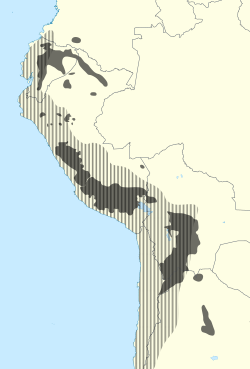
The Quechua (also known as Quichua or Kichwa) are Indigenous peoples of South America whose ancestral roots are deeply embedded in the highlands of Peru. Known for their resilience and rich cultural heritage, they are the descendants of various ethnic groups who flourished in the Andes, most notably the Inca Empire. Today, they maintain a vibrant presence across several nations, blending ancient traditions with modern life.
For a Quechua speaker, the word for "person" is runa (or nuna), and the people as a whole are referred to as runakuna (or nunakuna). This simple definition reflects a profound sense of identity tied to their humanity and their connection to the land.
Key Facts
- Total Population: Approximately 10–11 million people.
- Primary Regions: Peru, Bolivia, Ecuador, Argentina, Colombia, and Chile.
- Language: Quechua (native) and Spanish (non-native).
- Religion: Predominantly Catholicism, often blended with traditional Andean beliefs.
- Staple Crops: Potatoes, quinoa, and maize.
- Official Status: Quechua became Peru's second official language in 1969.
Language and Regional Distribution
The Quechua languages originated in Peru and evolved into various dialects. The most widespread is Southern Quechua. In Ecuador, the people speak the Kichwa dialect, while the Inga people of Colombia speak Inga Kichwa. Because these dialects can vary significantly, mutual understanding is not always possible between speakers of different regions.
While the Inca Empire helped spread the language, it was spoken by several groups before the rise of Cusco, including the Huanca and Chanka. In other regions, such as Bolivia and Ecuador, the language was adopted during or after the Inca period.
| Country | Estimated Population |
|---|---|
| Peru | 5,611,085 |
| Bolivia | 1,646,174 |
| Ecuador | 1,592,000 |
| Colombia | 55,000 |
| Argentina | 52,154 |
| Chile | 39,430 |
Historical and Sociopolitical Background
The history of the Quechua is marked by both imperial grandeur and systemic struggle. Following the colonial era, large landowners seized ancestral lands, forcing many Indigenous people into bondage—a system known in Ecuador as Huasipungo. This exploitation led to numerous revolts, the most significant being the uprising led by Túpac Amaru II between 1780 and 1781.
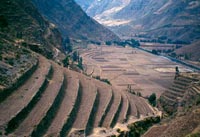
In the mid-20th century, agrarian reforms in Bolivia (1952) and Peru (1968) attempted to redistribute land to Indigenous populations. While this disrupted some communal ownership structures, the ayllu (a traditional community-based land system) persists in remote areas like the Q'ero community in Peru.
Modern political struggles continue, particularly regarding land rights. In Ecuador, the association ECUARUNARI has worked to regain communal land titles, with the Sarayaku community gaining international recognition for resisting the exploitation of the rainforest for petroleum.
Material Culture and Daily Life
Agriculture and Diet
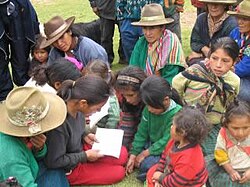
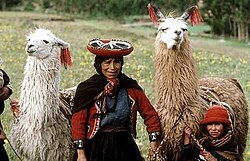
The Quechua are world-renowned for domesticating the potato, cultivating thousands of varieties for food and medicine. Other staples include quinoa and maize. A traditional delicacy is ch’arki (the origin of the word "jerky"), which is meat—traditionally llama—that is sun- and freeze-dried in the Andean climate.
One of the most distinct culinary traditions is pachamanca, a pit-cooking technique where meats (chicken, beef, pork, lamb) and tubers (potatoes, sweet potatoes, oca, mashwa) are cooked underground with seasonings and fava beans.
Clothing and Traditions
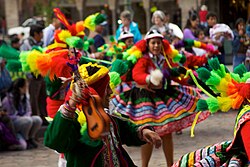
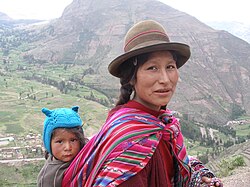
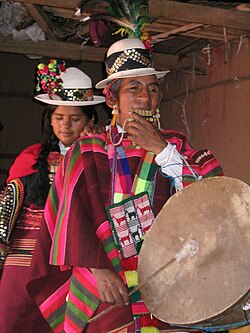
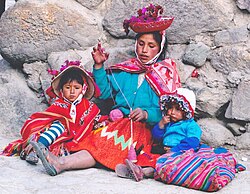
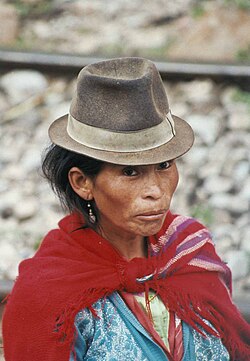
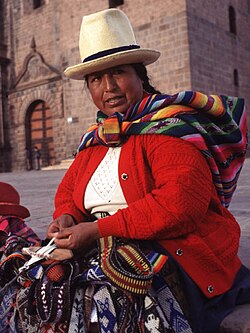
Traditional attire is often colorful and distinctive. Since the 1920s, many women have worn Fedora-style hats, originally introduced by British railway workers. For footwear, ajotas—durable sandals made from recycled tires—are commonly used due to their affordability and strength.
Medicine and Coca
The use of coca leaves is central to Andean life. When chewed, coca acts as a mild stimulant that suppresses hunger, thirst, and fatigue, and is widely used to alleviate altitude sickness. While it is the raw material for cocaine, for the Quechua, it remains a vital tool for physical endurance during agricultural and construction work.
Spirituality and Mythology
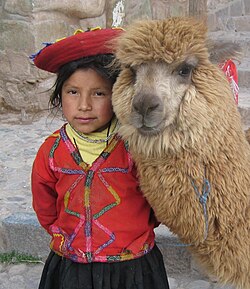
Quechua spirituality is a form of syncretism, where Catholicism is blended with ancient Andean beliefs. Central to this is the veneration of Pachamama (Mother Earth), to whom offerings and libations are made to ensure fertility. They also honor apu (mountain spirits) and wak'a (local deities).
Their mythology often reflects historical trauma. The Pishtaco (or Nak'aq) is a mythical "butcher" who kills Indigenous people to extract their fat. Conversely, the Inkarrí myth in southern Peru serves as a cultural link, symbolizing hope and restoration across the region.
Recent Challenges and Persecution
Despite their cultural richness, Quechua populations have faced severe persecution. During Peru's internal conflict in the 1980s, approximately three-quarters of the 70,000 deaths were Quechua. Furthermore, between 1996 and 2001, a forced sterilization policy under President Alberto Fujimori targeted roughly 270,000 Quechua and Aymara women.
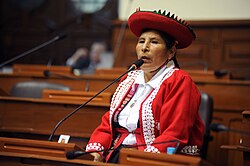
Ethnic discrimination also persists in government. For example, when politicians Hilaria Supa and María Sumire attempted to swear their oaths of office in Quechua, the Peruvian parliamentary leadership initially refused to accept it.
Frequently Asked Questions
What is the difference between Quechua and Kichwa?
Quechua is the general term for the language family and the people. Kichwa is the specific dialect spoken by the Indigenous people of Ecuador.
What is Pachamanca?
Pachamanca is a traditional Andean cooking method where various meats, tubers, and vegetables are cooked in a pit in the ground using hot stones.
How is coca used traditionally by the Quechua?
Coca leaves are chewed as a mild stimulant to reduce fatigue, hunger, and thirst, and are specifically used to treat altitude sickness in the high Andes.
What is the significance of the ayllu?
The ayllu is a traditional form of communal land ownership and social organization that has existed since pre-colonial times and still persists in some remote Andean regions.
Who was Túpac Amaru II?
Túpac Amaru II was a leader who led one of the largest Indigenous revolts against Spanish colonial rule between 1780 and 1781.