Cusco: The Imperial City and Navel of the World
Perched high in the Peruvian Andes, Cusco (also spelled Cuzco or Qosqo in Quechua) stands as a living testament to the grandeur of the Inca Empire. Known by the nicknames La Ciudad Imperial (The Imperial City) and El Ombligo del Mundo (The Navel of the World), it serves as the historical capital of Peru. Today, it is a vibrant metropolis where ancient stone foundations support colonial architecture, attracting over 2 million visitors annually.
The city's unique identity is rooted in its layers of history, from the early Killke culture to the sophisticated urban planning of the Incas and the subsequent Spanish conquest. Its designation as a UNESCO World Heritage Site in 1983 recognizes its exceptional cultural value as a fusion of indigenous and European influences.
Key Facts
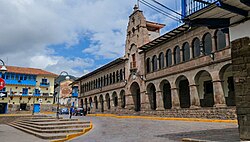
![View in the Plaza del Cabildo, Cuzco in 1877 by Ephraim George Squier[28]](/images/44/97/44976c4a81dace27fecde7955e8f943276326dcdc9292f79ebf26562f7ef8105.jpg)
- Elevation: Approximately 3,399 meters (11,152 feet) above sea level.
- Status: Historical Capital of Peru and a UNESCO World Heritage Site.
- Population: 428,450 (as of 2017), making it the 7th most populous city in Peru.
- Economy: Heavily driven by tourism, serving as the gateway to Machu Picchu.
- Demographics: A predominantly native population, with 63% identifying as Quechua.
Historical Evolution
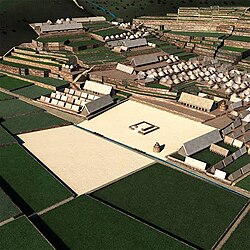
Pre-Colonial and Inca Era
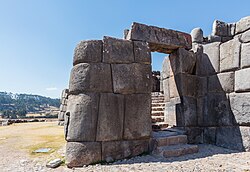
The region was first inhabited by the Killke culture during the 10th century, who constructed the massive fortress of Sacsayhuamán in the 11th century. In the 12th century, Manco Cápac founded the city as the capital of the Kingdom of Cusco, which eventually expanded into the vast Inca Empire.
Spanish Conquest and Colonial Influence
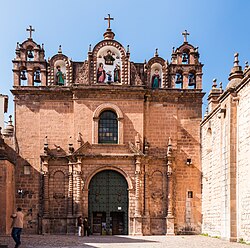
The Spanish conquered the region in the 16th century, and Francisco Pizarro reestablished the city on March 23, 1534. The colonial era saw the construction of churches and administrative buildings directly atop Inca monuments, creating a distinct architectural hybrid. This period was marked by significant events, including a devastating earthquake in 1650 that destroyed early complexes like the Basilica de la Merced.
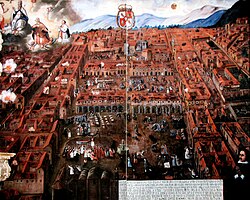
![Map showing the city of Cusco during the Inca Empire. Painting of 1565 by Giovanni Battista Ramusio.[25][26][27]](/images/eb/0c/eb0c32d124f772d6c9c2f05ef1543fb4a7225b071f8ed3ba46541ddab2ed1997.jpg)
Geography and Climate
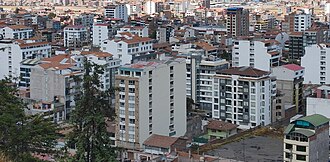
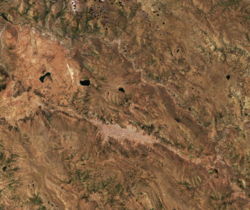
Cusco is located in the Peruvian Andes at a high altitude, which significantly influences its climate. The city experiences a temperate highland climate with a distinct rainy season from November to March and a dry season from May to September.
| Metric | Wettest Month (Jan) | Driest Month (Jun) | Annual Average/Total |
|---|---|---|---|
| Mean Daily Max Temp | 20.5°C (68.9°F) | 20.8°C (69.4°F) | ~21°C |
| Mean Daily Min Temp | 8.0°C (46.4°F) | 1.2°C (34.2°F) | Variable |
| Average Precipitation | 153.4 mm | 3.3 mm | 727.7 mm |
| Sunshine Hours | 143 hrs | 228 hrs | 2,350 hrs |
Cultural Heritage and Architecture
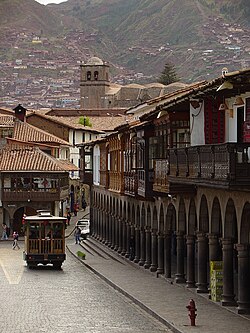
Architectural Landmarks
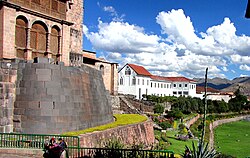
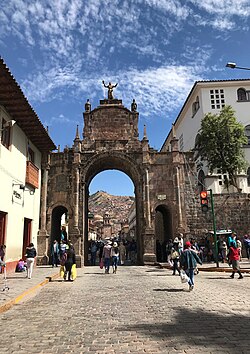
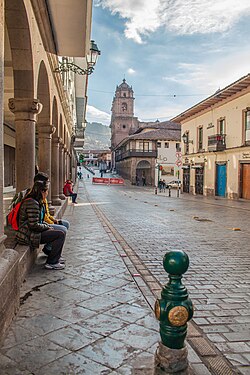
The city is famous for its precision stonework. Hatun Rumiyuq street showcases the seamless integration of Inca bases with colonial structures. Other primary sites include:
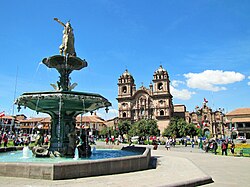
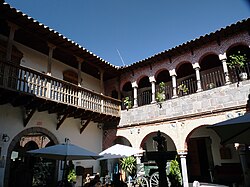
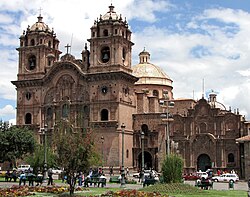
- Plaza de Armas: The central square, featuring the Cusco Cathedral and the Iglesia de la Compañía de Jesús.
- Qorikancha: Once the most important temple in the Inca Empire, now partially occupied by the Convent of Santo Domingo.
- Basílica de la Merced: A colonial landmark rebuilt after the 1650 earthquake.
![View of Hatun Rumiyuq Street. Many of the colonial constructions used the city's Inca constructions as a base.[31]](/images/60/4a/604a16635ec7df4e8ef9c1048e8f37d3adebed16b750981582d11d9057ee2899.jpg)
Traditions and Cuisine
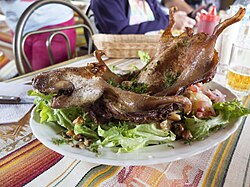
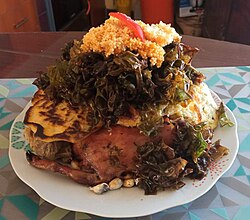
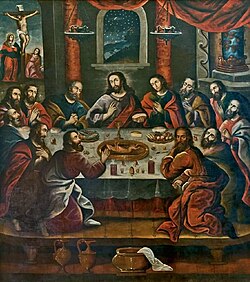
Cusco maintains a strong connection to its indigenous roots. The local cuisine features traditional dishes such as Chiri Uchu and the consumption of Cuy (guinea pig), which is so culturally significant it even appears in local interpretations of religious art, such as Marcos Zapata's "The Last Supper."
Modern City and Infrastructure
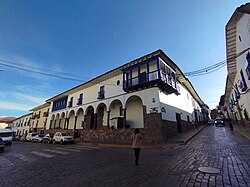
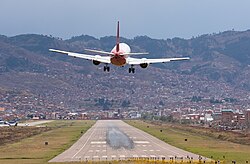
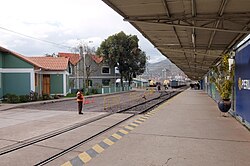
Today, Cusco is a municipality governed by a mayor and divided into several districts, with the Cusco District being the largest. The city is well-connected via the Alejandro Velasco Astete International Airport and a rail system in Wanchaq that facilitates travel to the Sacred Valley and Machu Picchu.
Sports and Arts
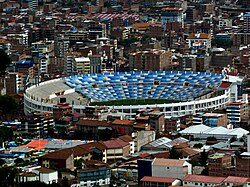
The city is a hub for sports and cinema, hosting teams like Deportivo Garcilaso and Cusco Football Club. It also hosts the International Short Film Festival (FENACO), which has grown to include hundreds of films from dozens of countries.
Frequently Asked Questions
What is the significance of the rainbow flag in Cusco?
Introduced in 1973 and officially adopted in 1978, the seven-striped rainbow flag represents the city's identity. Since 2021, it has also featured the golden Sol de Echenique.
Why is Cusco called the "Navel of the World"?
This nickname, El Ombligo del Mundo, refers to its historical status as the center and capital of the Inca Empire.
How does the altitude affect visitors in Cusco?
With an elevation of approximately 3,399 meters (11,152 feet), visitors often experience altitude effects, making it a critical consideration for travel planning.
Which UNESCO criteria was Cusco recognized under?
Cusco was inscribed as a World Heritage Site in 1983 under cultural criteria iii and iv.
What is the relationship between the city's names, Cusco and Qosqo?
Cusco is the Spanish spelling, while Qosqo is the Quechua name. The name Qosqo was officially adopted between 1983 and 1995 to reclaim the indigenous pronunciation and spelling.