Chachapoyas: The Mysterious Warriors of the Clouds
High in the mist-shrouded peaks of the southern Amazonas region of present-day Peru lived a civilization known as the Chachapoyas. Often referred to as the "Warriors of the Clouds," these people built an extraordinary society within the cloud forests—high-altitude tropical forests characterized by persistent low-level cloud cover. Flourishing between approximately 800 and 1470 AD, the Chachapoyas created a distinct cultural identity that resisted the expansion of the Inca Empire until shortly before the Spanish conquest.
Because much of our knowledge comes from the accounts of their conquerors—the Incas and the Spanish—the true internal history of the Chachapoyas remains partially obscured. However, modern archaeology, utilizing advanced tools like lidar (light detection and ranging) and photogrammetry, is beginning to reveal the scale and sophistication of this egalitarian society.
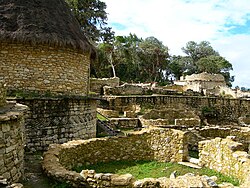
Key Facts
- Period: Late Intermediate period, roughly 800 AD to 1470 AD.
- Location: The Amazonian Andes of northern Peru, primarily the Utcubamba River basin.
- Architecture: Known for circular stone buildings and massive cliffside fortifications.
- Social Structure: Evidence suggests a nonhierarchical, egalitarian society.
- Fate: Conquered by the Inca Empire and later devastated by Spanish colonization.
Geography and the "Amazonian Andes"
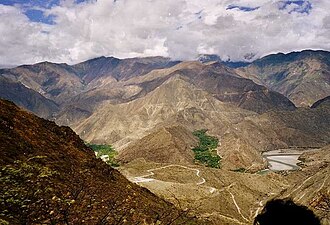
The Chachapoyas occupied a triangular territory on the eastern slopes of the Andes. Their realm stretched from the confluence of the Marañón and Utcubamba rivers in Bagua Province to the Abiseo River basin. This region, often called the "Amazonian Andes," is a rugged landscape where the mountains meet dense tropical vegetation, typically situated between 2,000 and 3,000 meters (6,600 to 9,800 feet) in elevation.
Due to the formidable terrain and the size of the Marañón River, the Chachapoyas remained relatively isolated from the Peruvian coast. This isolation helped preserve their unique customs, though they did maintain some interaction with neighboring cultures.
The Rise and Fall of the Cloud Warriors
Origins and Expansion
The culture emerged around 800 AD, possibly as a response to the influence of the Wari culture. Scholars suggest that the expansion into the Amazonian Andes was driven by a need for more agrarian land, leading to the extensive terracing of the mountainsides. This process is sometimes described as the "mountainization of the rain forest," where Andean agricultural practices were transplanted into the tropical highlands.
Inca Conquest and Resistance
In the second half of the 15th century, under the rule of Tupac Inca Yupanqui, the Inca Empire began its annexation of the region. The Chachapoyas were famously rebellious, resisting Inca troops for years. To maintain control, the Incas employed the mitma system—a policy of forced resettlement where large groups of Chachapoyas were moved to remote parts of the empire to break their social ties and prevent further uprisings.
During the subsequent Inca civil war between Atahualpa and Huáscar, many Chachapoyas supported Huáscar. Following Atahualpa's victory, many were executed or deported as punishment for their allegiance.
The Spanish Arrival
When Spanish conquistadors arrived in the 16th century, many Chachapoyas initially allied with them, viewing the Spanish as a means to escape Inca oppression. However, this alliance brought new hardships. By 1547, Spanish soldiers had fully occupied the region, relocating residents into Spanish-style towns. The combination of disease, poverty, and attrition was catastrophic; some estimates suggest the population decreased by 90% over the following 200 years.
Architectural and Cultural Legacy
Fortresses and Urban Centers
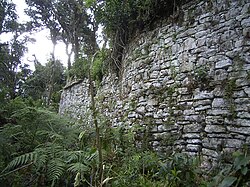
The Chachapoyas are best known for their circular stone architecture. The most famous site, Kuélap, is often called the "Machu Picchu of the North." This massive fortress features exterior walls reaching 60 feet (18 meters) in height and contains over 400 interior buildings.
Funerary Customs
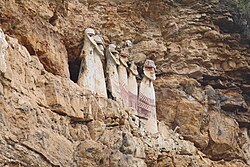
The culture practiced two distinct burial patterns. The first involved sarcophagi—vertical coffins placed in high, excavated caves on precipices. The second involved small, house-like mausoleums built directly into cliff faces.
Art and Appearance
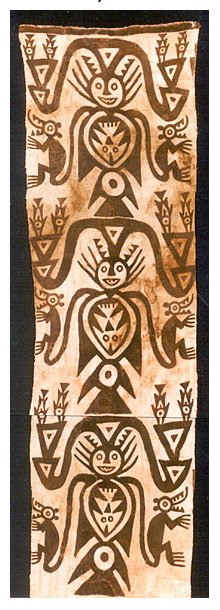
Spanish chronicler Pedro Cieza de León noted that the Chachapoyas were unusually fair-skinned and handsome compared to other indigenous groups. Their textiles were also highly developed, featuring intricate painted designs.
Summary of Chachapoya Culture
| Feature | Details |
|---|---|
| Time Period | c. 800 – 1470 AD |
| Primary Region | Utcubamba River Basin, Amazonas, Peru |
| Key Sites | Kuélap, Gran Pajatén, Revash, Carajía |
| Social Structure | Egalitarian / Nonhierarchical |
| Defining Architecture | Circular stone houses and cliffside sarcophagi |
| Successor State | Inca Empire |
Frequently Asked Questions
What does the name "Chachapoya" mean?
The name was given to them by the Incas. It likely derives from the Quechua words sach'a (tree) and phuyu (cloud), meaning "cloud forest," or potentially sach'a-p-qulla, referring to "qulla people who live in the woods."
Why are they called the "Warriors of the Clouds"?
This nickname refers to their habitation of the high-altitude cloud forests of the Andes, where their settlements were often built on steep ridges and peaks shrouded in mist.
How did the Chachapoyas differ from the Incas?
Unlike the highly stratified and centralized Inca Empire, archaeological evidence suggests the Chachapoyas had a more egalitarian society without the clear architectural markers of royalty or a ruling aristocracy.
What is the significance of Kuélap?
Kuélap is one of the most significant urban centers of the culture, serving as a massive fortified city with towering walls and hundreds of circular buildings, likely designed for defense.
Did the Chachapoyas have their own language?
Yes, though it is poorly known today. Some linguists believe the Chachapoya language may be related to the Cahuapanan language family.