Ptolemaic Kingdom: The Hellenistic Dynasty of Ancient Egypt
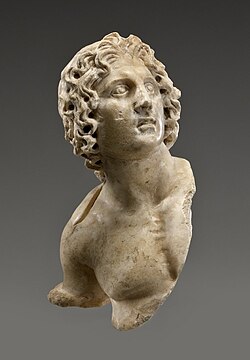
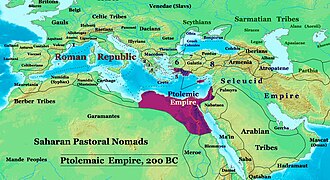
The Ptolemaic Kingdom (305–30 BC) represents a fascinating era of cultural fusion, where the administrative precision of Greece met the timeless traditions of Ancient Egypt. Established in the wake of Alexander the Great's death, this dynasty transformed Egypt into a Mediterranean superpower, blending Hellenistic governance with the divine authority of the pharaohs.
At its heart, the kingdom was a study in duality. The rulers acted as basileus (Greek kings) to their Macedonian and Greek subjects and as pharaohs to the native Egyptian population. This strategic syncretism allowed the Ptolemies to maintain control over a diverse population while fostering a golden age of science, art, and architecture centered in the legendary city of Alexandria.
Key Facts
- Duration: 305 BC to 30 BC.
- Capital: Alexandria, a global center of Hellenic culture.
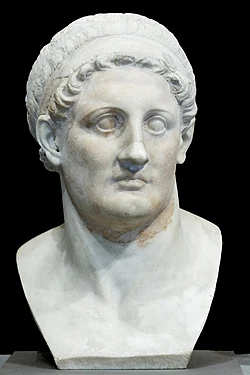
- Founding Ruler: Ptolemy I Soter.
- Final Ruler: Cleopatra VII.
- Official Language: Greek, though Egyptian remained common.
- Population: Estimated between 4.9 and 7.5 million by 150 BC.
- Religion: A mix of Greek polytheism, Egyptian polytheism, and the official cult of Alexander the Great.
The Establishment of the Dynasty
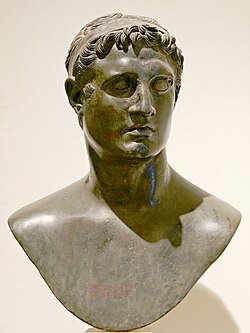
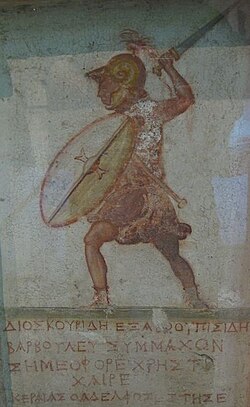
The kingdom emerged from the chaos following the death of Alexander the Great in 323 BC. A succession crisis broke out among his generals, known as the Wars of the Diadochi. Ptolemy, one of Alexander's closest companions, was appointed as the satrap (governor) of Egypt. While he initially ruled in the name of Alexander's successors, he quickly consolidated his own power.
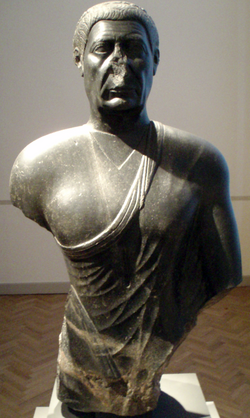
By 305 BC, Ptolemy I Soter officially took the titles of basileus and pharaoh, marking the formal beginning of the Ptolemaic dynasty. He successfully defended Egypt from invasions and expanded his influence into Coele-Syria, Palestine, and parts of Anatolia.
The Peak of Ptolemaic Power
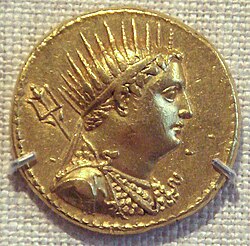
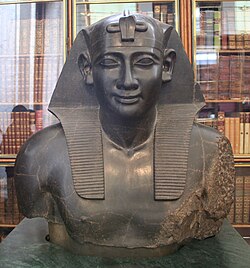
Under the early Ptolemies, the kingdom reached its zenith of wealth and influence. Ptolemy I and his successors focused on building a robust naval presence and a sophisticated bureaucracy. Ptolemy II Philadelphus further cemented the kingdom's status as a cultural beacon.
Architectural Legacies
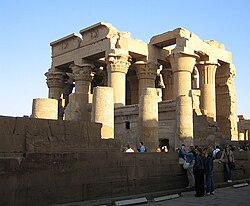
Ptolemy III Euergetes is remembered for his extensive patronage of Egyptian temples. Most notably, he initiated the construction of the Temple of Horus at Edfu on August 23, 237 BC. This structure remains one of the best-preserved examples of ancient Egyptian temple architecture, though it took several generations to complete, with final reliefs added during the reign of Ptolemy XII.
The Role of Alexandria
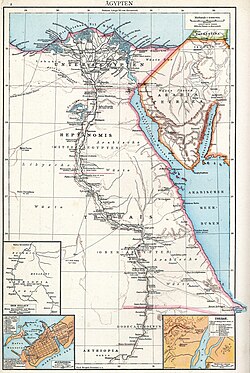
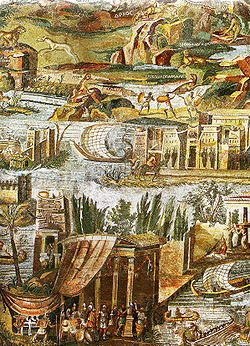
Founded by Alexander the Great in 331 BC, Alexandria became the capital of the Ptolemaic Kingdom. Located 30 kilometers west of the Nile's mouth, the city's harbor was protected from the silt that plagued other river ports. It eventually surpassed Athens as the cultural and intellectual center of the Hellenic world.
Social Structure and Internal Conflict
Despite the kingdom's outward prosperity, there was a sharp divide between the ruling Greek elite and the native Egyptian population. Wealth and political power remained concentrated in Greek hands, leading to frequent social unrest and nationalist uprisings.
The Great Theban Revolt
The most significant challenge to Ptolemaic authority was the Great Revolt of Egypt (205–186 BC). This twenty-year uprising began in Upper Egypt, where native leaders established an autonomous state. Pharaohs such as Horwennefer and Ankhwennefer ruled from Thebes before the rebellion was finally suppressed in 186 BC. While the Ptolemies regained control, the revolt left the dynasty severely weakened.
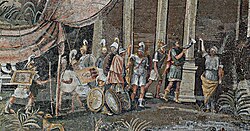
Dynastic Decline and the Roman Transition
![A mosaic from Thmuis (Mendes), Egypt, created by the Hellenistic artist Sophilos (signature) in about 200 BC, now in the Greco-Roman Museum in Alexandria, Egypt; the woman depicted is Queen Berenice II (who ruled jointly with her husband Ptolemy III Euergetes) as the personification of Alexandria, with her crown showing a ship's prow, while she sports an anchor-shaped brooch for her robes, symbols of the Ptolemaic Kingdom's naval prowess and successes in the Mediterranean Sea.[30]](/images/77/61/7761bbbc9efe7a4a9289aa86e52b05b84ca1b19f05a137bd64a36821212b4ad6.jpg)
The later years of the kingdom were characterized by brutal civil wars and familial feuds. Following the death of Ptolemy VI, the throne became a prize for warring relatives. Figures like Ptolemy VIII (known as Physcon) were noted for their cruelty, and the constant instability turned Egypt into a de facto protectorate of the rising Roman Republic.
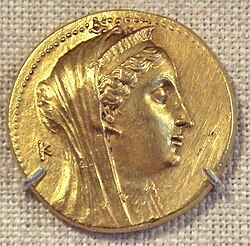
The dynasty reached its dramatic conclusion with Cleopatra VII. Despite her efforts to maintain Egyptian independence through strategic alliances with Roman leaders, the kingdom finally fell in 30 BC, transitioning into the province of Roman Egypt.
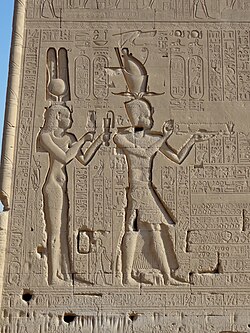
Summary of the Ptolemaic Era
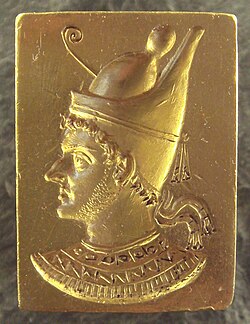
| Category | Details |
|---|---|
| Timeline | 305 BC – 30 BC |
| Government | Monarchy (Basileus/Pharaoh) |
| Key Cities | Alexandria, Ptolemais, Naucratis |
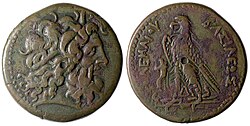
| Currency | Greek drachma (Ptolemaic coinage) |
| Major Conflicts | Syrian Wars, Great Theban Revolt |
| Successor State | Roman Egypt |
Frequently Asked Questions
![Coin of Cleopatra VII, with her image[38] and a Greek inscription "θεά νεωτέρα" thea neotera, lit. "the younger goddess", one of Cleopatra's adopted titles.[39]](/images/fc/1c/fc1c103f0723ae4aa594a0aa54297823a179250214d9cc51b022cd831cb1973d.jpg)

![Faience sistrum with head of Hathor with bovine ears from the reign of Ptolemy I. Color is intermediate between traditional Egyptian color to colors more characteristic of Ptolemaic-era faience.[45]](/images/1f/ce/1fce532aee3c18397019464519f14c33cf378e6b3a4800b0e89c82831a22d635.jpg)
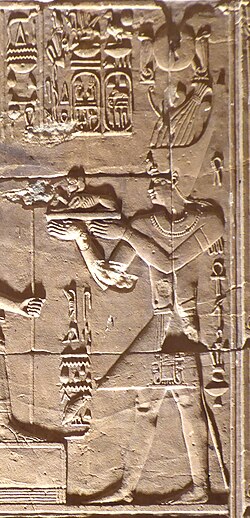
![Relief from the temple of Kom Ombo depicting Ptolemy VIII receiving the sed symbol from Horus[54]](/images/89/89/898910f58950993aeeb9a1cc1b14065bdf92b70646c8b97e97e4f4d1762ad967.jpg)

Who founded the Ptolemaic Kingdom?
The kingdom was founded by Ptolemy I Soter, one of Alexander the Great's generals, who declared himself king (basileus) and pharaoh in 305 BC.
What was the significance of Alexandria?
Alexandria served as the capital and became the premier cultural and scientific hub of the Hellenistic world, surpassing Athens in influence.
How did the Ptolemies maintain power over native Egyptians?
They used a dual identity, presenting themselves as traditional pharaohs to the Egyptians while maintaining a Greek-style monarchy for the Hellenistic elite.
What was the Great Theban Revolt?
It was a massive native uprising from 205 to 186 BC in Upper Egypt that established a short-lived autonomous state ruled by native pharaohs.
How did the Ptolemaic Kingdom end?
The kingdom ended in 30 BC following the death of Cleopatra VII, after which Egypt was absorbed into the Roman Empire.