Pine Residence: The Historic Heart of French Diplomacy in Beirut
The Pine Residence (Arabic: Qasr al-snawbar, meaning "the palace of the Pines") stands as one of Beirut's most significant architectural and political landmarks. Located in the Horsh district, this elegant estate serves as the official residence of the French ambassador to Lebanon. Beyond its diplomatic function, the residence is a silent witness to the birth of the modern Lebanese state.
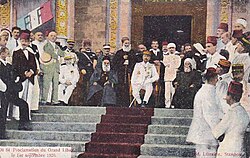
The site is most famous for the events of September 1, 1920, when General Henri Gouraud stood upon its porch to proclaim the establishment of the State of Greater Lebanon, defining the nation's current boundaries and designating Beirut as its capital.
Key Facts
- Location: Horsh district, Beirut, Lebanon.
- Architectural Style: Neo-Mauresque.
- Original Purpose: Planned as a casino and leisure complex.
- Historical Milestone: Site of the proclamation of Greater Lebanon in 1920.
- Current Use: Official residence of the French Ambassador.
- Status: Recognized as a historic monument by the Lebanese Directorate General of Antiquities.
The Evolution of Beirut's Urban Landscape
To understand the origins of the Pine Residence, one must look at the transformation of Beirut in the 19th century. The opening of the Suez Canal in 1869 and the rise of steamship travel turned Beirut from a small walled town into a prominent Ottoman port city. Shipping weights surged from 40,000 tons in 1830 to 1.7 million tons by 1914.
During this era, the Tanzimat reforms—a series of Ottoman administrative modernizations—reshaped the city. These reforms led to the creation of the Beirut municipality in 1863 and encouraged the construction of large public and private buildings inspired by European styles, such as neo-Baroque and neo-Gothic. As the city center became crowded, Beirut's affluent class began building villas on the surrounding hills, seeking recreation away from the urban bustle.
Construction and Early Purpose
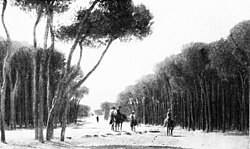
The vision for a high-end meeting place in the "Bois des Pins" (Pine Forest) was initiated by Azmi Bey, the Wali (governor) of Beirut. However, the residence was actually built by Alfred Moussa Sursock, a Lebanese nobleman and Ottoman embassy official in Paris. In 1915, Sursock obtained a 50-year concession to manage 660,000 square meters of the pine forest to build the "Cercle du Parc du Bois" (Azmi Club), intended to be Lebanon's first casino.
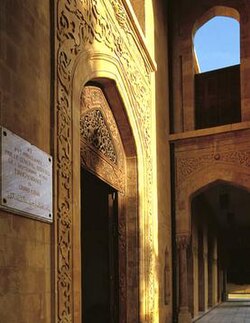
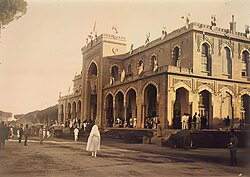
Designed by architect Bahjat Abdel Nour, construction began in 1916. The resulting Neo-Mauresque building—a style blending European and North African/Moorish elements—featured a raised basement, a ground floor for dining and hosting, and an upper floor for gaming. However, due to the outbreak of World War I, the building never functioned as a casino; instead, it was repurposed as a military hospital.
The French Mandate and Political Significance
Following World War I, Lebanon came under the French mandate. The residence became the seat of the French High Commissioners. It was during this period that the building transitioned from a private venture to a center of geopolitical power. General Henri Gouraud used the residence as his base, drawing inspiration from the Residence Lyautey in Rabat to upgrade the facilities.
On September 1, 1920, the residence entered the history books as the site where the State of Greater Lebanon was officially proclaimed.
In 1921, the Sursock family sold the property to the French state for 1.85 million French francs. Over the following decades, the residence underwent several expansions, including the addition of a "Salon de Musique" in 1928 and the creation of a first-floor atrium by architect Michel Ecochard in 1932.
From Independence to Restoration
After Lebanon gained independence in 1943, the palace became the official residence of the French Ambassador. The 20th century brought periods of extreme volatility. During the Lebanese Civil War, the residence was evacuated in 1975 and later occupied by armed militias in 1978. It witnessed the tragic assassination of Ambassador Delamare in 1981 and served as a field hospital and international observer headquarters during the 1982 Israeli bombardments.
By 1984, the building was abandoned and heavily damaged. It was not until the 1990s that a comprehensive rehabilitation project was launched. Inaugurated by President Jacques Chirac in 1996 and completed in 1998, the restoration returned the Pine Residence to its former glory, ensuring its preservation as both a diplomatic hub and a historic monument.
Summary of the Pine Residence
| Feature | Details |
|---|---|
| Architect | Bahjat Abdel Nour |
| Construction Period | 1916–1920 |
| Original Owner | Alfred Moussa Sursock |
| Key Historical Event | Proclamation of Greater Lebanon (Sept 1, 1920) |
| Architectural Style | Neo-Mauresque |
| Current Status | French Ambassador's Residence / Historic Monument |
Frequently Asked Questions
What is the Pine Residence?
The Pine Residence (Qasr al-snawbar) is the official residence of the French ambassador to Lebanon, located in the Horsh district of Beirut. It is a historic monument known for its Neo-Mauresque architecture and its role in Lebanese political history.
Why is the Pine Residence historically important?
It is primarily significant because General Henri Gouraud proclaimed the establishment of the State of Greater Lebanon from its porch on September 1, 1920, defining the nation's modern borders.
Was the building always a diplomatic residence?
No. It was originally commissioned by Alfred Moussa Sursock to be a casino and leisure club. During World War I, it served as a military hospital before becoming the seat of the French High Commissioners and later the ambassador's residence.
How did the Lebanese Civil War affect the building?
The residence suffered extensive damage, was occupied by militias, and was eventually abandoned in 1984. It was heavily bombarded and pillaged before being restored in the 1990s.
Who designed the Pine Residence?
The original construction was supervised by the Sursock family architect, Bahjat Abdel Nour, with contributions from several other builders including Amine Abdel Nour and Gaspard Nafilyan.