Pheasant-tailed Jacana
The pheasant-tailed jacana (Hydrophasianus chirurgus) is a striking waterbird found across tropical Asia. Known for its remarkable ability to navigate floating vegetation and its unusual social structure, this bird is the sole member of the monotypic genus Hydrophasianus. From its distinctive long toes to its dramatic seasonal plumage changes, the pheasant-tailed jacana is one of the most specialized waders in the region.
Key Facts
- Conservation Status: Least Concern (IUCN 3.1).
- Unique Ability: Elongated toes and nails allow it to walk on floating aquatic plants.
- Social System: Polyandrous, meaning one female mates with multiple males.
- Migration: The only jacana species known to migrate long distances.
- Range: Tropical Asia, spanning from Yemen in the west to the Philippines in the east.
Physical Description and Appearance
The pheasant-tailed jacana is the longest species in its family when its tail streamers are included. Its appearance varies significantly between the breeding and non-breeding seasons.
Breeding Plumage
During the breeding season, the bird is unmistakable. It features a chocolate-brown body, a white face, and a black crown. A striking silky golden-yellow patch adorns the nape, separated from the white front of the neck by white stripes. Its wings are predominantly white, and it possesses elongated central tail feathers that give the species its name.
Non-Breeding Plumage
In the non-breeding season, the bird's colors mute. The top of the head and back become dark brown, and the golden nape feathers are barely visible. A dark eyestripe runs down the neck, forming a dark necklace against a slightly off-white front.
Anatomical Features
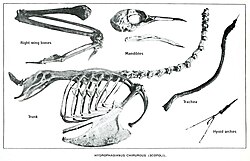
Both sexes possess sharp white carpal spurs (bony protrusions on the wrist), which are longer in females. Their bills are bluish-black with a yellow tip during breeding, turning dull brown with a yellowish base during the non-breeding period. Skeletal analysis reveals that the skull and mandibles are slightly pneumatized (containing air cavities), a feature not found in their other bones.
Taxonomy and History
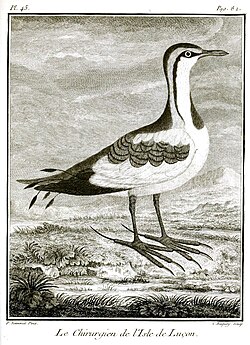
The species was first described in 1776 by French explorer Pierre Sonnerat in his work Voyage à la Nouvelle Guinée. He referred to the bird as "Le Chirurgien de l'Isle de Luzon" (the surgeon of the island of Luzon) because its long toes and wing extensions reminded him of the lancets used by surgeons for blood-letting at the time. This led to the specific name chirurgus.
In 1832, Johann Georg Wagler established the genus Hydrophasianus, meaning "water pheasant," to distinguish this species from other jacanas due to its slender bill, lack of a frontal lappet, and unique plumage variations.
Distribution and Habitat
These birds inhabit small to large lakes with ample floating vegetation. While they are resident breeders in tropical India, Indonesia, and Southeast Asia, northern populations from the Himalayas and south China migrate south during the winter. They are common in lower elevations but have been recorded as high as 3,800 meters in Lahul.
While widespread, the species is considered endangered in Taiwan. They have also been spotted as vagrants in locations such as Qatar, Australia, and southern Japan.
Behavior and Ecology
The pheasant-tailed jacana primarily feeds on insects, molluscs, and other invertebrates. It forages by walking on aquatic plants or swimming—a behavior similar to phalaropes. They are social birds, often forming flocks of 50 to 100 individuals, and can become quite tame around humans.
Diet and Foraging
While their diet is mainly invertebrate-based, they occasionally ingest seeds and filamentous algae. When landing on water, they keep their wings open until they secure a firm footing on vegetation.
Breeding and Life Cycle
The breeding habits of the pheasant-tailed jacana are highly unusual. They practice polyandry, a mating system where one female maintains a harem of several males.
- Courtship: Females court males through calling and flight displays.
- Nesting: The female builds a nest of leaves and stalks on floating vegetation.
- Egg Laying: A clutch typically consists of four dark-olive-brown eggs with black marks.
- Parental Care: Once the eggs are laid, the female leaves to find another mate, leaving the male to handle all incubation (which lasts 26 to 28 days) and chick-rearing.
Males are highly protective, sometimes performing "broken-wing" displays to lure predators away from the nest. The chicks are nidifugous (leaving the nest shortly after hatching) and can freeze or submerge themselves in water to avoid detection by predators.
Comparative Measurements
Females are generally larger and heavier than males, which is common in polyandrous species.
| Measurement | Male | Female |
|---|---|---|
| Mass (g) | 129.2 | 140.7 |
| Bill Length (cm) | 2.89 | 3.12 |
| Wing Length (cm) | 24.76 | 25.83 |
| Tarsus Length (cm) | 5.72 | 6.33 |
| Tail Length (cm) | 25.75 | 28.34 |
| Total Length (cm) | 45.91 | 50.27 |
Frequently Asked Questions
Why is it called the "surgeon" bird?
The name comes from the French explorer Pierre Sonnerat, who noted that the bird's elongated toes and wing feathers resembled the lancets used by 18th-century surgeons for blood-letting.
How does the pheasant-tailed jacana walk on water?
It does not walk on the water itself, but rather on floating vegetation. Its exceptionally long toes and nails distribute its weight over a larger surface area, preventing it from sinking into the plants.
What is polyandry in this species?
Polyandry is a mating system where one female mates with multiple males. In this species, the female lays several clutches of eggs, each of which is raised by a different male in her harem.
How does it differ from the bronze-winged jacana?
The pheasant-tailed jacana has a more slender bill, lacks a frontal lappet, and is the only jacana that undergoes significant changes between breeding and non-breeding plumage. Additionally, juveniles have a dark neck stripe that is absent in young bronze-winged jacanas.
Do pheasant-tailed jacanas migrate?
Yes, they are the only members of the jacana family that migrate long distances. Populations in south China and the Himalayas move south to Southeast Asia and peninsular India during the winter.