Oracle Bone Script: The Ancient Foundations of Chinese Writing
The origins of Chinese civilization are etched into the very surfaces of animal bones and tortoise shells. Known as oracle bone script (jiǎgǔwén), this logographic writing system represents the earliest known corpus of Chinese writing. Dating from approximately 1250 to 1050 BC, these inscriptions provide a direct window into the ritualistic and social life of the Late Shang dynasty.
Beyond their role as tools for divination, these characters serve as the direct ancestor to the vast family of East Asian writing systems used today. By studying these ancient marks, scholars can trace the evolution of Chinese etymology and the structural development of one of the world's oldest continuous writing traditions.
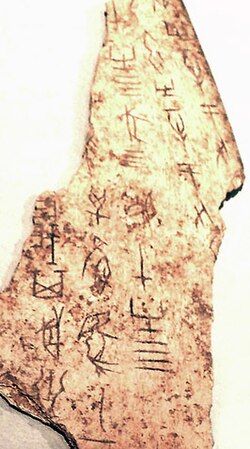
Key Facts
- Period: Circa 1250 – 1050 BC (Late Shang Dynasty).
- Primary Material: Turtle shells (plastrons) and animal bones.
- Location: Most inscriptions were found at Yinxu, the final Shang capital in modern-day Anyang, Henan.
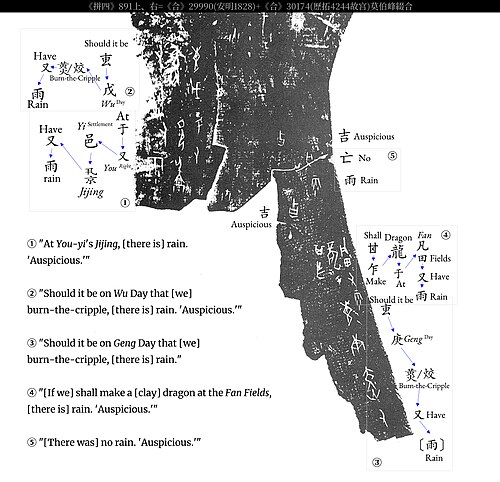
- Function: Primarily used for divination regarding war, agriculture, ritual sacrifice, and royal family matters.
- Legacy: The direct ancestor of Seal script and modern Chinese writing systems.
The Origins and Discovery of Jiaguwen
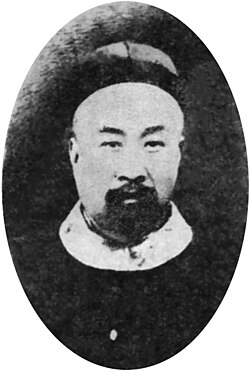
The term jiǎgǔwén literally translates to "shell and bone script." While early scholars used various names based on the site of discovery (such as Yīnxū bǔcí or "Yinxu divinatory texts"), the modern term became widely recognized following the systematic study of these artifacts. The recognition of these markings as ancient Chinese writing is credited to the scholar Wang Yirong in 1899.
The vast majority of the estimated 150,000 uncovered inscriptions originate from Yinxu. A significant recent discovery was the Huayuanzhuang cache found in 1993, which included 1,608 pieces, 579 of which contained inscriptions. These records are so detailed that they name the last nine Shang kings, including Wu Ding, whose reign has been radiocarbon dated to between 1254 and 1197 BC.
Oraculology: The Science of Ancient Scripts
The specialized study of these artifacts is known as oraculology (jiǎgǔxué). This multidisciplinary field combines paleography—the study of ancient writing systems—with archaeology, history, and anthropology. Oraculology does not merely focus on translating characters; it seeks to understand the historical, cultural, and social patterns of the ancient world through the lens of these inscriptions.
While early researchers focused on simple script interpretation, modern oraculology has evolved into a systematic inquiry into the inherent laws of the script and its orthography (the conventional spelling and structure of a language).
Style and Structural Evolution
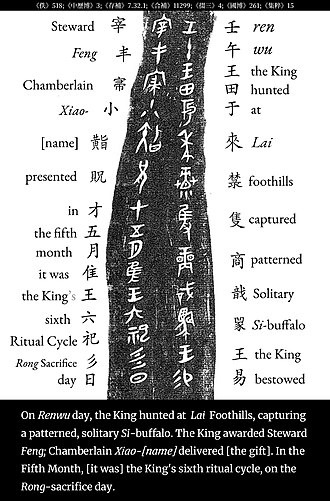
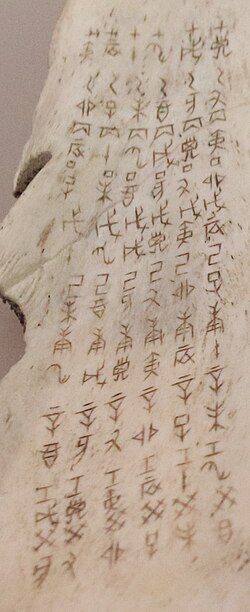
The visual style of oracle bone script is notably pictographic, meaning many characters originated as simplified drawings of physical objects. However, the script was not purely artistic; it was functional. Because engraving hard bone is more difficult than writing on wet clay, the characters often feature rectilinear (straight-lined) forms rather than the rounded shapes seen in contemporary bronzeware inscriptions.

Evidence suggests that the Shang people also utilized brushes and ink to write on bamboo or wooden books (cè). This is supported by the presence of specific characters in the oracle bone script that depict a writing brush (yù) and bamboo slats. The vertical, top-to-bottom layout of oracle bone inscriptions likely mirrors the arrangement used on these ancient bamboo books.
Character Composition
By the late Shang period, the script had already developed complex structures. A structural analysis reveals a diverse range of character types:
- Pictographs: 23% (direct representations of objects).
- Associative compounds: 32% (combining ideas).
- Phono-semantic compounds: 27% (combining meaning and sound).
- Phonetic loans: 11% (using a character for its sound).
- Simple indicatives: 2% (basic indicators).
Despite the wealth of data, decipherment remains a challenge. Of the over 30,000 distinct characters found, scholars believe they can only reliably decipher between 1,500 and 2,000. This difficulty often arises because components of characters changed significantly over millennia due to simplification or historical misunderstandings.


Summary of Script Characteristics
| Feature | Description |
|---|---|
| Script Type | Logographic |
| Language | Old Chinese |
| Writing Direction | Top-to-bottom, vertical columns |
| Primary Era | Late Shang Dynasty (c. 1250–1050 BC) |
| Key Subjects | War, ritual, agriculture, and royal health |
Frequently Asked Questions
What was the primary purpose of oracle bone inscriptions?
The inscriptions were primarily used for divination. Kings or diviners would pose questions to deities or ancestors regarding significant matters such as upcoming wars, weather patterns (like rain), agricultural success, or the health of the royal family.
How does oracle bone script differ from modern Chinese?
Oracle bone script is much more pictographic and less standardized than modern characters. While many modern characters share the same roots, the ancient forms were often more literal drawings of objects, and many specific characters used in the Shang dynasty have since evolved or disappeared entirely.
Where can these ancient inscriptions be found today?
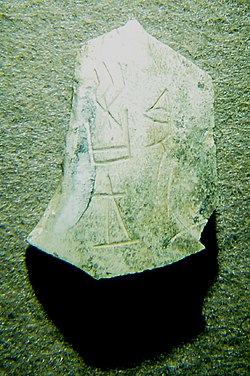
The majority of significant finds are located at the Yinxu archaeological site in Anyang, Henan province. However, since 2000, new sites have continued to be discovered, and some Zhou-era examples have been found near various major population centers.
Why are so many characters still undeciphered?
Decipherment is difficult because the script underwent massive changes over thousands of years. Components of characters were often simplified, or later generations may have misinterpreted the original drawings, leading to a disconnect between the ancient form and its modern descendant.
![Hand copy of a Zhou inscription[25]](/images/bd/bb/bdbb5b755a5e0aff417989fc337e9ae8cbd2f294e848dc034d1e6ab2dcf6f671.png)