Chinese Characters: The Evolution and Global Impact of Hanzi
The Chinese writing system, known as Hanzi, represents one of the oldest and most influential continuous writing traditions in human history. As a logographic system—where characters represent words or morphemes rather than individual sounds—it has served as a cultural cornerstone across East Asia for millennia. From its ancient origins in divination to its modern digital implementation, the script has adapted to diverse languages and technological eras.
![Diagram comparing the abstraction of pictographs in cuneiform, Egyptian hieroglyphs, and Chinese characters – from an 1870 publication by French Egyptologist Gaston Maspero[A]](/images/f9/2b/f92bfc0739a2c544793173723a84c0ef63a80ec88f9378cd0a753eab7e995869.webp)
Key Facts
- Script Type: Logographic
- Origin Period: Approximately 13th century BCE
- Primary Languages: Chinese, Japanese, Korean, Vietnamese, and Zhuang
- Core Forms: Traditional and Simplified Chinese
- Global Variations: Kanji (Japanese), Hanja (Korean), and Chữ Hán (Vietnamese)
Historical Origins and Development
The roots of Chinese characters can be traced back to the Neolithic period, eventually manifesting in the famous Oracle Bone Script. These early inscriptions, often found on ox scapulae used for divination around 1200 BCE, show the foundational structures of the characters we recognize today.
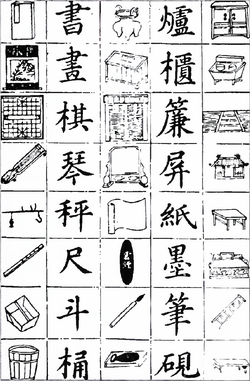
As the script evolved, it moved through various stages of complexity and style. The unification of China under the Qin dynasty led to the standardization of the Small Seal Script. Over time, more efficient forms emerged, including Clerical script, Cursive, and Regular script, the latter of which remains the standard for formal writing.

Structural Classification
Chinese characters are not merely random strokes; they are organized into logical categories based on their meaning and function:
- Pictographs: Characters that resemble the objects they represent, such as 日 (sun), 山 (mountain), or 象 (elephant).
- Compound Ideographs: Characters formed by combining two or more meanings to create a new concept.
- Phono-semantic Compounds: The most common type, where one part of the character provides the meaning (semantic) and another provides a hint to the pronunciation (phonetic).


Calligraphy and Artistic Expression
Beyond mere communication, Chinese characters are a central medium for calligraphy, an art form where the aesthetic quality of the brushwork is as important as the text itself. Master calligraphers throughout history have utilized various styles to express emotion and rhythm.
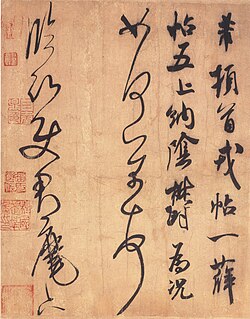
The precision of character construction is often demonstrated through the study of stroke order. A single character is composed of specific strokes that must be applied in a precise sequence to maintain balance and legibility.

Regional Variations and Adaptations
While Hanzi originated in China, its influence spread throughout East Asia, where it was adapted to suit local languages. This led to the development of several distinct systems:
Japan and Korea
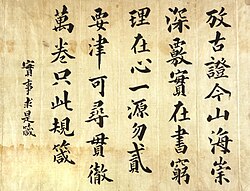
In Japan, Chinese characters are known as Kanji. In Korea, they are referred to as Hanja. While Korea eventually adopted the Hangul alphabet in 1443, Hanja remained vital for literary and formal purposes for centuries.
Vietnam and Zhuang
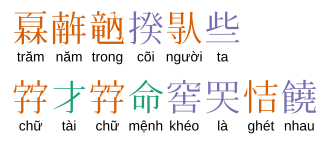
Vietnamese history includes the use of Chữ Hán and Chữ Nôm (an invented script representing native Vietnamese words). Similarly, the Zhuang people utilize scripts like Sawndip derived from Chinese characters.
Modern Standardization: Traditional vs. Simplified
In the modern era, the script has undergone significant reform. To increase literacy rates, the People's Republic of China introduced Simplified Chinese, which reduces the number of strokes in many complex characters. In contrast, regions like Taiwan and Hong Kong continue to use Traditional Chinese.
![Variants of the Chinese character for 'turtle', collected c. 1800 from printed sources.[D] The traditional form 龜 (left) is used in Taiwan and Hong Kong. The simplified form 龟 (not pictured) is used in mainland China, and the simplified form 亀 (also not pictured) is used in Japan.](/images/41/a5/41a5106b19504f4559b7ff68c8b48ef6ed51a091abf57a14e70489f149824f79.webp)
![The first official list of simplified character forms, published in 1935 and including 324 characters[189]](/images/d1/38/d138abb0c7842301bad5591f39e12f9c55bb657ad04ccb76713661aea3e60635.jpg)

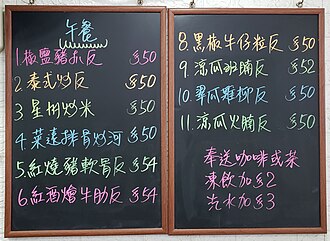
Even in daily life, characters undergo informal changes. For example, in Hong Kong, handwritten notes might use unofficial short forms to save time, such as using 反 as a shorthand for 飯 (meal).
Printing, Typography, and Digital Input
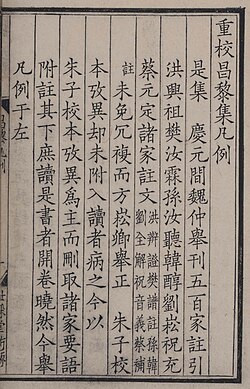
The transition from woodblock printing to modern digital technology has transformed how characters are consumed. Historical woodblock editions, such as those from the Southern Song dynasty, are celebrated for their exquisite typography.
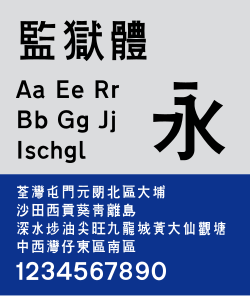
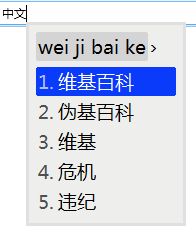
Today, characters are managed through complex Unicode encoding systems, allowing them to be displayed on any digital device. Users interact with these characters through various Input Methods (IME), such as typing Pinyin (the Romanized spelling of Mandarin) to select the correct character from a list of candidates.
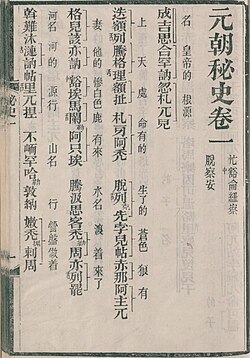
The history of the script is also reflected in its use for other languages. For instance, Chinese characters were used to transcribe Mongolian in the 19th century, demonstrating the script's incredible versatility as a tool for transcription.
Summary of Script Characteristics
| Feature | Details |
|---|---|
| Primary Type | Logographic |
| Writing Direction | Left-to-right or Top-to-bottom (columns right-to-left) |
| Major Variants | Traditional, Simplified, Kanji, Hanja, Chữ Hán |
| Digital Standard | Unicode (CJK Unified Ideographs) |
Frequently Asked Questions
What is the difference between Traditional and Simplified Chinese?
Simplified Chinese uses fewer strokes per character and was introduced in mainland China to improve literacy. Traditional Chinese retains the more complex, historical stroke structures and is used in Taiwan, Hong Kong, and Macau.
How do Japanese and Korean use Chinese characters?
Japan uses Kanji as part of its writing system alongside Kana. Korea uses Hanja, though the phonetic Hangul alphabet is the primary script used in daily life.
What does "logographic" mean in the context of Hanzi?
A logographic script is one where each character represents a word or a meaningful unit (morpheme) rather than a single sound, unlike alphabets where letters represent phonemes.
Are Chinese characters used for other languages?
Yes, historically, Chinese characters have been adapted to write various languages, including Vietnamese (Chữ Nôm), Mongolian (via transcription), and Zhuang (Sawndip).
How are characters typed on a computer?
Most users employ an Input Method Editor (IME), which allows them to type the phonetic pronunciation (such as Pinyin) and then select the appropriate character from a list of candidates.