Chinese Language: History, Varieties, and Writing Systems
The Chinese language is a vast and complex linguistic system, serving as the primary means of communication for over 1.39 billion native speakers. Belonging to the Sino-Tibetan language family, it is not a single monolithic tongue but a collection of diverse varieties. While Standard Chinese serves as the official bridge across regions, the linguistic landscape is rich with distinct dialects and a writing system that has evolved over millennia.
Today, Chinese is the official language of China and Taiwan, one of four official languages in Singapore, and one of the six official languages of the United Nations. Its influence extends globally through significant populations in Malaysia and various overseas communities.
Key Facts
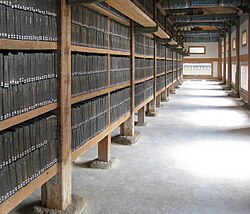
- Native Speakers: Approximately 1.39 billion (2017–2024).
- Language Family: Sino-Tibetan, specifically the Sinitic branch.
- Official Status: Official in China, Taiwan, and Singapore.
- Writing Systems: Primarily Chinese characters, with romanization systems like Pinyin and Wade-Giles.
- Major Varieties: Mandarin, Wu, Yue (Cantonese), Min, Hakka, Gan, and Xiang.
The Evolution of Chinese Varieties
The classification of Chinese is often a subject of linguistic debate. While frequently referred to as "dialects," many of these varieties are mutually unintelligible, functioning more like a family of related languages. These include Mandarin, Wu (including Shanghainese), Yue (including Cantonese), Min (including Hokkien), Hakka, Gan, and Xiang.
![Range of dialect groups in China proper and Taiwan according to the Language Atlas of China[44]](/images/3c/ba/3cba8414c236e4a44646cd2cdd95fe00e24c26690220643e67293d3a8348e0c4.webp)
Standard Chinese
Standard Chinese is based on the Beijing dialect and was first officially adopted in the 1930s. It serves as the current official language of the People's Republic of China and the Republic of China (Taiwan). Because it is written in a shared vernacular, educated readers can often communicate via text even if they speak mutually unintelligible spoken varieties.
Writing Systems and Orthography
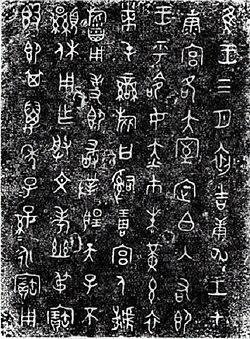
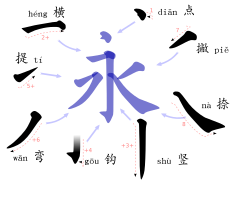
The most distinctive feature of the Chinese language is its logographic writing system, where characters represent morphemes (the smallest units of meaning) rather than individual sounds.
Traditional vs. Simplified Characters
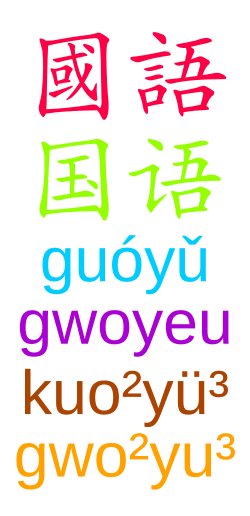
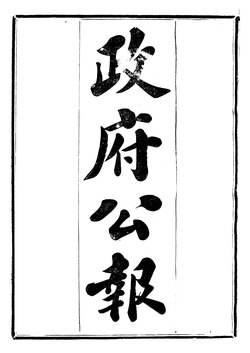
Since the 1950s, the government of the People's Republic of China has promoted Simplified Chinese characters to increase literacy. Singapore officially adopted simplified characters in 1976. Conversely, Traditional Chinese characters remain in use in Taiwan, Hong Kong, Macau, and many overseas Chinese communities in Malaysia and Myanmar.
Calligraphy as Art
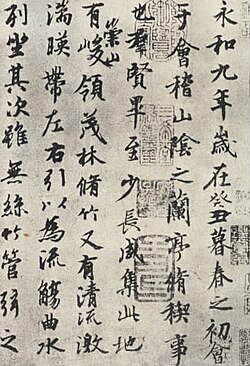
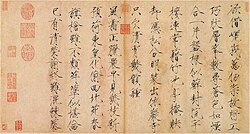
Beyond communication, writing in Chinese is a highly developed aesthetic art. From the semi-cursive styles of the Orchid Pavilion to the "Slender Gold Style" of Emperor Huizong, calligraphy reflects the literary and artistic traditions of the culture.
Romanization Systems
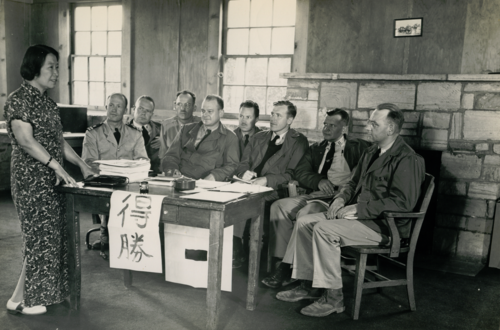
To help learners and facilitate digital input, several romanization systems have been developed. Hanyu Pinyin is the most widely used today. Historically, the Wade-Giles system was prominent in English-speaking academic circles and in Taiwan until 2009.
Linguistic Structure and Phonology
Tones and Syllables
Chinese is a tonal language, meaning the pitch used when pronouncing a syllable can completely change the word's meaning. For example, in Standard Mandarin, the syllable "ma" can mean "mother," "hemp," "horse," or "scold" depending on the tone.
Grammar and Morphology
While Old and Middle Chinese were largely monosyllabic—where 90% of words consisted of a single character—modern varieties have evolved. Due to phonetic erosion (the reduction of possible distinct sounds over time), modern Mandarin has shifted toward disyllabic words (two-syllable words) to maintain clarity.
| Tone | Character | Gloss | Pinyin | Pitch Contour |
|---|---|---|---|---|
| 1 | 妈 / 媽 | mother | mā | High, level |
| 2 | 麻 | hemp | má | High, rising |
| 3 | 马 / 馬 | horse | mǎ | Low falling, then rising |
| 4 | 骂 / 罵 | scold | mà | High falling |
Vocabulary and Lexicon
The total corpus of Chinese characters since antiquity exceeds 50,000, though only about 10,000 are in active use, and roughly 3,000 are frequent enough for daily media and newspapers. It is important to distinguish between a character (morpheme) and a word, as most modern words are composed of two or more characters.
Frequently Asked Questions
Is Chinese one language or many?
Linguistically, Chinese is a family of related Sinitic languages. While they share a common writing system and a common ancestor, spoken varieties like Cantonese and Mandarin are often mutually unintelligible.
What is the difference between Pinyin and Chinese characters?
Chinese characters are the actual writing system (logograms), while Pinyin is a system of romanization that uses the Latin alphabet to represent the sounds of the characters, primarily used for teaching and typing.
Why are there simplified and traditional characters?
Simplified characters were introduced by the People's Republic of China in the 1950s to reduce the number of strokes in complex characters, aiming to increase literacy rates. Traditional characters are the historical forms still used in Taiwan, Hong Kong, and Macau.
How many characters does one need to know to be literate?
While there are tens of thousands of characters in existence, knowing approximately 3,000 frequently used characters is generally sufficient for reading most newspapers and media.
What does "tonal language" mean?
A tonal language is one where the pitch or inflection of a word changes its meaning. In Mandarin, for instance, the same sequence of sounds can have entirely different meanings depending on whether the pitch is high, rising, falling, or dipping.