North-West Frontier: A History of Conflict and Control
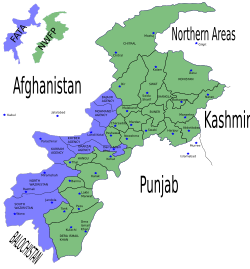
The North-West Frontier, known today as Khyber Pakhtunkhwa, served as a critical strategic zone of the British Indian Empire. Geographically, it forms the western frontier of modern-day Pakistan, stretching from the Pamir Knot in the north to the Koh-i-Malik Siah in the west. This rugged region separates the provinces of Khyber Pakhtunkhwa, Balochistan, and the formerly Federally Administered Tribal Areas (FATA) from Afghanistan.
The official boundary, known as the Durand Line, is more than just a political border; it divides the Pashtun inhabitants of the region between the Pakistani frontier and eastern Afghanistan.
Strategic Gateways and Imperial Ambitions
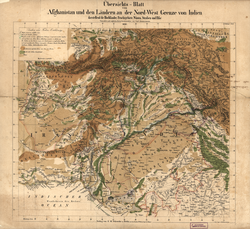
For millennia, the Indian subcontinent has been vulnerable to invasions via two primary gateways: the Khyber Pass and the Bolan Pass. Because of these natural corridors, the stability of the frontier and the control of Afghanistan became central to the defensive strategy of British India, particularly as the Russian Empire expanded into Central Asia during the twentieth century.
Control of the region shifted frequently. In the early 19th century, much of the frontier was occupied by Ranjit Singh of the Sikh Empire. However, the East India Company took control of the area following the annexation of the Punjab in 1849.
Key Facts
- Modern Identity: The region is now primarily the Khyber Pakhtunkhwa province of Pakistan.
- The Durand Line: The official border that separates Pashtun populations between Afghanistan and Pakistan.
- Strategic Passes: The Khyber and Bolan Passes are the historic primary routes for invasions into the Indian subcontinent.
- Major Powers: The region was contested by the Mughal Empire, the Sikh Empire, the British East India Company, and the British Indian Empire.
- Military Legacy: The area saw centuries of warfare, including three Anglo-Afghan wars and numerous tribal expeditions.
Chronology of Conflict
The history of the North-West Frontier is marked by a relentless cycle of wars and expeditions. Early conflicts were defined by the Mughal Afghan Wars (1526–1757), followed by the Afghan-Sikh Wars (1800–1837), which included significant battles at Nowshera and Jamrud.
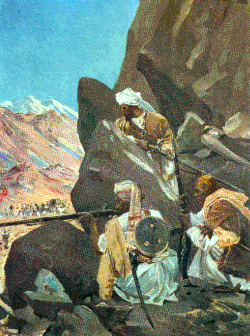
The British era introduced a series of systemic campaigns. From 1838 to 1849, the region saw the First Anglo-Afghan War and the First and Second Anglo-Sikh Wars. Following the annexation of Punjab, the British conducted a dizzying array of "expeditions" against local tribes, such as the Mohmand, Afridi, and Mahsud, to maintain imperial order.
Major Military Eras
- 1849–1858: Early British operations including the First Black Mountain Expedition and the Sepoy Rebellion (Indian Mutiny).
- 1859–1878: Campaigns such as the Ambela Campaign and the Second Black Mountain Expedition.
- 1878–1898: The Second Afghan War and the subsequent Punjab Frontier Revolt.
- 1898–1939: Inter-war operations, including the Third Anglo-Afghan War (1919) and the Afridi Redshirt Rebellion.
- 1940–Present: Post-independence conflicts, including the Waziristan rebellion, the Soviet-Afghan war impacts, and modern Pakistani military operations like Zarb-e-Azb.
Military Formations of the Frontier
To manage the volatile terrain, the British established specialized military units. The Corps of Guides was particularly prominent, earning battle honours at Ali Masjid and Kabul during the Second Afghan War, and later during the Chitral campaign of 1895.
The Punjab Frontier Force (PFF) consisted of cavalry, artillery, and infantry specifically trained for mountain warfare. This included the Sikh Infantry and various Punjab Infantry regiments, many of whom were decorated for their service in the Second Afghan War.
The Frontier Corps and Scouts
The British also utilized local militias and scouts to maintain surveillance and security. These units were often recruited from the very tribes they were tasked with monitoring:
- Khyber Rifles: Recruited from the Afridi, Shinwari, and Mullagori tribes.
- Kurram Militia: Recruited from the Turi and Bangash of the Kurram Valley.
- Chitral Scouts: Recruited from the Chitrali of Chitral.
| Unit Name | Primary Role | Notable Affiliations/Honours |
|---|---|---|
| Corps of Guides | Intelligence & Infantry | Ali Masjid, Kabul, Chitral |
| Punjab Frontier Force | Mountain Warfare | Sikh and Punjab Infantry |
| Khyber Rifles | Border Security | Afridi, Shinwari, Mullagori tribes |
| Scinde Horse | Cavalry | Second Afghan War honours |
Frequently Asked Questions
What is the Durand Line?
The Durand Line is the official international border between Afghanistan and Pakistan, which divides the Pashtun ethnic group between the two nations.
Why were the Khyber and Bolan Passes so important?
These passes provided the only viable routes for large armies to enter the Indian subcontinent from Central Asia, making them the primary targets for both invaders and defenders.
Who were the Corps of Guides?
The Corps of Guides was an elite British Indian Army unit specializing in frontier intelligence and combat, known for their versatility in the rugged terrain of the North-West Frontier.
Which modern province corresponds to the North-West Frontier?
The region is now primarily the province of Khyber Pakhtunkhwa in Pakistan.
What was the role of the Frontier Corps?
The Frontier Corps consisted of various militias and scouts recruited from local tribes to provide border security and maintain stability in the tribal regions.