Princely States of the British Indian Empire
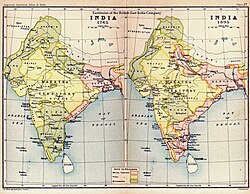
The princely states, also known as native states, were nominally sovereign entities within the British Indian Empire. Unlike the provinces governed directly by the British, these states were managed by indigenous rulers through a system of indirect rule. While these rulers maintained internal autonomy, they were subject to the suzerainty or paramountcy of the British Crown and typically operated under a subsidiary alliance—a treaty that ensured British protection in exchange for political influence and military cooperation.
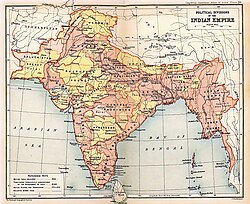
At the time of the British withdrawal in 1947, there were 565 officially recognized princely states across the Indian subcontinent, alongside thousands of smaller jagirs and zamindari estates. These states collectively covered 40% of the land area of pre-independence India and housed 23% of its total population.
Key Facts
- Total States: 565 officially recognized princely states by 1947.
- Land and Population: Covered 40% of the area and 23% of the population of pre-independence India.
- Governance: Ruled by indigenous monarchs under British paramountcy via indirect rule.
- Salute States: A prestigious tier of states where rulers were entitled to ceremonial gun salutes.
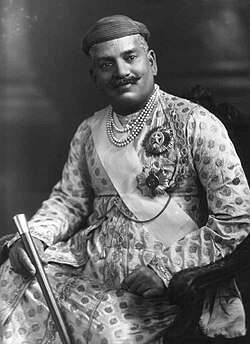
- Major Entities: Prominent states included Hyderabad, Jammu and Kashmir, Mysore, and Gwalior.
The Hierarchy of Prestige: Salute and Non-Salute States
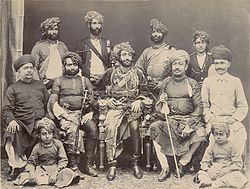
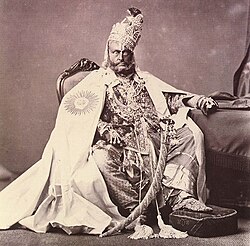
The British established a rigid hierarchy to categorize the prestige of various rulers. The most prominent states were designated as salute states. A ruler's status was visually and auditorily signaled by the number of gun salutes they were entitled to receive during ceremonial occasions.
For those entitled to 15 guns or more, the British often conferred military ranks such as Commodore, Brigadier, or Air Commodore. This system created a clear social and political ladder among the indigenous nobility.
Major Princely States and Their Administration
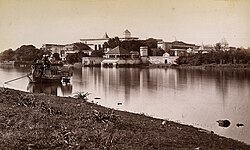
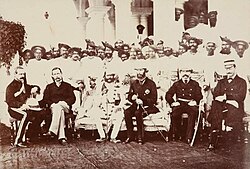
The most influential states often maintained their own political residencies, where a British Resident acted as the liaison between the local ruler and the central British government. These states varied wildly in ethnicity, religion, and wealth.
The Great States of the North and Center
Jammu and Kashmir and Hyderabad were among the largest in terms of area and population. Hyderabad was ruled by the Nizam, a Turkic Muslim ruler, while Jammu and Kashmir was led by a Dogra Maharaja.
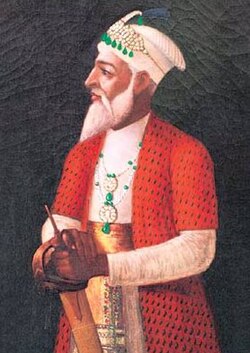
In Central India, states like Gwalior and Indore were dominated by Maratha nobility. These regions were often managed through agencies such as the Central India Agency or the Gwalior Residency.
Southern and Eastern States
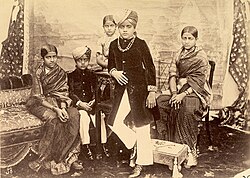
In the south, the Kingdom of Mysore, Travancore, and Pudukkottai were key entities. Mysore was ruled by the Wodeyar dynasty, while Travancore and Cochin were led by Malayali Maharajas.
In the east, states like Cooch Behar and Tripura maintained their own distinct cultural identities, with rulers often holding titles such as Maharaja and receiving specific gun salutes (e.g., 13 guns for Tripura).
Imperial Governance and the Doctrine of Lapse
The British relationship with these states was not always stable. The Doctrine of Lapse was a policy used by the British to annex states where a ruler died without a direct natural heir, effectively absorbing the territory into British India.
To maintain control, the British appointed Political Agents and Residents. These officers monitored the state's administration and ensured that the ruler's actions aligned with British imperial interests.
The Path to Political Integration
As the movement for Indian independence grew, the status of the princely states became a point of contention. In 1920, the Indian National Congress, led by Mahatma Gandhi, declared swaraj (self-rule) as its goal and urged princes to establish responsible governments.
Jawaharlal Nehru argued that the people of the states should determine their own future. By 1937, while Congress won provincial elections in British-governed areas, the princely states remained outside this electoral process. By 1946, Nehru noted that no princely state could realistically withstand the military power of an independent India.
Summary of Major Princely States (1941 Data)
| State | Ruler Title | Religion | Gun-Salute | Present Location |
|---|---|---|---|---|
| Jammu and Kashmir | Maharaja | Hindu | 21 | India |
| Hyderabad | Nizam | Muslim | 21 | India |
| Mysore | Maharaja | Hindu | 21 | India |
| Gwalior | Maharaja | Hindu | 21 | India |
| Khanate of Kalat | Khan/Wali | Muslim | 19 | Pakistan |
| Baroda | Maharaja | Hindu | 21 | India |
Frequently Asked Questions
What was a princely state?
A princely state was a nominally sovereign territory in the British Indian Empire that was ruled by an indigenous prince rather than being directly administered by the British government, though it remained subject to British paramountcy.
What were "salute states"?
Salute states were a privileged group of princely states whose rulers were entitled to a specific number of gun salutes during ceremonial events, reflecting their rank and prestige within the imperial hierarchy.
How did the British maintain control over these states?
The British used a combination of subsidiary alliances, the appointment of Residents and Political Agents to monitor local courts, and the Doctrine of Lapse to annex states without direct heirs.
What happened to the princely states after 1947?
Following the British withdrawal, the states underwent a process of political integration into the newly independent nations of India and Pakistan, as they could not maintain military or political independence against the new central governments.
Who were some of the most powerful rulers?
Some of the most powerful rulers included the Nizams of Hyderabad, the Maharajas of Jammu and Kashmir, Mysore, and Gwalior, all of whom held the highest gun-salute status of 21.