Moche Culture: The Master Artisans of Ancient Peru
The Moche culture was a sophisticated civilization that flourished along the northern coast of Peru between 100 CE and 800 CE. Rather than a single unified empire, the Moche consisted of culturally united independent polities that shared a common religion, artistic style, and language—likely Mochica. They are renowned for their extraordinary craftsmanship in ceramics and metalwork, as well as their monumental architecture.
The trajectory of Moche history is generally divided into three distinct eras: the Early Moche (100–300 AD), characterized by the culture's emergence; the Middle Moche (300–600 AD), a period of expansion and peak flourishing; and the Late Moche (500–800 AD), which saw urban nucleation followed by an eventual collapse.
Key Facts
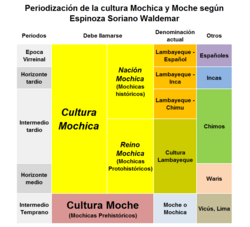
- Timeline: 100 CE to 800 CE (Early Intermediate period).
- Location: Modern-day La Libertad and Lambayeque Departments, Peru.
- Social Structure: Highly stratified society with a powerful elite class.
- Key Sites: Huaca del Sol, Huaca de la Luna, and Pampa Grande.
- Legacy: Influenced the later Sican and Chimu cultures.
Regional Variations: Northern vs. Southern Moche
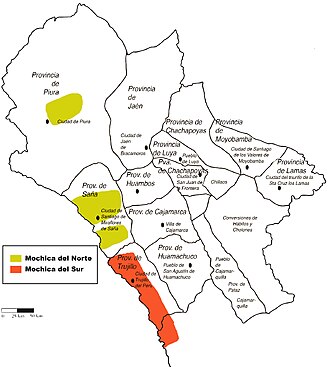
While the Moche shared a broad cultural sphere, significant differences existed between the northern and southern regions. The northern sphere included the upper Piura Valley and the lower Lambayeque Valley system (comprising the La Leche, Reque, and Zaña rivers). Pampa Grande, located in the Lambayeque Valley, emerged as one of the largest sites, particularly during the Moche V period (600–700 AD).
| Feature | Northern Moche | Southern Moche |
|---|---|---|
| Goldsmithing | Present | Absent |
| Portrait Huacos (Ceramics) | Absent | Present |
| Ramp Buildings | Present | Absent |
| Larco 5-Phase Ceramic Sequence | Absent | Present |
| Valley Geography | Great and wide valleys | Narrower valleys |
| Archaeological Heirs | Sicanes | Chimus |
Material Culture and Artistry
Ceramics and Textiles
The Moche are world-famous for their ceramics, particularly their Huacos (portrait vessels) that captured realistic human expressions. Their textiles, though fragile and rarely preserved, were crafted from cotton and wool from vicuña and alpaca. High-status individuals wore complex tapestries with bright dyes, while commoners produced their own simpler, monochrome garments using household tools like whorls and needles.
Advanced Metallurgy
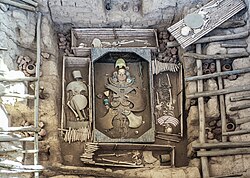
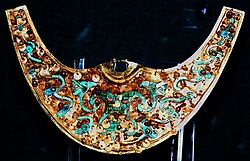
Moche metalwork was a primary tool for projecting power. Using gold, silver, copper, and bronze, they created elaborate flared headdresses and nose ornaments. The 1986 discovery of the Tombs of Sipán provided unparalleled evidence of how metal objects were intertwined with the authority of the Moche elite.
Architecture and Engineering
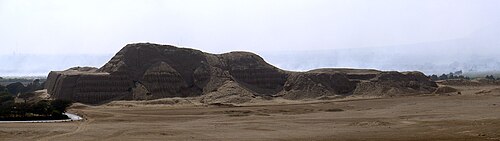
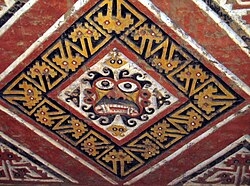
The Moche constructed massive adobe brick structures known as Huacas. The Huaca del Sol (Temple of the Sun) served as a cultural capital, while the Huaca de la Luna featured intricate murals depicting the "Decapitator" deity.
Religion and Social Hierarchy
The Moche practiced a polytheist religion characterized by ritual sacrifice and a complex iconography of deities. Their art often depicted the "Decapitator," a fearsome figure associated with ritual violence. Power was concentrated in the hands of an elite class of priest-kings and queens who used opulent jewelry and ceremonial knives, known as Tumi, to signify their status.
The Collapse of the Moche
The demise of the Moche political structure is attributed to several environmental factors. Ice core data suggests a "super El Niño" event between 563 and 594 AD, which brought 30 years of devastating floods followed by 30 years of severe drought. Because Moche agriculture relied heavily on canal-based irrigation from Andean runoff, these climatic shifts likely crippled their food supply and undermined the perceived power of the ruling elite.
Major Archaeological Discoveries
In 2005, the discovery of the Lady of Cao at the Huaca Cao Viejo revealed a mummified woman buried with war clubs and spear throwers, suggesting that women could hold high-ranking military or political power in Moche society. Additionally, the recovery of a looted gold mask depicting a sea god in London in 2005 (returned to Peru in 2006) highlighted the continued global interest in Moche treasures.
Frequently Asked Questions
Who were the Moche people?
The Moche were a pre-Inca civilization that lived on the northern coast of Peru from 100 CE to 800 CE, known for their independent polities, advanced irrigation, and masterful art.
What is a Huaco?
A Huaco is a type of Moche ceramic vessel, most notably the portrait heads which are highly realistic depictions of individual people.
How did the Moche civilization end?
The collapse is largely attributed to extreme climatic events, specifically a super El Niño that caused alternating periods of intense flooding and drought, disrupting their irrigation-based agriculture.
Who was the Lady of Cao?
The Lady of Cao was a mummified Moche woman discovered in 2005 whose tomb contained military artifacts, indicating she held a position of significant power.
What materials did the Moche use for jewelry?
They were expert metallurgists who used gold, silver, copper, and bronze, often inlaying these metals with turquoise and chrysocolla.